
In Toronto’s most exclusive dining establishments, revolutionary technology is redefining the art of gastronomy. From molecular gastronomy labs equipped with centrifuges and sonic homogenizers to AI-powered wine pairing systems that analyze diners’ palate preferences, cutting-edge innovations are transforming every aspect of the premium dining experience. Leading culinary artisans like Chef Jean-Georges Vongerichten and Grant Achatz have embraced these advancements, seamlessly blending tradition with technology to create unprecedented sensory journeys.
The convergence of artificial intelligence, robotics, and culinary expertise has ushered in an era where interactive dining tables respond to gesture controls, and augmented reality enhances plate presentations with stunning visual narratives. These innovations extend beyond mere novelty—they’re fundamental tools that elevated restaurants employ to craft more refined, personalized, and memorable experiences for their distinguished clientele.
As we witness this technological renaissance in fine dining, Toronto’s premier establishments are at the forefront, incorporating everything from precision temperature-controlled cooking systems to blockchain-tracked ingredient sourcing, ensuring unparalleled quality and authenticity in every carefully curated dish.
Smart Kitchen Automation in Toronto’s Top Restaurants
AI-Powered Cooking Systems
In the realm of modern gastronomy, AI-powered cooking systems are revolutionizing how high-end culinary expertise is delivered with unprecedented precision. These intelligent systems combine advanced thermal sensors, machine learning algorithms, and sophisticated temperature control mechanisms to ensure each dish achieves perfection.
At the heart of these innovations are smart ovens equipped with multiple temperature zones and humidity controls, capable of maintaining optimal cooking conditions within 0.1°C accuracy. The systems learn from each cooking cycle, adapting their parameters to account for variables such as ingredient density, moisture content, and desired doneness levels.
Particularly impressive are the AI-driven sous vide systems that have evolved beyond simple temperature maintenance. These sophisticated units now analyze protein structure changes in real-time, adjusting cooking duration and temperature profiles to achieve the perfect medium-rare steak or silky-textured fish. The technology extends to intelligent induction cooktops that create virtual cooking zones, monitoring heat distribution patterns to prevent hot spots and ensure consistent results.
For pastry arts, these systems prove invaluable, maintaining precise temperature curves essential for delicate preparations like chocolate tempering and soufflé baking. The integration of cloud-connected recipe databases allows these systems to replicate complex cooking techniques with remarkable consistency, ensuring that signature dishes maintain their excellence regardless of who operates the equipment.
Robotic Sous Chefs
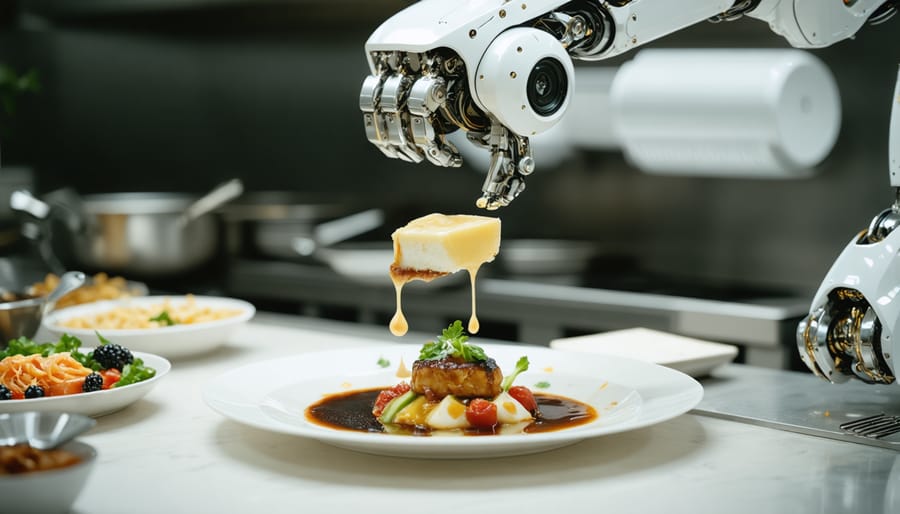
In the heart of Toronto’s most innovative kitchens, a quiet revolution is taking place as robotic sous chefs transform the art of precision cooking. These sophisticated mechanical assistants, equipped with advanced sensors and artificial intelligence, are mastering tasks that once required years of culinary training to perfect.
At Michelin-starred establishments, robotic arms delicately portion proteins with microscopic accuracy, ensuring each cut meets exact specifications. The consistency achieved is remarkable – every slice of wagyu beef, every portion of line-caught sea bass emerges identical to the last, allowing executive chefs to maintain unwavering standards of presentation and portion control.
During a recent visit to one of the city’s premier restaurants, I observed as a robotic assistant executed intricate vegetable brunoise with mesmerizing precision. The machine produced perfectly uniform 1/8-inch cubes of carrots, celery, and shallots – a task that typically demands intense focus and exceptional knife skills from human chefs.
These mechanical collaborators excel in repetitive tasks while allowing human chefs to focus on creativity and flavor development. They’re particularly valuable during high-volume service, maintaining consistency when fatigue might otherwise affect precision. The integration of these systems has elevated kitchen efficiency without sacrificing the artisanal quality that defines fine dining.
Importantly, these robots aren’t replacing chefs but rather enhancing their capabilities, creating a harmonious blend of technological precision and human creativity in modern haute cuisine.
Interactive Dining Experiences
Projection Mapping and AR Menus
In the realm of avant-garde gastronomy, projection mapping and augmented reality (AR) menus are revolutionizing how we experience fine dining. These technological marvels transform ordinary dining spaces into immersive theatrical environments, creating visually stunning dining presentations that engage all the senses.
Leading Toronto establishments have embraced this innovation, utilizing high-definition projectors to cast dynamic imagery directly onto dining tables and plates. Imagine witnessing the story of your dish unfold before your eyes—scenes of rolling ocean waves accompanying your seafood course, or abstract patterns that dance in harmony with your wine selection’s tasting notes.
AR menus, accessed through elegant tablet devices or specialized dining apps, offer an interactive glimpse into each dish’s preparation. Diners can explore three-dimensional renderings of their selections, complete with wine pairing suggestions and detailed ingredient information. This technology particularly shines when presenting complex tasting menus, allowing guests to preview the culinary journey ahead.
The fusion of projection mapping with thoughtful sound design creates multi-sensory experiences that elevate traditional fine dining. At select venues, customized lighting sequences synchronize with each course, while carefully curated soundscapes complement the culinary narrative. These technological elements don’t merely serve as entertainment; they’re carefully orchestrated to enhance flavor perception and create memorable dining moments.
For private events, these systems offer unprecedented personalization opportunities. From corporate gatherings to intimate celebrations, hosts can incorporate branded content or personal imagery into the dining environment, ensuring each experience is uniquely tailored to the occasion.

Smart Table Systems
The dining experience has evolved far beyond mere plates and cutlery, with smart table systems revolutionizing the way we interact with our meals. At the forefront of this transformation are interactive dining surfaces that respond to touch and movement, creating an immersive experience that engages all senses. These sophisticated tables feature high-resolution displays seamlessly integrated into their surfaces, allowing diners to customize their dining environment, explore menu details, and even watch their meals being prepared in real-time.
One of the most remarkable innovations in this space is the temperature-controlled dining surface, which maintains precise temperatures for different dishes across various sections of the table. Imagine sushi remaining perfectly chilled on one side while your coffee stays precisely at 65°C on the other – a feat made possible through advanced thermal management systems embedded within the table’s structure.
During a recent tasting at one of Toronto’s premier establishments, I experienced firsthand how these smart surfaces adapt to each course. The table’s surface subtly changed its ambient lighting to complement each dish, while integrated heating elements ensured that my wagyu beef maintained its optimal temperature throughout the experience. The system even features individual climate zones that can be adjusted to each diner’s preference, ensuring that shared plates remain at their ideal serving temperature regardless of their position on the table.
These intelligent dining surfaces also incorporate subtle notification systems that communicate with service staff, allowing for unobtrusive yet attentive service that never interrupts the natural flow of conversation or dining rhythm. The result is a seamlessly orchestrated dining experience that caters to the most discerning palates while pushing the boundaries of culinary technology.
AI-Enhanced Wine and Beverage Service
Digital Sommeliers
In an era where artificial intelligence reshapes luxury dining experiences, digital sommeliers are emerging as sophisticated companions to traditional expert sommelier services. These AI-powered systems analyze diners’ preferences with remarkable precision, creating personalized wine recommendations that complement both the meal and individual palates.
Leading Toronto establishments have embraced platforms that maintain detailed profiles of guests’ wine preferences, previous selections, and tasting notes. These intelligent systems consider factors such as flavor affinities, price points, and even seasonal variations to suggest perfect pairings. The technology goes beyond simple matching algorithms, incorporating data from thousands of wine reviews, vintage reports, and professional ratings to ensure recommendations align with current market trends and availability.
The innovation extends to interactive digital wine lists, where guests can explore detailed tasting notes, vineyard histories, and food pairing suggestions through elegantly designed interfaces. Some systems even predict future preferences based on pattern recognition, allowing restaurants to curate their cellars more effectively and introduce clients to new, emerging vintages that align with their established preferences.
While these digital solutions enhance the dining experience, they serve as sophisticated tools that complement rather than replace the nuanced expertise of human sommeliers, creating a harmonious blend of technological innovation and traditional wine service.
Smart Wine Storage
The evolution of wine storage has reached new heights with cutting-edge preservation systems that are revolutionizing how fine establishments maintain their valuable collections. Leading Toronto establishments have embraced sophisticated solutions like the Coravin Wine Preservation System, which allows sommeliers to pour premium wines without removing the cork, ensuring the remaining wine stays pristine for months.
Temperature-controlled wine walls have become architectural statements, featuring precision climate control systems that maintain optimal humidity levels and protect against harmful UV rays. These smart storage solutions can be programmed to different temperature zones, accommodating various wine styles from crisp Champagnes at 45°F to full-bodied reds at 65°F.
During a recent visit to one of the city’s premier wine venues, I witnessed their AI-powered inventory management system in action. This sophisticated technology tracks each bottle’s location, monitors temperature fluctuations in real-time, and even predicts optimal drinking windows based on the wine’s aging curve.
Modern wine cabinets now feature advanced oxidation prevention systems, utilizing inert gas preservation methods to eliminate oxygen contact. Some establishments have implemented biometric security measures for their most prestigious bottles, ensuring that only authorized personnel can access certain collections. These innovations not only preserve wine quality but also enhance the overall dining experience by ensuring every bottle is served in perfect condition.

Sustainable Tech in Luxury Dining
Smart Waste Reduction Systems
At the forefront of sustainable luxury dining, AI-powered waste reduction systems are revolutionizing kitchen management in Toronto’s finest establishments. These intelligent systems employ advanced algorithms to track ingredient usage, predict dining patterns, and optimize inventory levels with remarkable precision. Through sophisticated machine learning, these platforms analyze historical data to forecast daily covers and seasonal fluctuations, enabling chefs to maintain the perfect balance between freshness and efficiency.
Leading restaurants have reported up to 40% reduction in food waste since implementing smart inventory management solutions. These systems integrate seamlessly with digital ordering platforms, automatically adjusting procurement based on real-time consumption data. High-resolution cameras and weight sensors monitor food preparation, providing invaluable insights into portion control and prep techniques.
Perhaps most impressively, these technologies now extend beyond the kitchen, with smart waste sorting systems that automatically separate organic matter, recyclables, and compostable materials. The data collected helps restaurants refine their sustainability practices while maintaining the exacting standards expected in fine dining. This marriage of sustainability and sophistication represents a new paradigm in conscious luxury dining.
Energy-Efficient Kitchen Technologies
Today’s luxury restaurants are revolutionizing their kitchens with sophisticated energy management systems that blend sustainability with culinary excellence. Leading Toronto establishments have embraced smart refrigeration units that optimize temperature zones based on ingredient requirements while reducing power consumption by up to 40%. These systems employ AI-driven sensors to monitor usage patterns and adjust cooling cycles accordingly.
Induction cooking platforms have become standard in high-end kitchens, offering precise temperature control while consuming significantly less energy than traditional gas ranges. These systems feature zone-specific heating that activates only when cookware is present, maintaining the kitchen’s comfort while reducing overall energy expenditure.
Advanced ventilation systems with heat recovery technology are transforming kitchen efficiency. These systems capture excess heat from cooking operations and redirect it to warm water or support climate control, creating a closed-loop energy cycle. LED lighting systems with motion sensors and daylight harvesting capabilities further enhance energy conservation while providing optimal illumination for culinary precision.
The integration of smart meters and energy monitoring dashboards allows chefs to track and optimize their kitchen’s power consumption in real-time, ensuring both environmental responsibility and cost efficiency without compromising on culinary excellence.
Toronto’s luxury dining scene stands at the forefront of culinary innovation, where cutting-edge technology seamlessly blends with traditional gastronomy to create unprecedented dining experiences. These advancements have fundamentally transformed how we perceive and interact with fine dining, elevating Toronto’s status as a global culinary destination.
The integration of AI-driven kitchen systems, robotics, and interactive dining experiences has not only enhanced operational efficiency but has also opened new avenues for creative expression among chefs. Industry leaders predict that these innovations will continue to evolve, with emerging technologies like augmented reality dining experiences and personalized nutrition analytics becoming mainstream within the next few years.
The sustainability initiatives driven by smart technology have positioned Toronto’s luxury restaurants as pioneers in eco-conscious dining, setting new standards for the industry. This commitment to innovation while maintaining the essence of fine dining has created a unique ecosystem where technology enhances rather than overshadows the fundamental pleasures of gastronomic excellence.
Looking ahead, we can expect to see even more sophisticated implementations of these technologies, with a particular focus on personalized dining experiences and immersive culinary journeys. As Toronto’s luxury dining establishments continue to push boundaries, they’re not just adopting new technologies – they’re actively shaping the future of fine dining, ensuring that the city remains at the cutting edge of culinary innovation for years to come.