
Mastering the art of wine pairing with Indian cuisine demands an understanding of how bold spices interact with complex varietals. The vibrant layers of cardamom, cumin, and saffron in traditional Indian dishes create a unique challenge for wine enthusiasts, requiring selections that complement rather than compete with these intense flavors. While conventional wisdom once limited beverage pairings to beer or lassi, today’s sophisticated dining scene embraces thoughtfully chosen wines that enhance everything from delicate butter chicken to fiery vindaloos. From aromatic Gewürztraminer that mirrors the fragrant notes of biryani to crisp Rieslings that cut through rich curry sauces, the perfect wine can elevate Indian cuisine to new heights. This guide explores exceptional plant-based wine pairings and traditional favorites, drawing from both Old World wisdom and New World innovations to help you create memorable dining experiences that honor the complexity of Indian gastronomy.
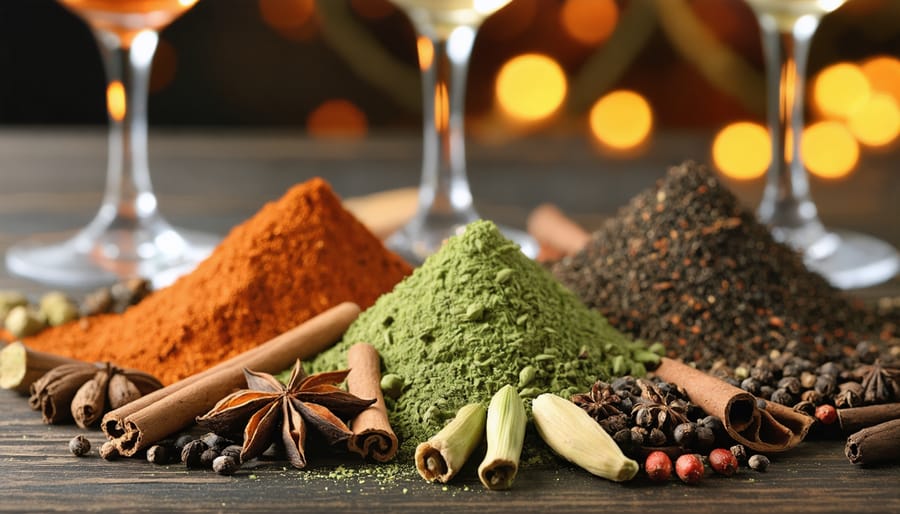
Understanding Indian Spice Profiles
Regional Flavor Variations
Indian cuisine’s remarkable diversity is particularly evident in the stark contrast between northern and southern regional styles, each demanding distinct wine considerations. Northern Indian cuisine, characterized by rich, creamy curries and tandoor-cooked dishes, often features dairy-based gravies and wheat-centric breads like naan and roti. These heartier dishes pair beautifully with full-bodied wines such as Syrah or robust Cabernet Sauvignons.
Southern Indian cuisine, with its emphasis on coconut-based curries, fermented rice and lentil preparations, and aromatic spice blends, calls for different wine companions. The region’s lighter, often tangier flavor profiles harmonize exceptionally well with aromatic whites like Gewürztraminer or crisp Rieslings. The prevalent use of curry leaves, mustard seeds, and fresh chilies in southern dishes creates a unique pairing challenge that’s best met with wines offering good acidity and subtle sweetness.
When considering regional variations, it’s crucial to note that coastal areas in both regions feature abundant seafood dishes, which often pair wonderfully with mineral-driven whites like Chablis or Albariño, while inland specialties might require more robust wine selections.
The Spice-Wine Balance
Understanding the delicate dance between spice and wine is crucial to mastering wine pairing fundamentals, particularly when navigating the complex flavors of Indian cuisine. The heat level in dishes significantly influences your wine selection, with each spice intensity requiring a thoughtful approach to achieve harmony on the palate.
For mildly spiced dishes like butter chicken or malai kofta, aromatic whites with subtle sweetness provide an elegant complement. As the spice level increases, wines with higher residual sugar become essential partners, acting as natural fire extinguishers while enhancing the dish’s intricate spice profiles.
Intensely spiced vindaloos and fiery curries demand wines with pronounced sweetness and lower alcohol content. High alcohol can amplify heat sensations, while sugar molecules help neutralize capsaicin’s burning effect. The key lies in finding equilibrium – your wine should neither overwhelm the dish’s carefully crafted spice blend nor disappear beneath its intensity.
Consider the layered nature of Indian spices; it’s not merely about heat, but rather a sophisticated interplay of warming, cooling, and aromatic elements that your wine selection must address harmoniously.
White Wines for Aromatic Curries
Riesling: The Classic Choice
When it comes to harmonizing with the intricate spice blends of Indian cuisine, Riesling stands as a virtuoso among wines. This versatile German varietal, particularly in its off-dry expressions, creates perfect Riesling combinations with everything from fragrant biryanis to fiery vindaloos. The wine’s natural acidity acts as a palate-cleansing counterpoint to rich, butter-based gravies, while its subtle sweetness tempers the heat of chilies without diminishing their complexity.
What makes Riesling particularly exceptional is its remarkable aromatic profile, featuring notes of stone fruits, citrus, and honey that complement the cardamom, saffron, and other warming spices prevalent in Indian dishes. The wine’s lower alcohol content proves advantageous, as it doesn’t amplify the sensation of heat from spicy dishes, instead offering a cooling embrace that enhances the dining experience.
Consider selecting a Kabinett or Spätlese style Riesling from the Mosel region, where the characteristic mineral backbone provides additional structure to support the layered flavors of Indian cuisine.
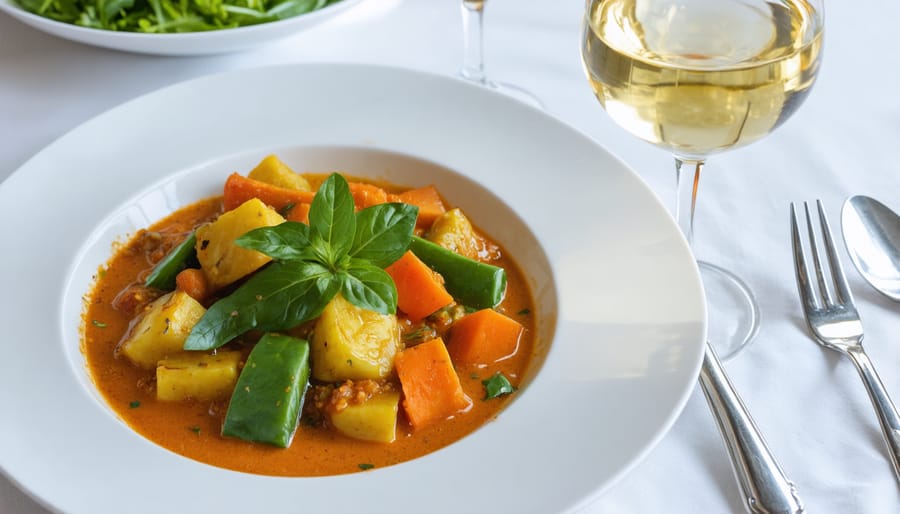
Gewürztraminer and Aromatic Alternatives
While Gewürztraminer leads the pack of aromatic whites that complement Indian cuisine, several other varietals offer equally enchanting partnerships. The floral and lychee notes of Alsatian Gewürztraminer find delightful company in dishes featuring cardamom, saffron, and subtle cream-based curries. Torrontés from Argentina brings similar aromatic qualities with a crisp, refreshing finish that stands up beautifully to coconut-based preparations and seafood curries.
New Zealand Rieslings, particularly those from Central Otago, offer a compelling alternative with their perfect balance of residual sugar and bright acidity. These wines expertly cut through rich gravies while harmonizing with aromatic spices like cumin and coriander. For those seeking something unique, Austrian Grüner Veltliner provides white pepper notes and mineral complexity that particularly shine alongside vegetable-forward dishes and lentil preparations.
I’ve found Viognier from the Rhône Valley to be an exceptional choice, especially with butter chicken or mild kormas. Its stone fruit character and subtle honeysuckle notes create an elegant dialogue with the gentle heat of these dishes while maintaining their own distinct personality.
Red Wines for Robust Plant-Based Dishes
Light to Medium-Bodied Reds
When pairing wines with gentler Indian dishes, particularly lentil-based preparations and vegetable curries, light to medium-bodied reds offer a sophisticated complement without overwhelming the subtle spices. Pinot Noir stands out as an exceptional choice, with its elegant red fruit notes and silky tannins harmonizing beautifully with dal makhani and mushroom-based curries. The wine’s natural acidity cuts through the richness while enhancing the earthy undertones of these dishes.
Gamay, particularly from Beaujolais, presents another excellent option. Its bright cherry characteristics and light structure make it an ideal companion for vegetable biryani and mildly spiced paneer dishes. The wine’s refreshing character helps cleanse the palate between bites while maintaining enough body to stand up to aromatic spices.
For those exploring plant-based Indian cuisine, consider Austrian Zweigelt or Loire Valley Cabernet Franc. These wines offer similar light-bodied profiles with enough complexity to complement the layered flavors of vegetarian dishes, while their subtle herbaceous notes create interesting dialogues with fresh curry leaves and cilantro garnishes.
Full-Bodied Options
For those bold and richly spiced Indian dishes, particularly those featuring tomato-based gravies and robust meat preparations, certain full-bodied wines rise admirably to the occasion. A well-structured Cabernet Sauvignon from California’s Napa Valley, with its firm tannins and dark fruit profile, stands up beautifully to the intensity of Rogan Josh or Butter Chicken. The wine’s black cherry and cassis notes complement the caramelized onions and aromatic spices common in these preparations.
Australian Shiraz presents another excellent option, particularly with tandoori dishes. Its peppery characteristics and concentrated fruit flavors harmonize with the charred, smoky elements while maintaining enough structure to balance the complex spice layers. Look for wines from the Barossa Valley, where the warm climate produces Shiraz with the necessary weight and intensity.
For vegetarian dishes with rich tomato gravies, like Paneer Makhani, consider a Zinfandel from Sonoma County. These wines offer a perfect balance of jammy fruit and spice notes, with enough body to match the creamy textures while complementing the aromatic spice blends without overwhelming them.

Toronto’s Best Indian Restaurants for Wine Enthusiasts
For wine enthusiasts exploring Toronto’s culinary scene, several distinguished Indian restaurants stand out for their exceptional wine programs that complement their sophisticated plant-based offerings.
Pukka, nestled in St. Clair West, boasts an impressive wine list curated by sommelier Peter Boyd. Their cellar features aromatic whites like Gewürztraminer from Alsace and Austrian Grüner Veltliner, perfectly matched with their innovative vegetable-forward dishes. The restaurant’s intimate atmosphere and knowledgeable staff ensure an elevated dining experience.
In Yorkville, Utsav presents an encyclopedic wine selection focusing on New World wines, particularly from California and New Zealand. Their temperature-controlled wine room houses rare vintages, including several boutique producers specializing in biodynamic wines. The sommelier team excels at suggesting pairings for their contemporary interpretations of classic Indian dishes.
Banjara, with its carefully curated wine list, emphasizes small-production wines from lesser-known regions. Their selection of Loire Valley whites and Australian Rieslings particularly shine alongside their aromatic curry preparations. The restaurant’s commitment to both authentic flavors and sophisticated beverage service has earned them a devoted following among oenophiles.
Host, located in the heart of the Entertainment District, offers a rotating selection of organic and natural wines that complement their modern Indian cuisine. Their by-the-glass program features unusual varietals like Viognier and Verdejo, specifically chosen to harmonize with complex spice blends.
For those seeking an exclusive experience, Kamasutra’s private wine cellar hosts intimate tastings paired with progressive Indian dishes. Their sommeliers regularly update the wine list to showcase emerging regions and innovative producers, making each visit a unique exploration of wine and spice harmony.
Reservations are essential at these establishments, particularly for weekend dining or special wine events. Many offer tasting menus with thoughtfully arranged wine pairings, providing an ideal way to experience the sophistication of modern Indian cuisine alongside carefully selected wines.
Embarking on your wine and Indian food pairing journey can be an exciting adventure in gastronomy. Begin by selecting one or two signature Indian dishes you enjoy and experiment with different wine varieties. Start with versatile wines like Riesling or Gewürztraminer, noting how they interact with your chosen dishes. Keep a tasting journal to record your observations about which combinations worked particularly well and why.
Consider hosting a small wine and Indian food pairing evening with friends, featuring three distinct wines and various dishes. This communal experience often yields surprising discoveries and enhances your understanding of flavor interactions. Remember to serve wines slightly cooler than usual, as Indian food’s warmth can affect wine temperature rapidly.
When shopping for wines, don’t hesitate to engage with your local wine merchant. Share your intended menu and ask for recommendations within your budget. Many Toronto wine shops offer regular tasting events where you can sample potential pairings before committing to a full bottle.
Pay attention to the intensity of spices in your dishes and adjust your wine selections accordingly. For milder preparations, explore light to medium-bodied wines. With more robust dishes, opt for wines with greater intensity to maintain balance. Most importantly, trust your palate – while guidelines are helpful, personal preference ultimately determines the most enjoyable pairings for your unique taste.