
Trace your fingers across ancient Mesopotamian clay tablets, and you’ll find the earliest known records of vine cultivation dating back to 6,000 BCE. These delicate tendrils of history reveal humanity’s enduring romance with the grapevine, a relationship that has profoundly shaped the cultural significance of wine across civilizations. From the terraced vineyards of Roman antiquity to the meticulously managed estates of medieval European monasteries, vines have woven themselves into the fabric of human civilization, transforming from wild woodland climbers into the carefully cultivated varieties we cherish today.
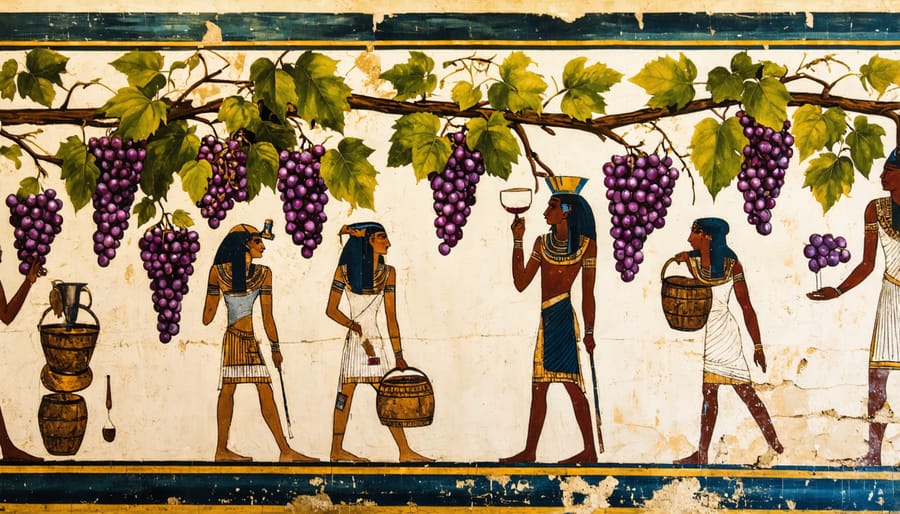
The story of vines parallels humanity’s journey from nomadic gatherers to sophisticated agriculturists, marking pivotal moments in our collective history. Ancient Egyptians documented precise vineyard management techniques on tomb walls, while Greek philosophers debated the finest methods for training vines. This legacy of innovation continues through modern times, where centuries-old wisdom meets cutting-edge viticulture science in the world’s most prestigious wine regions.
The Birth of Viticulture: Ancient Origins
From Wild Vines to Cultivated Grapes
The transformation from wild vine harvesting to intentional grape cultivation marks one of humanity’s most significant agricultural achievements. Archaeological evidence suggests that early humans first encountered wild vines (Vitis vinifera sylvestris) growing naturally in forests, particularly across the fertile regions of the Caucasus Mountains and ancient Mesopotamia. These early encounters with wild grapes, occurring approximately 8,000 years ago, sparked a remarkable journey of botanical domestication.
The decisive shift from gathering to cultivation emerged when our ancestors noticed that certain vines produced more desirable fruits. Through careful observation and selective propagation, they began choosing specimens with larger berries, higher sugar content, and more consistent yields. This deliberate selection process gradually transformed the small, tart berries of wild vines into the plump, sweet grapes we know today.
The ancient civilizations of Georgia, Armenia, and Persia pioneered many of the cultivation techniques still relevant in modern viticulture. They developed methods for training vines along supports, pruning for optimal growth, and identifying superior varieties for propagation. This knowledge spread along trade routes, reaching the Mediterranean basin where Greeks and Romans further refined these practices, establishing the foundation for today’s global wine industry.
Ancient Civilizations and Their Viticultural Legacy
The story of viticulture begins in the cradle of civilization, where ancient societies first discovered the art of winemaking. Archaeological evidence suggests that the earliest cultivation of grapevines occurred in the fertile regions between the Black and Caspian Seas, approximately 8,000 years ago. The Mesopotamians and Egyptians were among the first to document their sophisticated viticultural practices, leaving behind detailed hieroglyphics and clay tablets that depicted vineyard management and wine production techniques.
The Romans, however, truly revolutionized viticulture, establishing systematic cultivation methods and expanding vineyards across their vast empire. Their expertise in terroir selection and pruning techniques formed the foundation of modern European winemaking. Through ancient trade routes, these viticultural practices spread from the Mediterranean to distant regions, introducing new varieties and cultivation methods to diverse climates.
The Greeks, too, left an indelible mark on wine culture, not only through their advanced amphora aging systems but also through their philosophical and religious associations with wine. Their influence extended beyond mere production, establishing wine as a symbol of sophistication and cultural refinement that continues to resonate in contemporary wine appreciation.
Medieval Monasteries: Preservers of Wine Culture
Monastic Innovation in Vineyard Management
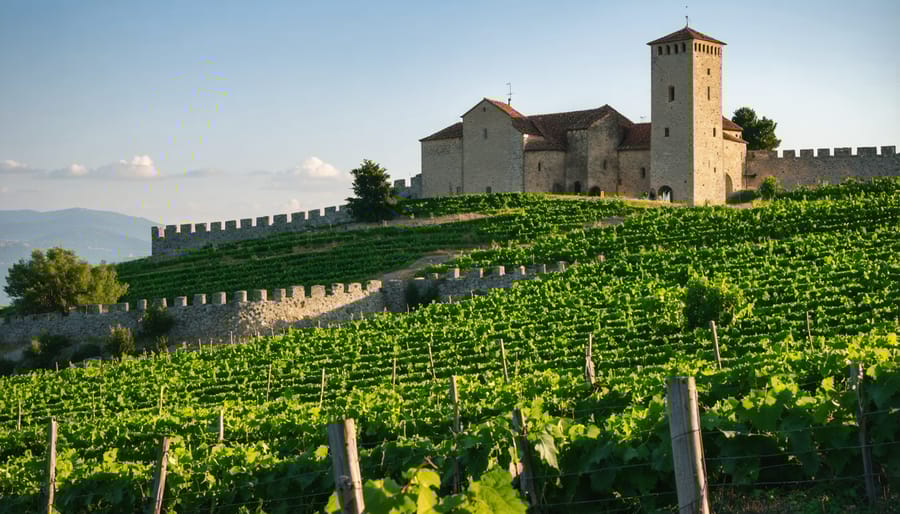
Medieval monasteries revolutionized viticulture through their methodical approach to vineyard management, establishing many of the traditional fermentation practices that influence modern winemaking. The Benedictine and Cistercian orders, in particular, developed sophisticated techniques for identifying optimal vineyard sites, considering factors such as slope orientation, soil composition, and drainage patterns.
These monastic innovators introduced the concept of ‘clos’ – walled vineyards that protected delicate vines and created unique microclimates. They meticulously documented their cultivation methods, including precise pruning techniques and harvest timing, laying the foundation for modern terroir-based viticulture. Their careful observation of grape varieties led to the identification and preservation of noble grape varieties that remain prestigious today.
Perhaps most significantly, monasteries pioneered the practice of cellaring wines, discovering how proper storage conditions affected wine development. Their methodical experimentation with oak aging and blending techniques revolutionized wine quality, establishing standards that continue to influence contemporary winemaking excellence.
The Birth of Europe’s Great Wine Regions
The monastic orders of medieval Europe played a pivotal role in establishing many of today’s renowned wine regions. As Christianity spread across the continent, monasteries became centers of viticultural excellence, with monks meticulously documenting their cultivation techniques and experimenting with different terroirs. The Benedictine and Cistercian orders, in particular, were instrumental in identifying and developing premier wine-growing territories throughout France, Germany, and Italy.
In Burgundy, the Cistercian monks created the concept of ‘clos’ – walled vineyards that protected specific terroirs – and began mapping the subtle differences between adjacent plots of land. This methodical approach led to the establishment of the modern Burgundian classification system. Similarly, in Germany’s Rheingau region, Benedictine monasteries pioneered Riesling cultivation, recognizing how the steep riverbank slopes created optimal growing conditions.
The monks’ influence extended beyond mere cultivation; they established the fundamental principles of terroir and developed the first appellation systems, laying the groundwork for modern wine classification methods. Their detailed record-keeping and commitment to quality have profoundly shaped contemporary European viticulture.
The New World Revolution
Colonial Vine Ventures
The age of exploration ushered in a fascinating chapter in viticultural history, as European colonizers sought to establish vineyards in newly discovered territories. Spanish missionaries led the charge, bringing vitis vinifera cuttings to the Americas in the 16th century, establishing the first New World vineyards in Mexico and later California. These “mission grapes” would become the foundation of North American wine production.
In the late 18th century, British colonists made determined efforts to cultivate European grape varieties in the eastern United States, though they encountered significant challenges. Thomas Jefferson, an ardent wine enthusiast, invested considerable resources in establishing vineyards at Monticello, only to face repeated failures due to indigenous diseases and harsh climate conditions.
The Dutch East India Company played a pivotal role in South Africa’s wine heritage, with the first Cape vineyards planted in 1655 by Jan van Riebeeck. The famous Constantia wine estate, established in 1685, would later produce some of the most coveted sweet wines of the 18th and 19th centuries, gracing the tables of European nobility.
Australia’s wine story began in 1788 when the First Fleet brought vine cuttings from the Cape of Good Hope. Despite initial struggles, by the 1820s, vineyards were flourishing in the Hunter Valley and Barossa regions, laying the groundwork for what would become one of the world’s most dynamic wine industries.
The Great Phylloxera Crisis
The late 19th century witnessed one of the most devastating events in viticultural history – the Great Phylloxera Crisis. This microscopic insect pest, native to North America, inadvertently made its way to Europe through imported vines, unleashing unprecedented devastation across the continent’s vineyards.
Beginning in the 1860s in France’s Rhône Valley, the crisis spread rapidly, with phylloxera feeding on vine roots and effectively destroying nearly all of Europe’s indigenous vinifera vines. The devastation was profound – countless vineyards were decimated, leading to widespread economic hardship and forcing many vignerons to abandon their generational properties.
The solution emerged through a groundbreaking discovery: American rootstock naturally resistant to phylloxera could be grafted with European vines. This revelation transformed modern viticulture forever. French botanists Charles Valentine Riley and Jules Émile Planchon pioneered this technique, which essentially saved the European wine industry from complete collapse.
The crisis catalyzed significant changes in global wine production. Many European winemakers migrated to unaffected regions, establishing new wine regions in places like California, South America, and Australia. This diaspora of wine expertise inadvertently contributed to the globalization of wine culture and techniques.
Today, nearly all wine-producing vines worldwide are grafted onto phylloxera-resistant rootstock, standing as a testament to human ingenuity in the face of agricultural crisis.
Modern Viticulture: Science Meets Tradition
Genetic Innovation and Vine Selection
The modern era of viticulture has witnessed remarkable advancements in genetic research and vine selection, revolutionizing how we cultivate and preserve grape varieties. Building upon centuries of agricultural innovations, scientists now employ sophisticated DNA mapping techniques to identify and protect heritage grape varieties while developing more resilient cultivars.
In prestigious wine regions worldwide, viticulturists utilize marker-assisted selection to breed vines that maintain desired flavor profiles while exhibiting enhanced disease resistance and climate adaptability. This precision breeding has proven particularly valuable in preserving delicate varieties like Pinot Noir and Nebbiolo, which have historically challenged even the most skilled vignerons.
Modern vine nurseries maintain extensive collections of genetic material through both traditional grafting and innovative cryopreservation methods. These living libraries safeguard centuries of viticultural heritage while enabling the development of new varieties that respond to contemporary challenges. The implementation of mass selection techniques in established vineyards has allowed winemakers to identify and propagate exceptional specimens, ensuring the continuation of superior genetic lines.
This careful balance of preservation and innovation continues to shape the future of winemaking, allowing vintners to maintain time-honored traditions while adapting to evolving environmental conditions.
Sustainable Practices in Modern Vineyards
Today’s vineyard management reflects a profound shift toward environmental stewardship, seamlessly blending centuries-old wisdom with cutting-edge sustainable practices. Leading vintners have embraced organic and biodynamic farming methods, eliminating synthetic pesticides and fertilizers in favor of natural alternatives. Cover crops between vine rows not only prevent soil erosion but also nurture beneficial insects and enhance biodiversity.
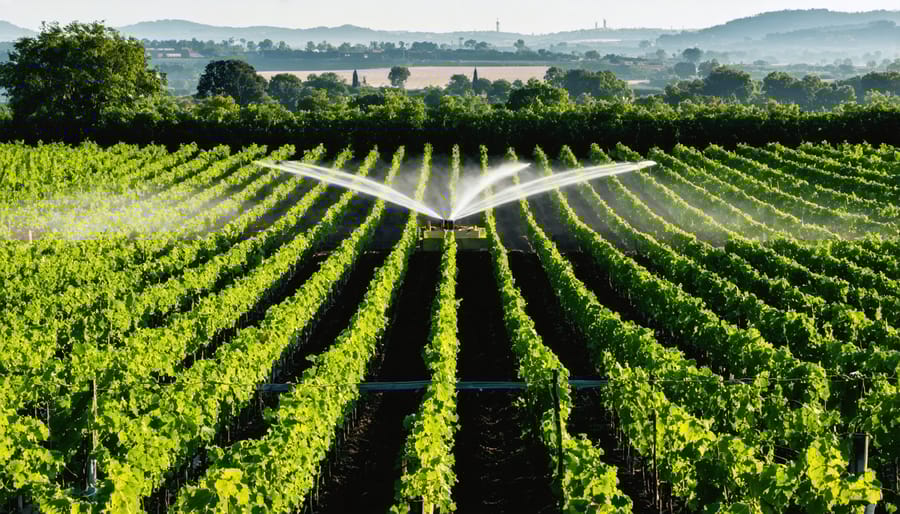
Water conservation has become paramount, with precision irrigation systems and drought-resistant rootstock selections helping vineyards adapt to climate change challenges. Many estates now utilize solar power for their operations, while others implement innovative composting programs that transform grape pomace into nutrient-rich soil amendments.
Integrated pest management strategies have revolutionized vine protection, utilizing natural predators and targeted interventions rather than broad-spectrum chemicals. The implementation of weather monitoring stations and sophisticated modeling software allows vintners to optimize their farming practices while minimizing environmental impact.
Perhaps most encouraging is the industry’s commitment to carbon sequestration through soil management practices that not only improve wine quality but also contribute to climate change mitigation. These sustainable approaches ensure that future generations can continue enjoying exceptional wines while preserving the delicate ecosystems that make each terroir unique.
Climate Change and the Future of Vines
As global temperatures rise and weather patterns become increasingly unpredictable, vineyards worldwide are adapting their age-old practices to meet unprecedented challenges. Traditional wine regions are experiencing shifting growing seasons, with earlier bud breaks and harvest dates disrupting centuries-old cultivation calendars. In Burgundy, for instance, harvest dates have advanced by nearly two weeks over the past three decades.
Forward-thinking vintners are implementing innovative solutions to protect their precious vines. Some are experimenting with drought-resistant rootstocks, while others are exploring high-altitude plantings to maintain optimal growing temperatures. In Spain’s Rioja region, producers are gradually moving their vineyards to higher elevations, sometimes up to 900 meters above sea level.
Technology plays a crucial role in this adaptation. Precision viticulture, utilizing satellite imagery and soil sensors, helps winemakers monitor vine stress and optimize irrigation. Some estates are even preserving genetic diversity by banking ancient vine varieties that might prove more resilient to future climate conditions.
Perhaps most intriguingly, we’re witnessing the emergence of new wine regions. Areas once considered too cool for quality wine production, such as England and Tasmania, are now producing exceptional sparkling wines. This geographical shift suggests that while traditional wine regions face challenges, the future of viticulture isn’t disappearing—it’s evolving, adapting, and finding new terroirs to call home.
The journey of vines through history stands as a testament to humanity’s enduring relationship with these remarkable plants. From ancient Mesopotamian vineyards to today’s precision viticulture, vines have continuously adapted alongside human civilization, shaping our cultural practices and agricultural innovations. Their resilience through centuries of climate changes, diseases, and evolving cultivation methods speaks to their remarkable adaptability.
As we look to the future, the role of vines continues to evolve. Modern vintners are embracing sustainable practices while honoring age-old traditions, creating a harmonious blend of innovation and heritage. Climate change presents new challenges, yet also opportunities, as vineyards expand into previously unexpected regions, creating exciting new terroirs and wine expressions.
The digital age has brought unprecedented precision to vineyard management, with satellite imaging and AI-driven analytics optimizing growing conditions. Yet, the fundamental connection between vintner and vine remains unchanged – a relationship built on patience, understanding, and respect for nature’s rhythms.
Perhaps most remarkably, vines continue to tell the story of human civilization. Each ancient variety preserved, each new hybrid developed, adds another chapter to our collective narrative. As we face future challenges, the history of vines reminds us that adaptation and persistence are key to survival and success, making their legacy not just one of past achievements, but of continued evolution and promise.