
Self-management in emotional intelligence is the ability to recognize your own emotions as they arise and regulate how you express them, so that your behaviour reflects your intentions rather than your impulses. It covers emotional control, adaptability, a drive toward goals, and a steady, positive outlook under pressure.
The concept matters most where pressure is highest, and few rooms apply more of it than a premium dining room on a Saturday night. I’ve watched a sommelier absorb a guest’s sharp complaint about a corked bottle, pause for a single breath, and respond with a calm, gracious replacement that turned the evening around. That pause is self-management at work. The chef’s composure when a ticket goes sideways is the same skill, just carried out at a different station.
This article defines self-management plainly, then breaks it into its core components and explains what happens in the moment between a trigger and a response. From there, we’ll look at how it applies in practice, whether you lead a kitchen team, serve a table of discerning guests, or simply want to stay level when the pace picks up. A short FAQ closes things out with the questions readers ask most.
What Self-Management Means in Emotional Intelligence
Self-management is the emotional intelligence skill of regulating your own emotions, impulses and behavior so that what you do reflects your intentions rather than your mood of the moment. In the widely used Goleman model, it sits alongside self-awareness, social awareness and relationship management as one of the four EQ domains.
The distinction between neighboring skills matters. Self-awareness is noticing a feeling: recognizing that frustration is building when a ticket stalls in the kitchen. Self-management is what you do next. Social skills, the territory of relationship management, concern how you guide and influence other people. One skill reads the signal, another chooses the response, and a third carries that response into the room.
It helps to say plainly what self-management is not. It is not suppression, and it is certainly not the brittle, forced smile of someone gritting their teeth through a bad night. Bottled emotion tends to leak out sideways, in a clipped tone or a slammed pass. Genuine self-management is a deliberate choice about how to express a feeling, and it is the ability to respond rather than react. The emotion is acknowledged, then directed.
Nowhere does this carry more weight than in hospitality, where emotional labor is part of the craft itself. A sommelier is expected to be warm and unhurried whatever the evening has thrown at them. A host greets the fortieth guest with the same grace as the first. When the dining room is performance as much as service, composure stops being a personal virtue and becomes part of what the guest is actually paying for.
The Core Components of Self-Management
Emotional Self-Control and Composure

When a dining room is full and the kitchen is running behind, the first thing a guest reads is your face. Emotional self-control means choosing a steady response before the frustration reaches the table. A host who acknowledges the delay plainly and offers a warm, specific update protects the evening far better than one who rushes or deflects.
Composure is the visible result of that discipline. It lowers the temperature at an unhappy table, steadies the colleagues working beside you, and keeps small hiccups from becoming memorable failures.
- Emotional self-control
- The ability to manage impulses and strong feelings so that your reaction fits the situation rather than the surge of emotion.
- Composure
- The calm, unhurried presence you maintain under pressure, which reassures guests and teammates alike.
- Adaptability
- The willingness to adjust smoothly when plans change, whether a menu item runs out or a reservation shifts.
- Positive outlook
- A constructive way of framing setbacks that keeps attention on solutions and on the guest’s experience.
Practised consistently, these habits make a demanding service look effortless from the other side of the table.
Adaptability and a Steady Outlook
Hospitality rarely follows the script. A reservation for eight dissolves at 6:45, the Barolo on the list runs out halfway through the evening, or a private event shifts its start by an hour with the kitchen already mid-prep. Adaptability is the capacity to absorb these changes without letting frustration travel through the room.
Equally important is outlook. A team that treats a depleted vintage as a chance to guide a guest toward a worthy alternative, say a Nebbiolo from a neighbouring appellation, turns an inconvenience into a moment of discovery. A team that grumbles about it passes that tension to the table.
Steadiness is contagious in both directions. When the lead calmly reassigns sections and the sommelier reframes the substitution with genuine enthusiasm, colleagues follow that tone. The dining room stays warm, and guests rarely sense that anything has changed at all.
How Self-Management Works in the Moment
Self-management works in the space between what happens and what you do about it. Think of it as four small movements that, with practice, fold into a single breath.
First comes the pause. A trigger lands: a ticket stalls, a guest sighs audibly, a reservation shows up twice. The untrained response is instant and physical, a clipped reply or a tightened jaw. The skilled one inserts a beat of silence, often just a slow exhale, before anything is said.
Second, name the emotion. Frustration, embarrassment and anxiety each ask for different handling, and simply labelling the feeling (“I’m irritated, and it’s about the delay, not the guest”) takes much of its heat away.
Third, reframe. The delayed course is not a personal failing; it is a problem with a solution. The guest’s sharp tone is probably about the wait, not about you.
Fourth, choose the action: acknowledge, offer a small gesture, and give an honest timeline.
I watched this play out on a recent Saturday at a Toronto dining room, where a table of six had waited far too long between courses. Their conversation had gone brittle, with glances toward the kitchen pass. The host approached, crouched slightly to eye level, and said plainly that the wait was longer than it should have been, then explained what was coming and when. A plate of warm bread and a pour of something crisp appeared moments later, with no theatrics. The tension left the table in under a minute, and the laughter that returned felt warmer than before. Nothing about her manner suggested effort, which is exactly the point.
That ease is built elsewhere. Habits formed outside service carry the load once the room is full: adequate sleep, a consistent pre-shift routine, and thorough preparation of the mise en place, the menu knowledge and the likely trouble spots. Even leisure matters, since a team that recovers well, whether over a quiet afternoon with one of those wine picnic baskets or simply a long walk, arrives at service with reserves to spend. Composure at the table is rarely improvised; it is stored up beforehand.
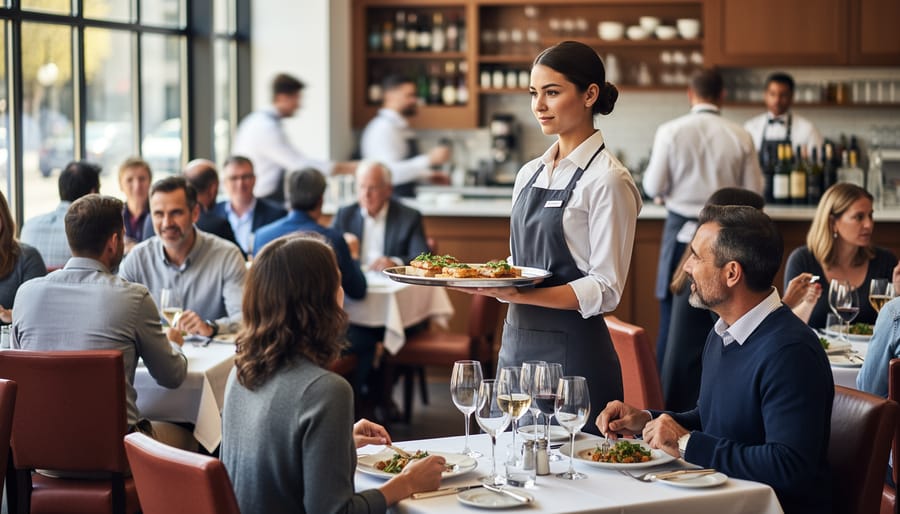
Where Self-Management Shapes the Hospitality Experience
Self-management is not confined to one corner of the restaurant. It travels through every role, and each one tests it differently.
- Host stand: Greeting a long queue with warmth while a table runs late, and never letting the wait show on your face.
- Kitchen pass: Calling a correction in a clear, level voice during peak service rather than letting frustration ripple down the line.
- Wine service: Receiving a guest’s skepticism about a pairing with curiosity, then guiding the conversation back to pleasure.
- Private events: Absorbing a shifted timeline or a surprise headcount and rearranging the evening without the host sensing the scramble.
- Management: Setting the emotional temperature of the floor, because a team mirrors the calm or the tension of whoever leads it.
On the floor, composure turns a complaint into an opening. A server who hears a guest’s displeasure without defensiveness can acknowledge it, fix it, and often leave the table more loyal than before. Behind the pass, the same discipline keeps a brigade communicating in short, respectful bursts when tickets stack up. Tempers raised in a hot kitchen rarely stay in the kitchen.
The craft extends beyond the nightly service. In settings such as culinary workshops, where instruction, timing and a roomful of curious guests all converge, a host’s steadiness decides whether the experience feels effortless or frantic. The same holds for wine and cheese soirées, where a poured glass, a graceful introduction and an unhurried pace depend on the person behind the table staying settled.
The downstream effects are easy to trace. Guests who feel looked after rate the evening higher and return. Staff who work under leaders that model self-management tend to feel respected rather than rattled, which supports retention in an industry where turnover is costly. Over time, these small, invisible choices accumulate into something a premium dining establishment cannot buy: a reputation for being a place where the evening simply goes well.
Common Questions About Self-Management
Can self-management be learned?
Yes. It is a practiced skill rather than a fixed trait, and emotional intelligence training is one route teams use to build it.
How is it different from self-awareness?
Self-awareness is noticing what you feel. Self-management is choosing how you respond once you have noticed it.
Does it mean hiding emotions?
No. It means acknowledging a feeling without letting it dictate your behavior, which is the opposite of a forced smile.
How do hospitality teams develop it?
Through pre-service briefings, rehearsed responses to difficult moments, and leaders who model composure when a service goes sideways.
You can recognize it in a team member by how they behave when the evening turns. They stay measured during a delayed course, adjust without fuss to a change of plan, and own a mistake plainly. The same steadiness shows up in event work, whether a banquet or something as delicate as a Valentine’s picnic, where weather and timing rarely cooperate.
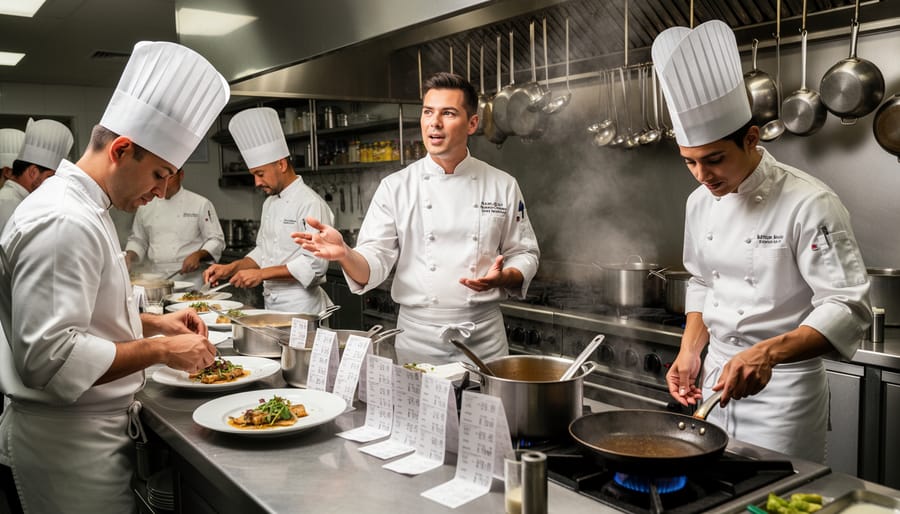
Back to that Saturday-evening dining room: the ticket rail full, a course running late, the room humming at full volume. What strikes me now is how little of the evening’s success was visible. Nobody at the tables saw the server take a breath before approaching an impatient guest, or the chef reframe a setback into a quick, quiet adjustment. They simply felt looked after.
That is self-management at its finest. It is not suppression and it is not performance. It is the deliberate choice, made again and again under pressure, to respond with care rather than react on impulse. Within Emotional Intelligence in Hospitality Management, it is the skill that lets every other talent shine: the sommelier’s generosity, the kitchen’s precision, the host’s warmth.
The next time a dinner in Toronto unfolds without a single jarring note, consider what you did not notice. Composure rarely announces itself, yet it is woven into every memorable evening out.