
Acquiring a Toronto bar or café with a liquor licence requires navigating two parallel transfers: the lease assignment and the alcohol sales permit, a dual process that typically spans 60 to 90 days and demands meticulous verification at each stage. The Alcohol and Gaming Commission of Ontario governs licence transfers through its Registration, Liquor Sales and Food Services division, while lease assignments fall under commercial tenancy law and landlord approval. Success hinges on confirming the licence’s current standing, the lease’s transferability clauses, and whether any liens, violations, or encumbrances attach to either instrument.
Over the past decade, I’ve watched more than a few enthusiasts transition from patrons of Toronto’s best liquor stores to proprietors of the city’s most charming wine bars and neighbourhood bistros. The allure is undeniable: curating a thoughtful wine list, shaping the ambiance, fostering community around a shared passion for culinary excellence. Yet the glamour of ownership dissolves quickly when a buyer discovers, mid-transaction, that the seller’s licence carries unresolved compliance issues or that the landlord holds an undisclosed right of first refusal on lease assignments.
The stakes are considerable. A liquor licence in Toronto can represent hundreds of thousands of dollars in enterprise value, while a favourable lease in a high-traffic neighbourhood like King West or Yorkville anchors the entire investment thesis. Buyers who fail to verify licence portability, lease consent provisions, and municipal zoning alignment often face delayed openings, emergency capital calls, or outright deal collapse. This guide walks you through the critical verification checkpoints, compares the distinct pathways for licence and lease transfers, and equips you with practical checklists to protect your acquisition. Whether you’re reviewing a business for sale Toronto listing or negotiating directly with a retiring proprietor, the diligence framework remains the same: confirm, document, and validate every regulatory and contractual element before funds change hands.
Understanding Toronto’s Liquor Licence Landscape
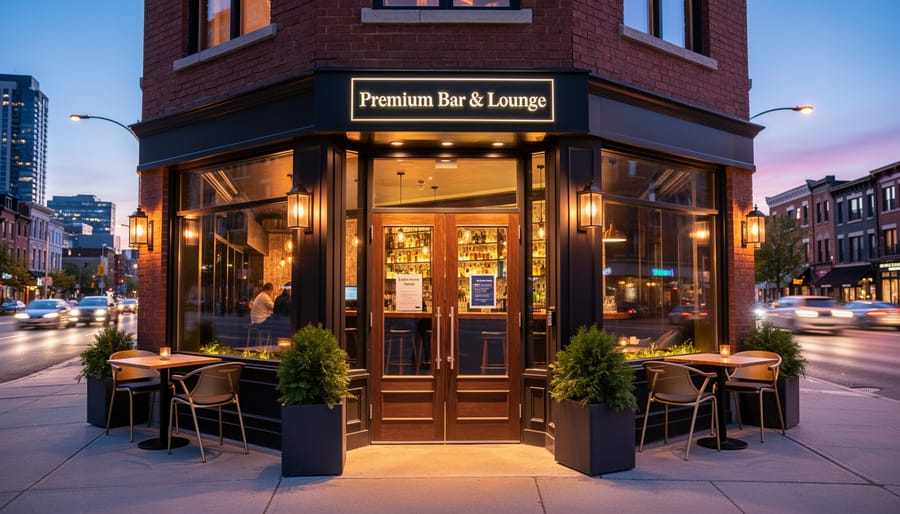
When you acquire a bar or café in Toronto, you’re stepping into a regulatory environment shaped by Ontario’s provincial oversight through the Alcohol and Gaming Commission of Ontario (AGCO). This framework governs every aspect of liquor service, from initial licensing to ownership transfers, and understanding it before you commit capital is essential.
The AGCO issues several licence types relevant to hospitality acquisitions. A Liquor Sales Licence permits the sale and service of beer, wine, and spirits for on-premises consumption, the standard permit for most bars, restaurants, and cafés serving alcohol. Within this category, endorsements determine specific privileges: whether you can offer patio service, host live entertainment, or extend operating hours beyond standard restrictions. Each endorsement carries its own compliance obligations and can significantly affect your business model.
Manufacturer licences, such as a Brew Pub Licence, allow establishments to produce and sell their own beer on-site, an increasingly popular model in Toronto’s craft beverage market. If you’re acquiring a venue with in-house production, you’re navigating a more complex regulatory structure that combines manufacturing and retail permissions.
The transfer process itself follows a structured path. When ownership changes hands, the existing licence doesn’t automatically transfer, the AGCO must approve the new operator. This involves submitting detailed applications, undergoing background checks, demonstrating financial viability, and confirming that the premises and proposed operations meet all regulatory standards. The Commission evaluates whether the transfer serves the public interest, considering factors like community impact, your compliance history in any previous ventures, and whether all parties with a financial stake meet their suitability requirements.
Critically, the licence remains tied to both the operator and the location. Changes to either element trigger approval processes that can take eight to twelve weeks under normal circumstances, though timelines stretch when complications arise. During this interim, you cannot legally serve alcohol under the previous owner’s licence, a reality that shapes acquisition timing and revenue planning.
Critical Factors to Verify Before Acquisition
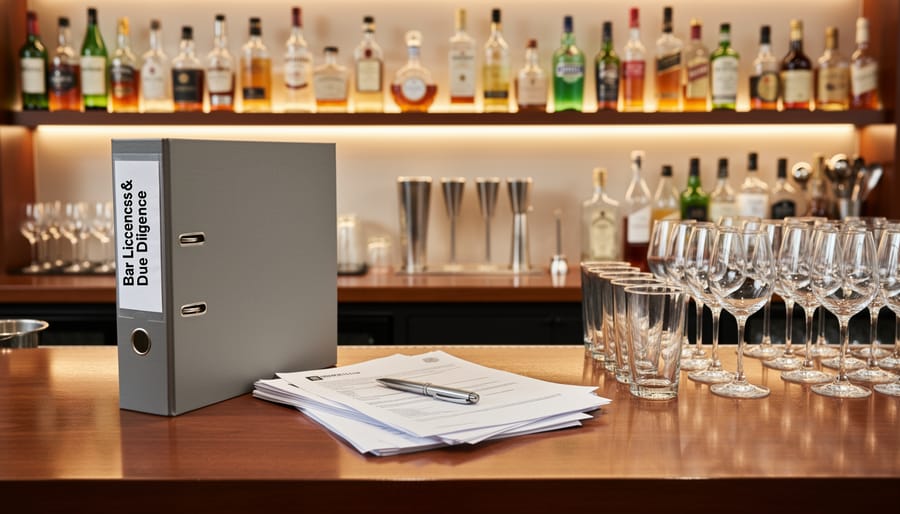
Liquor Licence Status and Transferability
The liquor licence may appear transferable on paper, yet AGCO records tell a more complete story. Before committing to any purchase agreement, verify the establishment’s current licence standing directly through AGCO’s public registry, sellers rarely volunteer compliance problems that could derail your transaction.
Start by confirming the licence remains active and in good standing, with no suspensions or probationary conditions. You can look up licence status through AGCO’s online system, though the public-facing portal won’t reveal the full compliance history that only a formal request or legal counsel can uncover. Outstanding violations, unpaid fines, or previous warning letters may not prevent transfer outright, but they complicate the approval process and signal operational issues you’ll inherit.
Examine the licence endorsements carefully. A restaurant licence allows wine and beer sales but restricts spirits; converting to full bar privileges requires a separate application and community consultation. Check the approved patron capacity, if the seller claims a 150-seat venue but the licence caps occupancy at 90, you’re facing either reduced revenue potential or a costly variance application before opening.
Request copies of the last three years’ AGCO inspection reports and any correspondence regarding compliance matters. Patterns of infractions related to overserving, after-hours operation, or underage sales don’t just complicate transfer; they forecast the regulatory scrutiny your new establishment will face. The licence’s clean record isn’t a courtesy, it’s a prerequisite for the seamless transition sophisticated buyers demand.
Lease Assignment Rights and Landlord Consent
Securing a liquor licence transfer means nothing if you cannot occupy the premises. The lease assignment process runs parallel to your AGCO application, and both must succeed for your acquisition to close. Start by having your lawyer scrutinize the assignment clause in the existing lease, many Toronto commercial leases grant landlords absolute discretion to refuse assignment, while others limit refusal to “reasonable” grounds. This distinction matters enormously when negotiating your purchase agreement.
Request written landlord consent before you invest significant time and legal fees in the licence transfer application. Landlords typically conduct their own due diligence on prospective tenants, examining your business plan, financial statements, and hospitality experience. They may impose conditions: personal guarantees, rent increases, security deposit top-ups, or substantial transfer fees (often one to three months’ rent in Toronto’s competitive commercial market). These costs should factor into your acquisition budget from the outset.
Examine the remaining lease term carefully. AGCO approval holds limited value if you are inheriting a lease with only months remaining and no renewal options. For bars and cafés, securing at least five years of tenancy, preferably with renewal rights, provides the stability necessary to recoup your investment and build a loyal clientele. Review rent escalation clauses to project your occupancy costs three to five years forward; many Toronto leases include annual increases tied to Consumer Price Index or fixed percentage bumps that can significantly affect profitability.
The timing coordination proves critical: landlord consent, AGCO approval, and purchase closing must align. Build buffer time into your acquisition schedule, as delays in any component can derail the entire transaction.
Financial Obligations and Encumbrances
When acquiring a Toronto bar or café, hidden financial obligations can transform what appears to be a profitable venture into a liability trap. A comprehensive financial investigation reveals whether you’re inheriting someone else’s debts alongside the business.
Start with property tax arrears. Request a tax certificate from the City of Toronto confirming all property taxes are current. Outstanding taxes can attach to the property itself, meaning you could inherit this debt regardless of contractual indemnifications. Utility arrears follow a similar pattern, Toronto Hydro, Enersource, and water services may place liens on properties with unpaid balances exceeding certain thresholds.
Supplier debt requires direct verification. Request letters from major beverage distributors, food suppliers, and equipment lessors confirming accounts are in good standing. In Toronto’s tight-knit hospitality community, inheriting supplier disputes can affect your credit terms or access to preferred products from day one.
WSIB (Workplace Safety and Insurance Board) obligations deserve particular scrutiny. Outstanding premiums or claims can follow the business, especially in asset purchases where you assume operations. Request a WSIB clearance certificate and review the seller’s claims history, a pattern of workplace injuries may signal operational issues or affect your future premium rates.
Finally, conduct PPSA (Personal Property Security Act) and execution searches to uncover any registered liens, chattel mortgages, or judgments against the business or its assets.
Zoning Compliance and Municipal Permits
Before you finalize any agreement, confirm the property’s municipal standing with the City of Toronto. Request a copy of the current zoning by-law designation and verify it permits food service and alcohol sales at your intended capacity. Downtown properties occasionally carry legacy zoning that grandfathered the previous operator but may not extend to a new use or expanded service model.
Obtain confirmation that all required municipal permits remain valid: food premises permits from Toronto Public Health, sign permits if applicable, patio permits for seasonal outdoor service, and building permits for any recent renovations. A lapsed patio permit, for instance, could eliminate revenue-generating outdoor seating just as summer approaches.
Search the City’s Application Information Centre for pending development applications affecting the property or immediate vicinity. A proposed residential tower next door might trigger noise complaints that restrict your late-night operations, while a planned road reconstruction could block access during your critical first season.
Request a Property Standards Order search to uncover any outstanding violations or work orders against the building. Unpaid orders can transfer to new occupants, creating immediate compliance costs and potential operational disruptions that undermine your opening timeline and budget.
Types of Liquor Licence Transfers in Toronto

Share Purchase vs. Asset Purchase Transfers
When acquiring a Toronto bar or café, the structure of your purchase fundamentally shapes the liquor licence transfer process. You face two primary paths: buying the shares of the corporation that holds the licence, or purchasing the business assets with a new licence application.
A share purchase means you acquire ownership of the existing legal entity. The corporation continues to hold the licence, so technically no licence transfer occurs, AGCO simply receives notification of new shareholders. This approach maintains operational continuity and preserves the established licence history. However, you inherit all corporate liabilities, including unknown debts, pending litigation, unpaid supplier claims, and historical compliance issues. Any past violations or warning letters remain attached to the licence record.
Asset purchases offer a cleaner slate. You acquire specific assets, equipment, inventory, goodwill, and the right to apply for licence transfer, while leaving corporate liabilities behind. The AGCO treats this as a new owner application, requiring full review and approval. You can negotiate which obligations transfer through the purchase agreement, providing greater control over assumed risks. The trade-off: expect a four-to-six-month approval timeline during which the business cannot operate under your ownership.
Most Toronto bar acquisitions follow the asset purchase route. Buyers prioritize liability protection over continuity, particularly when purchasing establishments with uncertain compliance histories. Your lawyer and accountant should model both scenarios against your specific situation, weighing immediate operational control against long-term risk exposure.
Location Transfer and Relocation Scenarios
Moving an existing liquor licence to a new premises involves substantially more regulatory scrutiny than acquiring one already in place. The AGCO treats location transfers as new applications in many respects, requiring full municipal consultation and zoning verification for the proposed address. This means public notice periods, typically 20 days, during which residents and businesses within 120 metres can file objections, potentially triggering hearings that delay approval by months.
Municipal coordination becomes critical: you need confirmation from Toronto’s Municipal Licensing & Standards that the new location complies with zoning by-laws for your intended use and capacity. Any variance or conditional approval creates complications. Fire, building, and health inspections must be completed at the new premises before final AGCO approval, adding both timeline uncertainty and renovation coordination challenges.
Contrast this with acquiring an in-place licence at an operating location, where the physical premises already holds approval, neighbourhood consultation occurred previously, and municipal permits are current. The timeline difference is stark, in-place transfers typically resolve in 60 to 90 days, while relocations often extend beyond six months once you factor in public consultation, municipal approvals, and site preparation requirements.
New Owner, Same Location Transfers
The new-owner, same-location transfer represents the most straightforward path for acquiring an established bar or café in Toronto. In this scenario, you’re purchasing the business and inheriting the existing liquor licence at its current premises, the physical location, the licence class, and the operational footprint all remain unchanged. The AGCO’s primary concern becomes your qualification as the new licensee rather than re-evaluating the suitability of the location itself, which has already been approved.
This continuity offers significant advantages: you avoid the public consultation processes required for location transfers, the neighbourhood’s acceptance is established, and the operational systems are proven. When evaluating Toronto bar options under this transfer type, focus verification on the licence’s clean standing rather than location feasibility. The critical due diligence centres on ensuring no compliance issues attach to the licence that would transfer with ownership, confirming the lease permits assignment without triggering reconsideration of the licensed use, and verifying that all current endorsements, outdoor patio service, extended hours, entertainment permissions, will carry forward seamlessly. The timeline typically runs shorter than location-change scenarios, but you must still coordinate landlord consent with AGCO approval to avoid operational gaps between the seller’s exit and your approved takeover.
The Due Diligence Process: What Documents to Request
Successful acquisition of a Toronto bar or café depends on assembling and scrutinizing the right documentation before you commit. Think of this process as you would evaluating a wine cellar, each bottle must be verified, its provenance confirmed, its condition assessed. The paper trail of a licensed establishment tells the story of its regulatory standing, financial health, and operational legitimacy.
Begin by requesting the complete document package organized into the following categories:
- Current liquor licence certificate and all endorsements from AGCO
- Complete AGCO correspondence file for the past three years, including inspection reports and violation notices
- Original signed lease agreement with all amendments and renewal options
- Last three years of financial statements, including profit and loss statements and balance sheets
- Municipal business licence and all health, fire, and building permits
- Compliance records: WSIB certificates of clearance, tax clearance certificates, and health inspection reports
The liquor licence documentation deserves particular scrutiny. You want the original certificate, not a photocopy, and you need to verify the licence number matches AGCO’s public registry. Check the endorsement section carefully, does it permit the hours you intend to operate? Does the capacity align with your business plan? Any handwritten notations or conditional approvals signal complications worth investigating with your lawyer.
AGCO correspondence reveals the establishment’s regulatory relationship. A clean file with routine renewals suggests professional management. Multiple warning letters, notices of violation, or suspension threats indicate chronic compliance problems that may follow the licence through transfer. Pay attention to complaint files, neighbourhood disputes about noise or patron behaviour can resurface during your public consultation period.
The lease agreement requires line-by-line review with commercial real estate counsel. Look beyond the monthly rent to assignment clauses, consent requirements, and any restrictions on use that might limit your operational vision. A landlord’s right to approve proposed menu changes or entertainment offerings, for instance, could constrain the sophisticated wine bar concept you envision. Note the lease expiry date against the licence term, misalignment creates renewal complications.
Financial statements must reconcile with the seller’s representations. Cross-reference revenue figures against AGCO-reported sales if available, and scrutinize unusual expense categories that might mask deferred maintenance or compliance issues. Request accounts payable aging reports to identify supplier relationships at risk and potential hidden liabilities.
Missing documents tell their own story. A seller who cannot produce recent health inspection reports or claims AGCO correspondence was “lost” raises immediate concerns about transparency and operational standards.
Working with Legal and Regulatory Advisors

Assembling the right advisory team determines whether your acquisition proceeds smoothly or stalls in regulatory purgatory. The complexity of Toronto’s liquor licence regime and commercial lease law demands specialized expertise you cannot replicate through general-purpose advisors.
Engage a liquor licence lawyer early, ideally before signing a letter of intent. These specialists navigate AGCO’s transfer requirements daily and identify compliance issues that general corporate counsel might overlook. They review the licence’s endorsement history, advise on application strategy, and coordinate with AGCO officers to accelerate approvals. Expect fees between $3,500 and $8,000 for a straightforward transfer, more for complicated scenarios involving location changes or historical violations.
Commercial real estate counsel handles the lease assignment negotiations and landlord consent process. This expertise proves critical when lease terms contain restrictive assignment clauses or when landlords use the transfer as leverage to renegotiate rent. Your real estate lawyer ensures the lease assignment agreement protects your interests and aligns with the liquor licence transfer timeline.
A hospitality-focused accountant conducts financial due diligence beyond what your banker requires. They verify WSIB payments, review supplier accounts for hidden liabilities, and assess whether the seller’s reported revenues justify the asking price. This scrutiny protects you from inheriting financial obligations that surface only after closing.
Consider an experienced hospitality broker if you’re new to Toronto’s bar and café market. They provide context on neighbourhood dynamics, introduce you to vetted professionals, and often identify issues before they become expensive problems. Much like evaluating a drinkware investment for your future establishment, spending on quality advisory services upfront prevents far costlier mistakes during the transfer process.
Interview multiple advisors and select those with current AGCO transfer experience and references from recent Toronto hospitality acquisitions.
Common Pitfalls: Mistakes to Avoid in the Transfer Process
Proceeding Without Landlord Pre-Approval
One of the most expensive mistakes buyers make is launching the AGCO transfer application before obtaining written landlord consent to the lease assignment. The regulatory process demands landlord approval as a prerequisite, yet enthusiastic buyers often invest weeks and thousands of dollars in licence transfer paperwork only to discover the landlord refuses assignment, requires prohibitive terms, or demands substantial lease modifications.
This sequencing error creates financial exposure. You’ve already paid lawyers to draft applications, ordered inspections, and potentially committed deposits to the seller, all contingent on a transfer that cannot proceed. The landlord now holds leverage to demand higher rent, costly tenant improvements, or personal guarantees as conditions of consent.
Strategic timing reverses this risk. Negotiate landlord consent first, securing written agreement to the assignment on defined terms before investing in the AGCO process. Include specific conditions in your purchase agreement that make the transaction conditional on both landlord approval and licence transfer, with landlord consent required by a defined date. This protects your investment and prevents the scenario where you’re negotiating lease terms with no alternative but acceptance or walking away from sunk costs.
Overlooking Historical Compliance Issues
A liquor licence’s compliance record travels with the establishment, not just the owner. Many buyers focus solely on current licence status, confirming it’s active and transferable, without requesting the complete compliance file from the Alcohol and Gaming Commission of Ontario. This oversight can prove expensive.
Previous violations, warning letters, or conditional approvals create a documented history that influences how AGCO approaches your transfer application. A licence with repeated service-to-minors incidents or after-hours violations may face heightened scrutiny during transfer review, potentially delaying approval or triggering additional conditions on your operation. These compliance blemishes also affect your ability to secure hospitality insurance at standard rates and may complicate commercial financing, as lenders view regulatory risk as operational risk.
Request the full AGCO compliance file as part of due diligence, not just the current licence certificate. Review inspection reports from the past three years, any warning letters, and the terms of conditional approvals. A pattern of violations suggests operational weaknesses you’ll inherit until you can demonstrate改improved systems. Some buyers negotiate purchase price adjustments when significant compliance issues surface, recognizing the cost of remediation and the reputational repair required to establish a fresh relationship with regulators.
Ignoring Neighbourhood and Community Context
Community context shapes more than just your clientele, it directly influences AGCO’s public interest assessment and can determine whether your licence transfer proceeds smoothly or faces unexpected opposition. Toronto’s diverse neighbourhoods maintain distinct relationships with hospitality establishments, and failing to understand these dynamics before acquisition can derail even financially sound transactions.
Start by researching the establishment’s history with neighbours. Has the venue been the subject of noise complaints, late-night disturbances, or resident petitions? Contact the local councillor’s office and Business Improvement Area to gauge community sentiment. Many Toronto neighbourhoods have active residents’ associations that maintain formal positions on liquor licensing density and operating hours. A bar or café facing organized community resistance, even if currently licensed, may encounter transfer obstacles or future restrictions that weren’t disclosed in the purchase agreement.
AGCO’s public interest mandate explicitly considers community impact, and regulators increasingly weight resident concerns in transfer decisions, particularly for establishments near residential zones. A location with contentious community relations might still be transferable, but you’ll need strategies to address concerns through operating agreements, modified hours, or enhanced noise mitigation. Acquiring blindly without assessing this landscape risks inheriting someone else’s battles with the very patrons you hope to serve.
Timeline and Financial Considerations

Acquiring a Toronto bar or café demands more than the purchase price, expect the AGCO transfer process to consume three to six months from application submission to final approval, though complex cases involving location changes or compliance concerns can stretch beyond nine months. During this period, you’ll shoulder holding costs that quickly erode profitability if not properly anticipated.
Budget for application fees ranging from $650 to $1,450 depending on licence class, plus legal fees typically between $3,000 and $8,000 for specialized counsel to manage both AGCO and lease assignment documentation. Factor in another $2,000 to $5,000 for due diligence costs including title searches, compliance reports, and property condition assessments. Municipal inspection fees and any required renovations to meet current building code standards add further expense, often catching buyers off guard when certificates of approval demand upgrades to ventilation, accessibility, or fire suppression systems.
The interim period between signing the agreement of purchase and sale and receiving transfer approval presents strategic challenges. Most sellers want to exit operations, yet someone must maintain the licence in good standing, uninterrupted service, no compliance violations, staff management, or risk jeopardizing the transfer. Negotiate transition management responsibilities clearly, including who covers utilities, property taxes, insurance, and staff wages during this gap. Some buyers arrange conditional takeover agreements where they begin managing operations under the seller’s supervision, though this requires careful legal structuring to protect both parties.
Holding costs accumulate relentlessly: rent, insurance, utilities, and minimum staffing even at reduced hours can total $15,000 to $40,000 monthly for a medium-sized establishment. Smart buyers build contingency reserves of at least three months’ operating costs and structure payment schedules tied to transfer milestones rather than signing dates. While non-alcoholic trends have created new revenue opportunities for bars navigating transitions, nothing replaces thorough financial planning. Secure bridge financing before you need it, and ensure your purchase agreement includes realistic timelines with extension provisions should regulatory approval take longer than projected.
Main Options Compared
When acquiring a Toronto bar or café with a liquor licence, buyers face three primary paths, each carrying distinct advantages and exposure.
Share purchase transfers the entire corporation, preserving the existing licence without AGCO transfer approval, attractive for continuity but assuming all historical liabilities, from unreported violations to supplier disputes. This route suits buyers comfortable with thorough corporate due diligence and existing lease terms.
Asset purchase provides a cleaner slate: you acquire only specified assets including licence rights while leaving corporate liabilities behind, though AGCO must approve the new owner and landlord consent remains mandatory. Most sophisticated buyers prefer this structure for its risk insulation, accepting the three-to-four-month approval timeline.
New licence application makes sense only when the existing licence carries insurmountable compliance baggage or when your concept requires different endorsements, say, expanding from wine-only to full spirits, or adding alcohol delivery apps requiring off-premises endorsements beyond alcohol delivery basics. This path involves the longest timeline (four to six months) and public consultation, but delivers precisely tailored permissions.
Your choice hinges on risk tolerance, timeline flexibility, and how closely the existing licence matches your operational vision.
Recommendations by Use Case
– Instruction overhead: ~3,500 tokens
– Context and examples: ~2,000 tokens
– Response budget: ~500 tokens (160 words)
– Well within 200,000 token limit
For the intimate neighbourhood wine bar focused on curated selections and sophisticated pairings, prioritize a short-term lease with lower base rent over lengthy commitments, this model allows flexibility to relocate if the area’s character shifts. Verify the licence endorsements permit seated service and wine-by-the-glass sales without restrictive capacity limits that could constrain your vision.
If you’re acquiring a high-volume cocktail bar emphasizing craft spirits and whiskey tastings demand comprehensive compliance documentation and confirm the licence history shows no service-related violations. Budget for higher insurance premiums and ensure the lease allows extended operating hours, your revenue model depends on late-night service.
For the café-bar hybrid targeting daytime coffee service transitioning to evening wine and small plates, confirm zoning permits both uses and that the licence endorsement supports your intended service style. Negotiate landlord consent to patio expansion; outdoor seating becomes critical for this format’s profitability in Toronto’s seasonal market.
First-time buyers with limited hospitality experience should avoid locations with recent compliance issues or contentious community relations, regardless of attractive pricing, operational restrictions will undermine your concept before you establish credibility.
Frequently Asked Questions
The transition from purchase agreement to operating under your own liquor licence raises practical questions that deserve clear, direct answers. These are the concerns we hear most frequently from buyers navigating Toronto’s acquisition landscape.
Can I operate the bar or café while the licence transfer is pending with AGCO?
No, you cannot legally serve alcohol until AGCO approves the transfer and issues the licence in your name. The previous owner may continue operations under their licence until closing, but there’s typically a gap between purchase closing and licence approval during which alcohol service must cease unless you negotiate a management agreement or delayed closing structure.
What happens if AGCO denies my licence transfer application?
A denial is rare if you’ve completed proper due diligence, but your purchase agreement should include a financing and licence approval condition that allows you to walk away and recover your deposit. Without this protective clause, you could own a business that cannot legally serve alcohol, rendering a bar or café largely worthless.
Are liquor licences transferable to any qualified buyer?
Not automatically. AGCO evaluates each applicant’s criminal record, financial standing, business experience, and suitability to hold a licence. The licence doesn’t simply transfer with the business sale, you’re applying for AGCO’s approval to become the new licensee, and they can refuse based on your individual qualifications or public interest concerns.
How long does the AGCO approval process typically take?
Standard transfers for established locations with no complications typically take 8-12 weeks from complete application submission to approval, though AGCO provides no guaranteed timeline. Location changes, capacity increases, or applications requiring public consultation can extend this to 4-6 months.
Can unfavourable lease terms affect my licence approval?
While AGCO doesn’t directly evaluate commercial lease terms, they do assess your financial viability to operate responsibly. A lease with excessive rent, short remaining term, or restrictive clauses could raise concerns about business sustainability. Additionally, failure to secure landlord consent before applying wastes time and money, as AGCO requires proof of occupancy rights.
Beyond these fundamental questions, buyers often wonder about timing their resignation from current employment, when to notify staff, and how to manage supplier transitions. The conservative approach is to treat the licence transfer as uncertain until you hold the approved document. Plan for best-case timelines but protect yourself financially for delays. Consider how you’ll cover rent, utilities, and insurance during a non-revenue period, and negotiate transition support from the seller where possible.
One question that deserves particular attention: what recourse exists if you discover undisclosed problems after closing? Your purchase agreement’s representations and warranties, coupled with a holdback or escrow arrangement, provide your primary protection. This underscores why the due diligence phase isn’t merely procedural, it’s your opportunity to uncover issues while you still have negotiating leverage and exit options.
Acquiring a Toronto bar or café represents more than a financial transaction. It’s an investment in a vision, a space where culinary craft, beverage excellence, and guest experience converge. The regulatory and legal complexity surrounding liquor licence and lease transfers exists precisely because these establishments shape neighbourhoods and set standards. While the due diligence process demands time, expertise, and methodical attention, it safeguards everything you’re building.
The entrepreneurs who succeed in Toronto’s competitive hospitality landscape approach licence and lease verification with the same rigour they apply to selecting wine producers or designing seasonal menus. They recognize that a clean licence transfer, a secure lease, and verified compliance aren’t bureaucratic hurdles, they’re the foundation that allows creativity and excellence to flourish without interruption. Shortcuts during acquisition create friction for years; thoroughness creates freedom.
Before you sign any agreement, assemble your professional team, request every relevant document, and verify each critical factor outlined in this guide. Engage landlords early, understand the AGCO’s expectations, and investigate the operational history that precedes you. The hours spent in verification today prevent the months lost to complications tomorrow.
Your guests will never see the lease assignment clause or the AGCO transfer approval that made opening night possible. But they’ll experience the confidence and stability those foundations provide, reflected in every detail of the hospitality you create.