
Toronto’s gastronomic festival season operates on a predictable May-through-September calendar, with marquee events anchored to summer weekends when outdoor venues can accommodate the crowds and producer schedules align with harvest cycles. The timing isn’t arbitrary. Festival organizers cluster dates around long weekends and seasonal ingredient peaks, which means the most compelling experiences unfold between late spring’s first market bounty and early autumn’s final harvests.
I’ve attended enough of these gatherings to recognize the pattern. The calendar opens with May’s specialty showcases, Toronto Halal Bites Festival claims Nathan Phillips Square from May 15 to 17, 2026, setting the tone for what follows, and builds momentum through June’s Island Eats at Mel Lastman Square (June 13 to 14) before July and August deliver the headliners. Taste of Lawrence runs July 3 to 5, offering free admission and extended Friday evening hours that draw the after-work crowd alongside weekend explorers. By August and September, niche celebrations like Taste The Caribbean (August 2 and September 6 at St. Lawrence Market, 10:00 AM to 5:00 PM) round out the season with focused culinary narratives.
These festivals represent more than convenient eating opportunities. They serve as live galleries for Toronto’s evolution from street food to fine dining compressed into temporary installations where technique, terroir, and cultural tradition converge. Understanding when they occur, and why those dates matter, transforms casual attendance into strategic engagement with the city’s most accomplished purveyors and emerging talent.
At a Glance: Toronto’s Festival Calendar
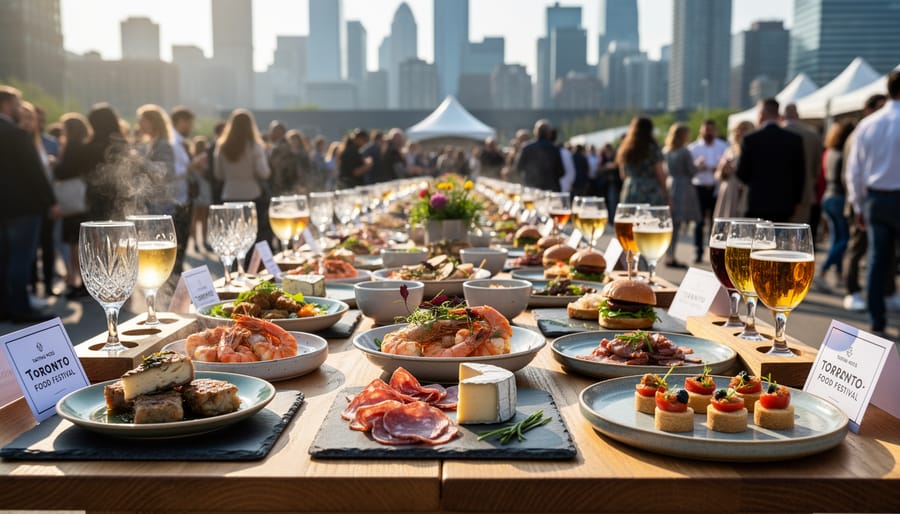
Toronto’s premium gastronomic festivals cluster into a predictable window, with May launching the season and September closing it. If you are planning a culinary-focused visit, concentrate on the period from late spring through early fall, every major event falls within these months, when outdoor venues can showcase the city’s diverse food traditions without the constraints of winter weather.
Spring opens with the Toronto Halal Bites Festival, May 15-17 at Nathan Phillips Square. This three-day event introduces the season with a focus on halal gastronomy, setting the tone for the months ahead. By mid-June, Island Eats arrives at Mel Lastman Square for June 13-14, bringing a travel-inspired culinary perspective across a full weekend.
July reaches peak density. Taste of Lawrence runs July 3-5, with extended evening hours on Friday (6pm, 11pm) and Saturday (11am, 11pm), then an abbreviated Sunday (11am, 8pm). Free admission removes the barrier to exploring this neighbourhood-focused celebration, allowing you to sample without committing to advance ticket purchases.
August and September shift to a different rhythm. Taste The Caribbean presents two single-day Sunday experiences, August 2 and September 6, at St. Lawrence Market, each running 10am to 5pm. This compressed format concentrates vendor offerings and visitor crowds into a shorter window, requiring more strategic planning if you want to experience the full range without overwhelming queues.
The Halal Bites Festival dates and Island Eats festival dates are confirmed for 2026, giving advance planners the certainty needed to coordinate travel and dining reservations around these anchor events. The calendar shows clear preferences: multi-day formats dominate the early summer, while late-season festivals favour compact, intensive presentations.
The Peak Windows: When Toronto’s Culinary Scene Takes to the Streets
Spring Launches: May’s Cultural Food Celebrations
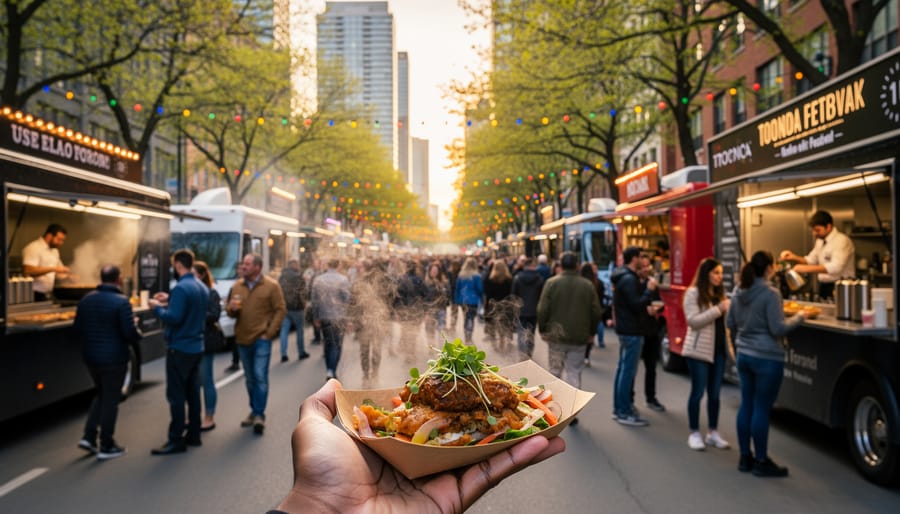
May marks the threshold where Toronto’s gastronomic festival season awakens from winter dormancy. The timing is intentional: spring ingredients reach their peak just as the city’s diverse communities begin their calendar of cultural celebrations. This convergence creates festivals that showcase both seasonal bounty and culinary heritage.
The Toronto Halal Bites Festival, running May 15-17, 2026 at Nathan Phillips Square, exemplifies this spring philosophy. I attended the 2024 edition on a Friday evening when the square was filled with the scent of grilled zaatar chicken and saffron-infused rice. What distinguished it from summer festivals was the presence of ingredients at their seasonal prime, spring lamb prepared according to traditional halal practices, early-season herbs brightening Middle Eastern and South Asian dishes, and a focus on lighter preparations suited to the transitional weather.
Spring festivals benefit from cooler temperatures that make outdoor tasting comfortable without the intensity of July heat. The extended daylight allows programming that stretches into evening without the early darkness of fall events. Vendors can showcase delicate preparations that might wilt under August sun, and attendees can sample multiple offerings without palate fatigue.
These early-season events also serve a curatorial function, introducing culinary traditions that may be less familiar to Toronto’s mainstream dining audience. The halal gastronomy featured in May’s festival calendar represents sophisticated cooking techniques and ingredient sourcing that deserve the same attention as the city’s celebrated Italian or French establishments.
High Summer: June Through August
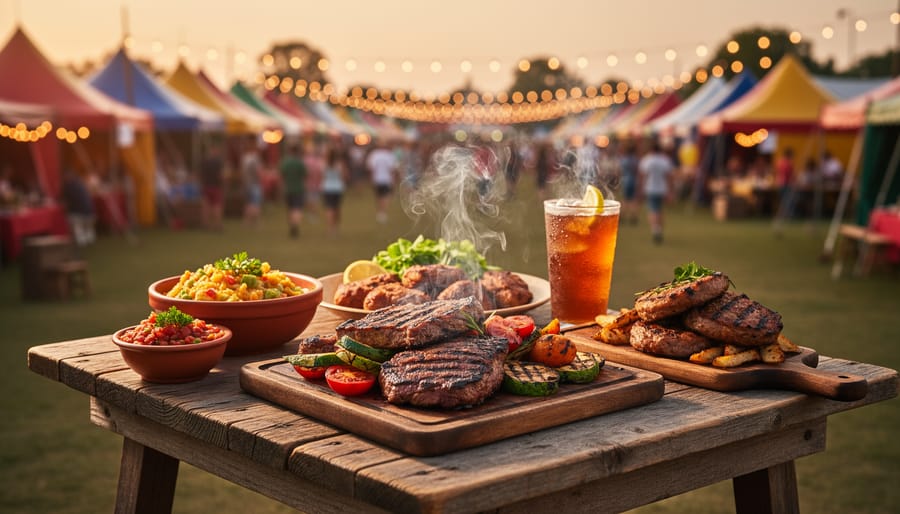
High summer transforms Toronto’s culinary landscape into an open-air theater of gastronomic celebration. Between mid-June and early August, the city hosts its most concentrated sequence of premium food festivals, each leveraging the extended daylight and warm evenings that make outdoor dining a genuine pleasure rather than a logistical compromise.
The season opens with Island Eats Food and Travel Festival at Mel Lastman Square on June 13-14, 2026. This weekend event captures the moment when patios are fully operational and diners crave the interplay between sophisticated cuisine and summer weather. I’ve found mid-June festivals benefit from that early-season enthusiasm, crowds arrive eager but not yet festival-fatigued, and the temperature typically hovers in that comfortable range before July’s humidity settles in.
Taste of Lawrence Toronto 2026, running July 3-5, exemplifies how extended hours shape the premium festival experience. The Friday evening launch (6pm-11pm) attracts professionals freed from workweeks, creating an urbane atmosphere distinct from the Saturday and Sunday sessions (11am-11pm and 11am-8pm respectively). The free-admission model democratizes access while maintaining culinary standards through careful vendor curation. During a previous July visit, I noticed how the staggered schedule allows both leisurely afternoon grazing and after-dark dining, a flexibility that suits different approaches to festival exploration.
August’s opening weekend brings Taste The Caribbean Food Festival to St. Lawrence Market on August 2, offering a focused Sunday session from 10am to 5pm. This single-day format concentrates the experience, and the historic market location adds architectural context that enhances the culinary narrative. The condensed timeframe demands strategic attendance but rewards it with intensity.
What Influences Festival Timing and Availability

Toronto’s gastronomic festival calendar emerges from a complex interplay of practical constraints and cultural considerations. Understanding these influences reveals why certain events claim specific weekends while others compress their ambitions into single-day celebrations.
Weather stands as the most inflexible determinant. Toronto’s late spring through early fall window provides the stable conditions outdoor festivals require, but even within that span, organizers face delicate calculations. A May festival like Toronto Halal Bites risks cool evenings that discourage lingering over signature dishes while early September dates skirt the possibility of sudden temperature drops that send attendees home before premium tastings conclude. The extended hours at Taste of Lawrence, running until 11pm on Friday and Saturday, reflect confidence in July’s warmth sustaining crowds after sunset, a calculation that wouldn’t hold in shoulder seasons.
- Weather Window
- The narrow May-through-September period when Toronto’s climate supports outdoor culinary events without risk of extreme cold or precipitation disrupting multi-day programming.
- Cultural Calendar Alignment
- Strategic positioning around religious observances, national holidays, and community celebrations that either provide built-in audiences or create competing demands on target attendees.
- Venue Availability
- Access to signature spaces like Nathan Phillips Square, Mel Lastman Square, and St. Lawrence Market, where municipal event calendars and seasonal programming create limited booking opportunities.
- Ingredient Seasonality
- The peak availability of fresh produce, proteins, and specialty items that define authentic festival cuisine, dictating when certain culinary traditions can be showcased at their finest.
- Permit Cycles
- Municipal approval timelines for special event licenses, road closures, and alcohol service authorizations that lock festival dates months in advance.
Cultural calendars shape timing as profoundly as temperature. Taste The Caribbean’s August 2 and September 6 dates position the festival during peak Caribbean heritage celebrations, when ingredient imports from the islands arrive fresh and community participation reaches its height. The Sunday-only format, running 10am to 5pm, aligns with post-church social traditions central to Caribbean culture, while simultaneously avoiding competition with weekend restaurant service that many featured vendors must maintain.
Venue logistics explain much of the variation in festival duration. Multi-day events require spaces that can surrender public access for extended setup and breakdown periods. Taste of Lawrence’s three-day span, Friday 6pm through Sunday 8pm, demands road closures that single-day festivals avoid, a complexity only justified when anticipated crowds support the infrastructure investment. St. Lawrence Market’s hosting of Taste The Caribbean works precisely because the Sunday schedule fits the market’s existing rhythm, minimizing operational disruption.
Ingredient availability influences more than you might assume. A June date like Island Eats’s June 13-14 weekend capitalizes on spring vegetable harvests and the arrival of premium seafood varieties, allowing vendors to present dishes at their peak rather than relying on preserved or imported substitutes. When I’ve attended festivals earlier in their seasonal windows, the difference in ingredient quality becomes immediately apparent, the snap of just-picked produce, the brightness of herbs cut that morning rather than shipped cross-continent.
The compression of Toronto’s festival calendar into a tight warm-weather window creates scheduling pressures that drive some organizers toward single-day formats. A Sunday event reduces permitting complexity, lowers security and staffing costs, and acknowledges that even enthusiastic food lovers struggle to justify multiple festival weekends when options cluster. The trade-off shows in programming intensity: Sunday festivals pack vendor density and performance schedules into concentrated timeframes, rewarding early arrival over leisurely exploration. That urgency shapes the experience differently than a sprawling three-day event where discovering a remarkable tequila pairing at 4pm on Saturday still leaves tomorrow for deeper investigation.
Free-admission models like Taste of Lawrence’s further complicate timing decisions. Without ticket revenue to offset infrastructure costs, organizers depend on vendor fees and sponsorships, which in turn require guaranteed foot traffic. That calculation favors established summer weekends with proven draw over experimental shoulder-season dates, perpetuating the calendar’s concentration even as it potentially leaves underserved windows open for future festival development.
Planning Your Festival Experience
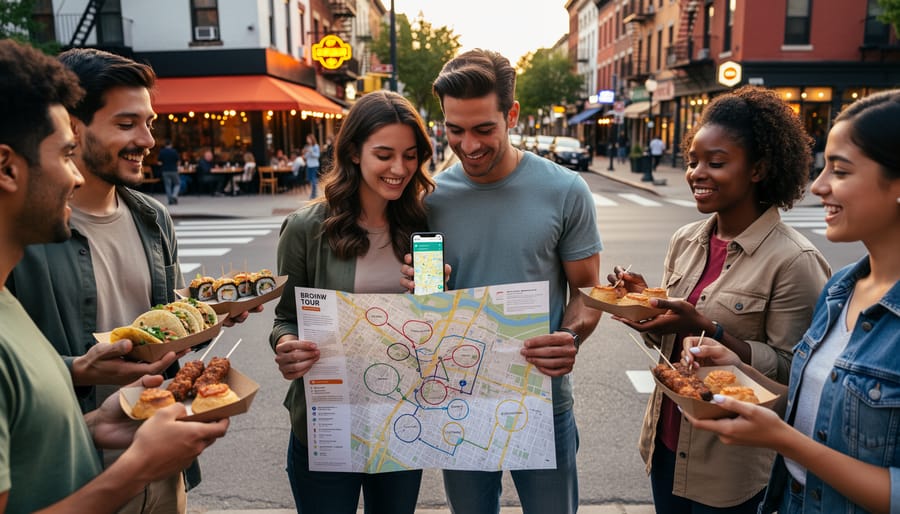
Choosing which festivals to attend begins with identifying your primary culinary interests, whether you’re drawn to the intricate spice profiles of halal gastronomy at Toronto Halal Bites Festival, the vibrant island flavours showcased at Taste The Caribbean, or the neighbourhood diversity represented at Taste of Lawrence. Each event offers a distinct lens into Toronto’s culinary fabric, and your selection should align with both your palate preferences and your broader exploration of the city’s premium dining landscape. I’ve found that the most rewarding festival experiences happen when I approach them not as isolated events but as entry points into entire culinary communities.
The logistics of accessing these venues shape your experience considerably. Nathan Phillips Square, hosting Toronto Halal Bites Festival May 15-17, sits at the heart of downtown with direct subway access and walkable connections to the city’s theatre and business districts. Mel Lastman Square in North York, where Island Eats runs June 13-14, offers a more contained footprint with adjacent parking and a suburban atmosphere that encourages leisurely exploration. St. Lawrence Market, the historic venue for Taste The Caribbean’s August 2 and September 6 events, brings festival atmosphere into an established culinary landmark where the building’s own vendors complement festival offerings from 10am to 5pm.
Multi-day festivals demand strategic planning to avoid palate fatigue and maximize discovery. At Taste of Lawrence’s three-day run (July 3-5), the extended Friday evening session from 6pm to 11pm provides a relaxed preview with smaller crowds, while Saturday’s full 11am-11pm schedule suits comprehensive tasting. Sunday’s 11am-8pm window works well for focused revisits to standout vendors identified earlier. Since admission is free, you can move fluidly between sessions without financial commitment.
- Research participating restaurants and vendors in advance to identify premium offerings worth prioritizing
- Pair festival visits with reservations at nearby fine dining establishments for contrasting perspectives
- Investigate beverage availability at different events, particularly opportunities for sophisticated wine and cheese pairings
- Plan arrival times based on festival format, Sunday single-day events peak mid-afternoon, while multi-day festivals offer quieter morning exploration
Consider your attendance within the broader arc of Toronto’s culinary calendar. Attending both early-season festivals like Toronto Halal Bites and late-summer events such as Taste The Caribbean reveals how seasonal ingredients and cultural timing shape programming. The single-day Sunday format of Taste The Caribbean concentrates energy into focused hours, contrasting sharply with the sprawling weekend experiences elsewhere. Match your schedule and stamina to these rhythms for optimal enjoyment.
How We Selected These Festival Dates
Establishing reliable festival dates required methodical cross-referencing with official event organizers and venue calendars throughout late 2025 and early 2026. We prioritized festivals with confirmed 2026 dates, Toronto Halal Bites Festival’s May 15-17 weekend at Nathan Phillips Square, Island Eats’ June 13-14 return to Mel Lastman Square, Taste of Lawrence’s July 3-5 run, and Taste The Caribbean’s August 2 and September 6 dates at St. Lawrence Market, because these events have established track records of showcasing premium culinary experiences rather than generic street food offerings.
Our selection criteria emphasized festivals that align with this site’s focus on sophisticated dining culture. We sought events featuring chefs and sommeliers executing elevated concepts, seasonal ingredient showcases, and cultural culinary traditions presented with refinement. Toronto’s festival landscape includes dozens of food-focused gatherings each year, but we concentrated on those that attract discerning audiences seeking gastronomic exploration over casual snacking.
Verification involved direct consultation with event websites, venue booking calendars, and municipal event permits where publicly accessible. When specific details like operating hours differed between sources, we deferred to the most recent official announcements, hence Taste of Lawrence’s precise Friday 6pm, 11pm, Saturday 11am, 11pm, Sunday 11am, 8pm schedule and its free-admission model appearing with confidence in this guide.
Toronto’s festival calendar remains dynamic. New events debut while established ones occasionally pause or shift dates due to sponsorship changes, weather contingencies, or venue availability. The festivals presented here represent the confirmed premium gastronomic experiences available for 2026 planning at the time of publication, with the understanding that Toronto’s culinary scene continues evolving year-round.
Beyond the Main Events: Extending Your Culinary Festival Season
The festival itself is just the opening chapter. The vendors I meet at Taste of Lawrence in July often operate year-round restaurants and catering services that allow me to revisit their signature dishes months later, without the summer crowds. I make notes during my festival visits, photograph menus, and collect business cards, simple steps that transform a three-day event into a season-long culinary project.
Following featured restaurants back to their home locations reveals how festival dishes translate to full dining experiences. A Caribbean vendor serving festival-portion rice and peas at St. Lawrence Market in August might offer elaborate seafood platters and aged rums at their Scarborough establishment come September. I’ve discovered some of my most memorable wine pairings by asking sommeliers which bottles would complement the spice profiles I encountered at festival stalls, a Gewürztraminer with halal Middle Eastern fare, or a robust Malbec alongside jerk chicken.
Tracking emerging festivals requires staying connected beyond the main calendar. I subscribe to neighborhood BIA newsletters and follow cultural community centers that announce smaller-scale events debuting between the established dates. These nascent festivals often showcase single cuisines or microseasons, a Portuguese sardine celebration, a fall harvest Korean market, that fill gaps in the spring-to-early-fall window.
The connection to premium dining runs deeper than simple follow-up meals. Chefs who participate in festivals often develop seasonal menus inspired by ingredients they sourced for their vendor booths. A restaurant that featured Ontario peaches at Island Eats in June might build an entire stone-fruit tasting menu by late summer. As weather shifts toward winter food traditions the festival lessons about cultural cuisine inform my choices at permanent establishments that specialize in warming, celebratory dishes.
Think of festivals as master classes that continue long after the tents come down. The real value lies in applying what you tasted, learned, and discovered to Toronto’s year-round culinary landscape.
At-a-Glance Details
Toronto’s major gastronomic festivals cluster around specific seasonal windows, each with distinct characteristics that shape the visitor experience. This snapshot highlights what to expect at the city’s premier culinary events.
| Festival | 2026 Dates | Hours | Venue |
|---|---|---|---|
| Toronto Halal Bites Festival | May 15-17 | Varies | Nathan Phillips Square |
| Island Eats | June 13-14 | Weekend schedule | Mel Lastman Square |
| Taste of Lawrence | July 3-5 | Fri 6pm, 11pm, Sat 11am, 11pm, Sun 11am, 8pm | Lawrence Avenue corridor |
| Taste The Caribbean | Aug 2, Sep 6 | Sun 10am, 5pm | St. Lawrence Market |
The festivals span spring’s emerging flavours through late summer’s harvest abundance. Taste of Lawrence stands out for its extended Saturday hours and free admission model, making it accessible for those who want to sample multiple vendors without financial commitment. Taste The Caribbean’s split Sunday dates accommodate distinct culinary focuses across two separate events. Weather considerations matter most in May and early June, when spring’s unpredictability can affect outdoor attendance, while July and August typically offer reliably warm conditions for lingering at vendor stalls and sampling dishes al fresco.
What to Watch For
Most festival date announcements arrive three to four months in advance, with early-bird vendor lists appearing on social media channels before official press releases. Follow festival organizers on Instagram and subscribe to event newsletters in January to catch early lineup reveals and any schedule shifts, organizers typically finalize dates by late winter but may adjust programming details closer to the event.
Watch for weather contingencies posted 48 hours before outdoor events at Nathan Phillips Square and Mel Lastman Square. Premium tasting experiences and chef-led sessions frequently require advance registration even when general admission is free, these limited-capacity components fill quickly once announced. Track changes to Sunday operating hours particularly for single-day festivals; the 10am, 5pm window at Taste The Caribbean leaves little room for delays if you’re targeting specific vendors or demonstrations scheduled for mid-afternoon peak periods.
Steps at a Glance
Attending Toronto’s gastronomic festivals requires strategic planning to maximize your culinary experience. Follow this sequence to ensure you encounter each event at its best:
- Mark your calendar with the spring launch, Toronto Halal Bites Festival (May 15-17) at Nathan Phillips Square, to begin the season with premium halal gastronomy and set the tone for summer events ahead.
- Secure mid-June for Island Eats (June 13-14) at Mel Lastman Square, positioning yourself in the heart of the festival season when outdoor conditions are reliably pleasant and ingredient quality peaks.
- Block the entire first weekend of July for Taste of Lawrence (July 3-5), planning evening attendance on Friday (6pm, 11pm) when the atmosphere shifts from daytime browsing to nighttime celebration.
- Choose between the two Taste The Caribbean dates, August 2 or September 6, based on your seasonal preference, arriving at St. Lawrence Market by 10am to experience the full five-hour window before the 5pm close.
- Review festival-specific vendor lineups as they’re announced weeks before each event, identifying which restaurants and premium purveyors align with your wine pairing interests or regional cuisine preferences.
This deliberate approach transforms casual festival attendance into curated culinary exploration, ensuring you engage with Toronto’s gastronomic calendar as the sophisticated progression it truly represents.
Common Questions About Toronto’s Gastronomic Festival Calendar
The logistical questions around Toronto’s gastronomic festivals often determine whether you actually attend or miss out on transformative culinary experiences. After navigating these events across multiple seasons, I’ve learned that seemingly minor details, admission requirements, optimal arrival times, weather backup plans, can reshape your entire festival experience.
Which months offer the best experience for first-time festival visitors?
June and July provide the ideal entry point, with established festivals like Island Eats (June 13-14, 2026) and Taste of Lawrence (July 3-5, 2026) offering reliable programming, comfortable weather, and manageable crowds. These mid-summer events showcase Toronto’s festival culture at full maturity without the experimental uncertainty of early-season launches or the compressed schedules of late-season closers.
Do I need tickets or reservations for Toronto’s major gastronomic festivals?
Most large-scale festivals operate on free admission models, Taste of Lawrence 2026 charges no entry fee, and you purchase food directly from vendors, though some specialized events may require advance registration. Always verify current ticketing policies on official festival channels before planning your visit, as premium tasting events or VIP experiences occasionally layer onto otherwise free festivals.
How does Toronto’s unpredictable weather affect outdoor festival schedules?
Organizers rarely cancel entire festivals for weather, but individual vendor participation and operating hours may shift during heavy rain or extreme heat. June through August typically offers the most stable conditions, while May festivals like Toronto Halal Bites (May 15-17, 2026) occasionally face late spring cold snaps that reduce outdoor seating comfort without closing the event.
What distinguishes a premium gastronomic festival from casual street food events?
Look for festivals emphasizing specific culinary traditions with depth, like Toronto Halal Bites Festival’s focus on elevated halal gastronomy or Taste The Caribbean’s showcasing of regional cuisine at St. Lawrence Market, rather than generic “taste of” events offering undifferentiated vendor lineups. Premium festivals curate participating restaurants, feature chef demonstrations or panel discussions, and position themselves around cultural exploration rather than simply aggregating food trucks.
Should I attend both weekend days of multi-day festivals or choose strategically?
Saturday typically draws the largest crowds but offers the fullest vendor participation and extended hours (Taste of Lawrence runs 11am-11pm on Saturday versus 11am-8pm Sunday). Sunday mornings attract serious food enthusiasts who arrive early for popular items before they sell out.
How far in advance should I plan my festival calendar?
Book accommodations three to four months ahead if you’re traveling specifically for festivals, as downtown hotels fill during peak summer weekends. The festivals themselves don’t require advance planning beyond checking current vendor lists and special programming, but scheduling conflicts emerge quickly when multiple events cluster in July and August.
The answers to these questions often determine whether you approach festivals as spontaneous weekend diversions or intentional culinary investigations. I’ve found that treating gastronomic festivals with the same advance consideration you’d give a reservation at a premium restaurant, researching the focus, understanding the format, checking weather contingencies, transforms them from crowded outdoor eating into genuine opportunities for cultural and culinary discovery. The festivals that reward this preparation most generously are those with clear culinary identities: Taste The Caribbean’s two Sunday sessions (August 2 and September 6, 2026, 10am-5pm) at St. Lawrence Market deliver focused Caribbean gastronomy rather than attempting to represent every possible cuisine.
What surprises many first-time festival attendees is how admission logistics vary even among established events. The free-entry model at Taste of Lawrence creates a different dynamic than ticketed tastings, you’re free to explore without commitment, but popular vendors may have longer waits because there’s no attendance cap. Island Eats at Mel Lastman Square follows a similar open-access approach, allowing you to gauge your interest and budget in real time rather than committing to a fixed tasting package upfront.
Toronto’s gastronomic festivals represent more than a concentration of excellent cuisine in public spaces, they form a deliberate intersection between seasonal ingredients, cultural celebration, and the city’s sophisticated dining identity. The festivals I’ve attended across different months reveal how timing shapes not only what appears on tasting plates but also the context that gives each event its distinctive character. Spring launches like Toronto Halal Bites Festival in mid-May capture the optimism of a new season, while summer’s concentration of events from Island Eats through Taste The Caribbean creates a rhythm of culinary discovery that extends across the warmest months.
Strategic attendance demands understanding these seasonal patterns rather than treating festivals as interchangeable weekend diversions. The June through August window offers the densest concentration of premium experiences, yet each event serves a different audience and culinary tradition. This isn’t about completionism, visiting every festival, but about selecting the ones that align with your particular interests in wine pairings, specific regional cuisines, or neighborhood food cultures.
For the discerning food and wine enthusiast, these festivals function as both celebration and education. They compress Toronto’s diverse culinary traditions into focused, accessible formats that reveal connections between seasonal ingredients, cultural heritage, and contemporary technique. The investment of advance planning, noting specific 2026 dates, understanding venue logistics, anticipating which traditions speak to your palate, transforms festival attendance from casual browsing into purposeful exploration of what makes Toronto’s food scene genuinely sophisticated.