
Kabocha squash is a Japanese winter variety with deep green skin, dense orange flesh, and a naturally sweet, nutty flavor profile reminiscent of chestnut and sweet potato. If you’re seeing it stacked at Toronto farmstands this season and wondering whether it justifies the curiosity, the answer is simple: this is one of the most versatile, nutrient-rich squashes available, priced accessibly at around $1.29 each or ten for $9.99 mix-and-match at local markets, and it delivers a silky, almost custard-like texture when roasted that sets it apart from the watery disappointment of many North American varieties.
The recent surge in local availability reflects a broader shift among home cooks and culinary professionals alike who’ve discovered what Japanese cuisine has long understood: kabocha’s concentrated sweetness and low moisture content make it ideal for everything from miso-glazed tempura to pureed soups that require no cream to achieve body. Unlike butternut or acorn squash, kabocha holds its shape under high heat, caramelizes beautifully, and offers edible skin packed with fiber and beta-carotene, which means less prep work and more usable yield per squash.
You’ll find kabocha at select Toronto-area farmstands this fall, often sold alongside delicata and spaghetti squash in seasonal bushel offerings starting at $19.99. The challenge for first-time buyers is identification: its squat, pumpkin-like shape and mottled dark green exterior can be mistaken for other varieties, but the telltale signs are a flattened base, a dry, corky stem, and surprising heft for its size.
What Makes Kabocha Squash Distinctive
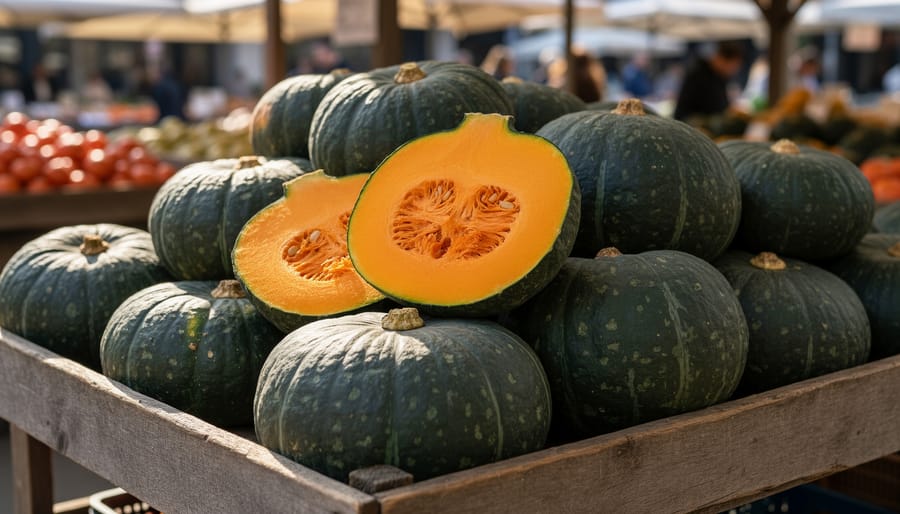
Kabocha squash stands apart from other winter squashes through its remarkably sweet, nutty flavor profile that carries subtle chestnut notes, a distinctive taste that positions it somewhere between pumpkin and sweet potato, yet more complex than either. When cooked, the flesh develops a dense, smooth texture that’s neither stringy nor watery, making it particularly appealing for refined preparations.
Visually, kabocha is immediately recognizable: the exterior displays deep, forest-green skin with subtle pale green striations or mottling, while the interior reveals saturated orange flesh rich in beta-carotene. This contrast between the dark outer shell and the brilliant interior signals the squash’s nutritional density. Unlike the uniformly tan surface of butternut squash or the ribbed orange of traditional pumpkins, kabocha’s appearance hints at its Japanese heritage and distinctive character.
The texture transformation during cooking deserves particular attention. Raw kabocha flesh is firm and pale, but as it roasts or steams, it becomes luxuriously creamy, almost custard-like, while maintaining enough structure to hold its shape in composed dishes. This quality makes it exceptionally versatile for sophisticated applications, from smooth purées that require no straining to wedges that caramelize beautifully under high heat. The natural sweetness intensifies with cooking, developing deeper, almost caramelized notes without any added sugar.
That inherent sweetness, combined with the earthy, nutty undertones, creates a flavor complexity that sophisticated palates find compelling. It’s sweet enough to work in subtly sweet contexts yet savory enough to anchor fall-focused entrees, offering a range that few other squashes can match.
Nutritional Profile and Edible Skin
Kabocha squash delivers substantial nutritional value in a compact package, a quality that resonates with Toronto’s health-conscious dining community. A single cup of cooked kabocha provides roughly 7 grams of dietary fiber, more than many other winter squashes, along with significant amounts of vitamins A and C. The deep orange flesh signals its beta-carotene concentration, a precursor to vitamin A that supports vision and immune function. These nutrients arrive with a relatively modest caloric load, making kabocha an appealing choice for those seeking nutrient density without excess.
What sets kabocha apart from butternut or acorn varieties is the edibility of its skin. Unlike squashes that require peeling, kabocha’s dark green rind softens beautifully during roasting or steaming, becoming tender enough to eat while retaining a slight textural contrast to the creamy interior. This characteristic aligns with current culinary movements toward whole-ingredient cooking and waste reduction. The skin itself contains additional fiber and nutrients, so leaving it intact maximizes both nutritional value and flavor complexity. For cooks accustomed to the labor of peeling dense winter squashes, this quality proves practically liberating, you can simply wash the exterior, cut the squash into wedges, and roast. The result is a dish that honors the ingredient in its entirety while simplifying preparation.
Where to Find Kabocha Squash in the Toronto Area
Kabocha squash has arrived at farmstands around Toronto this season, and the local food community is actively seeking sources. While verified availability remains limited to select farmstand locations, the current pricing structure makes this sweet winter squash accessible for both home cooks exploring new ingredients and those stocking up for seasonal menus.
Farmstands offering kabocha this fall present several purchasing options tailored to different needs. Individual squash retail at $1.29 each, with a mix-and-match program allowing shoppers to select 10 squash, including kabocha, delicata, pepper squash, and spaghetti squash, for $9.99. For those integrating kabocha into multiple dishes or hosting gatherings, full bushels start at $19.99, providing substantial volume at a lower per-unit cost.
| Purchase Option | Price | Best For |
|---|---|---|
| Single Squash | $1.29 each | First-time trials, single preparations |
| Mix-and-Match (10) | $9.99 | Variety seekers, comparing winter squashes |
| Full Bushel | Starting at $19.99 | Bulk cooking, seasonal preservation |
The growing interest aligns with Toronto’s expanding farm-to-table movement, where direct sourcing from regional producers offers both freshness and connection to local agriculture. Recent community posts seeking farms selling kabocha suggest demand currently outpaces supply at retail farmstands, making availability somewhat inconsistent.
When shopping for kabocha, select specimens that feel heavy for their size, indicating dense, moist flesh rather than drying or hollow cavities. The dark green skin should appear dull rather than glossy, with firmness throughout, avoid any soft spots, which signal internal deterioration. Small surface blemishes won’t affect flavor, but check the stem area for signs of mold or decay. A firm, dry stem attachment confirms proper harvest timing and adequate curing for storage longevity.
Preparing and Cooking with Kabocha
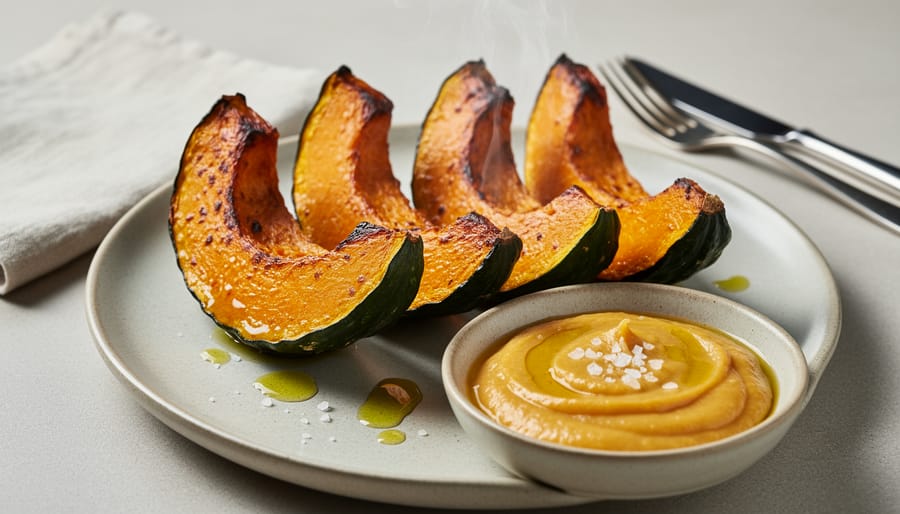
Kabocha squash’s dense, dry flesh transforms dramatically during cooking, making it ideal for techniques that emphasize its naturally sweet profile. Unlike watery varieties that turn mushy, kabocha maintains structure while developing a creamy interior that rivals the texture of quality sweet potato purée.
Roasting remains the most effective method for concentrating kabocha’s inherent sweetness. Cut the squash into wedges, leaving the edible skin on adds both nutritional value and a pleasant textural contrast, then toss with olive oil and sea salt. A 400°F oven for thirty to forty minutes yields caramelized edges and a tender center that collapses easily under a fork. The skin softens completely during roasting and contributes an earthy dimension that sophisticated palates appreciate.
For soups and purées, kabocha’s low moisture content means you’ll achieve velvety consistency without diluting flavor. Cube the flesh, steam until tender, then blend with minimal liquid, perhaps stock enriched with a knob of butter or a splash of cream. The resulting texture is substantial enough to stand as a side dish or form the base of refined preparations. Consider finishing with toasted pepitas and brown butter, or swirl in maple syrup and warming spices for dishes that fit naturally among Toronto’s winter comfort foods.
Kabocha also excels in applications that balance its sweetness with savory elements. Thin slices roasted until crisp make an elegant garnish, while chunks tossed into braises absorb surrounding flavors without disintegrating. The squash pairs particularly well with sage, thyme, and garlic in rustic preparations, or with ginger and miso in approaches influenced by its Japanese heritage.
Because the skin is both edible and nutritious, there’s no need to wrestle with peeling unless your recipe specifically demands smooth purée. Simply scrub the exterior well, cut carefully, the dense flesh requires a sharp knife and steady pressure, and proceed with your chosen cooking method. This streamlined approach suits both weeknight efficiency and the minimalist waste-reduction ethos that resonates with discerning home cooks.
Pairing Kabocha with Wine and Spirits
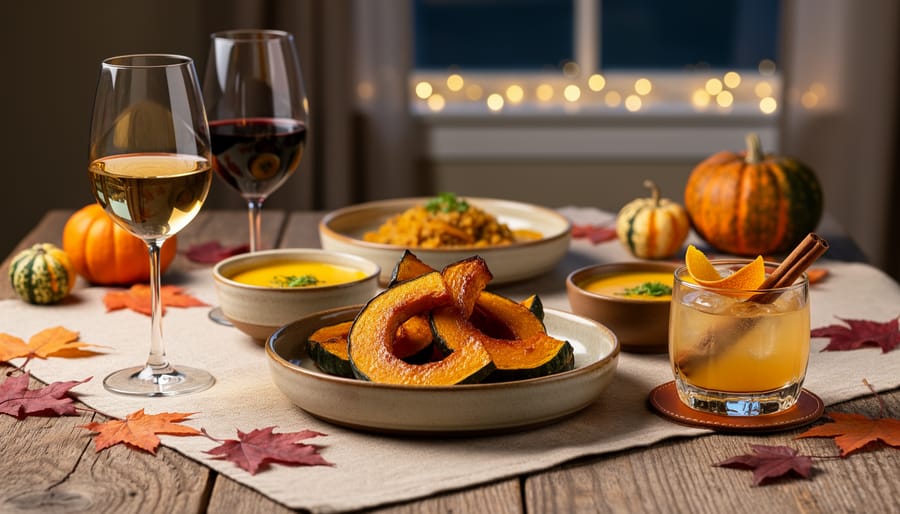
Kabocha’s sweet, nutty flavor and dense texture create intriguing opportunities for sophisticated food & drink pairings that showcase the squash’s complex character. The natural sweetness and subtle chestnut notes respond beautifully to wines and spirits that either complement or contrast these qualities.
For wine pairings, consider medium-bodied whites with gentle oak influence, a lightly-aged Chardonnay from Niagara or a Viognier provides enough weight to match kabocha’s creamy texture while the subtle barrel notes echo its earthy sweetness. Off-dry Rieslings work exceptionally well, their residual sugar harmonizing with the squash’s natural sugars while bright acidity cuts through rich preparations. When serving kabocha in savory applications with herbs or brown butter, try a light-bodied red like Pinot Noir or Gamay; their earthy undertones and soft tannins complement without overwhelming the delicate squash flavors.
Spirits offer equally compelling matches. Aged rum’s caramel and vanilla notes mirror kabocha’s inherent sweetness, making it ideal for fall cocktails featuring roasted squash purée. Bourbon’s toasted oak and corn sweetness creates a natural bridge to kabocha’s nutty profile. A Manhattan variation with a touch of kabocha-infused syrup showcases this affinity beautifully.
The key lies in respecting kabocha’s moderate sweetness, avoid bone-dry wines that clash with the squash, and steer clear of heavily oaked or high-alcohol spirits that dominate rather than complement. As Toronto’s seasonal dining scene increasingly embraces autumn vegetables, these pairings offer home cooks and hosts ways to elevate kabocha from simple side dish to the foundation of a thoughtfully composed course.
Common Questions About Kabocha Squash
Selecting premium kabocha at market comes down to weight and skin integrity. Choose specimens that feel heavy for their size, a sign of dense, moist flesh, with unblemished dark green skin that shows no soft spots or cracks. Unlike butternut or acorn varieties, kabocha’s squat, round shape and bumpy surface are normal; you’re looking for firmness when you press gently near the stem.
Do I need to peel kabocha squash before cooking?
No. The skin is edible and becomes tender when roasted or braised, adding texture and nutritional value to finished dishes.
How long does kabocha squash keep?
Whole kabocha stores for one to three months in a cool, dry place with good air circulation. Once cut, wrap the pieces tightly and refrigerate for up to five days.
What’s the difference between kabocha and other winter squashes?
Kabocha has a sweeter, nuttier flavor than butternut and a drier, fluffier texture than acorn squash. The edible skin and chestnut-like notes distinguish it from pumpkin.
Storage matters considerably for preserving that sweet, nutty character. Keep whole squash in a pantry or cellar where temperatures stay between ten and fifteen degrees Celsius; avoid refrigeration, which accelerates moisture loss and degradation. The same principles that guide selecting exceptional wine and cheese apply here: freshness indicators, proper storage conditions, and attention to seasonal availability all contribute to the best culinary results when you bring kabocha into your kitchen this fall.
Kabocha squash represents a compelling opportunity for Toronto’s discerning home cooks this season. Its sweet, chestnut-inflected flavor profile and versatile texture satisfy both sophisticated palates and nutritional priorities, while current farmstand availability makes exploration accessible at reasonable prices. The edible skin simplifies preparation without compromising elegance, and the squash’s natural affinity for thoughtful wine pairings extends its appeal beyond simple roasting.
With local sources now stocking kabocha and community interest growing, this is an ideal moment to experience what makes this winter squash distinctive. Visit area farmstands while seasonal supplies last, select specimens with firm, unblemished skin, and discover how this nutty, vibrant ingredient elevates your autumn cooking repertoire.