
Bordeaux wine regions are geographic subdivisions within France’s most celebrated wine-producing area, each defined by distinct terroir, grape varieties, and winemaking traditions that determine a bottle’s flavor profile, aging potential, and market value. Understanding these regions transforms wine selection from guesswork into informed choice, particularly as collectors and enthusiasts navigate an appellation system that encompasses everything from $20 everyday bottles to five-figure investment wines.
The Bordeaux region sprawls across 120,000 hectares, divided into more than 60 appellations that operate on a hierarchical structure. At the broadest level sit the regional appellations, followed by sub-regional designations, and finally the commune or village appellations that command the highest prestige. The Left Bank, dominated by Cabernet Sauvignon on gravelly soils, produces structured, age-worthy wines from Médoc, Pauillac, and Margaux. The Right Bank, where Merlot thrives in clay and limestone, gives us the opulent wines of Pomerol and Saint-Émilion. Between the Garonne and Dordogne rivers lies Entre-Deux-Mers, known for crisp white blends, while south of the city, Graves and Pessac-Léognan craft both distinguished reds and elegant Sauvignon Blanc-Sémillon whites.
I’ve spent years tasting through Bordeaux’s geography, from gravel-strewn châteaux in Pauillac to intimate cellars carved into Saint-Émilion’s limestone hills. What becomes clear is that these regional distinctions matter profoundly. They dictate not only what you’ll taste in the glass but also how a wine will evolve over decades and which dishes will best complement its character.
What Bordeaux Wine Regions Represent
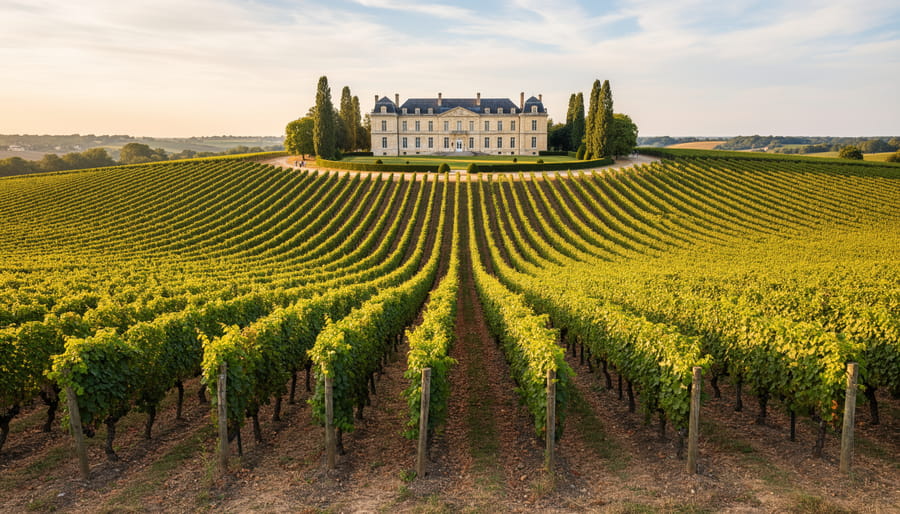
A Bordeaux wine region represents far more than a geographical boundary on a map of southwestern France. It’s a legally defined territory within the Gironde département where specific grapes grow in distinctive soil compositions, shaped by centuries of winemaking tradition and protected by France’s rigorous Appellation d’Origine Contrôlée system. Think of it as both a physical place and a quality guarantee: when you see “Bordeaux” on a label, you’re encountering wine produced under strict regulations governing everything from permitted grape varieties to maximum yields per hectare.
The appellation hierarchy works like nested circles of exclusivity. At the broadest level sits the regional Bordeaux AOC, encompassing roughly 120,000 hectares across the entire area. Within this umbrella exist progressively smaller, more prestigious appellations, 57 in total, each with stricter production standards. A wine from Pauillac, for instance, meets not only general Bordeaux requirements but also the specific terroir-driven criteria of that commune on the Left Bank’s Médoc peninsula.
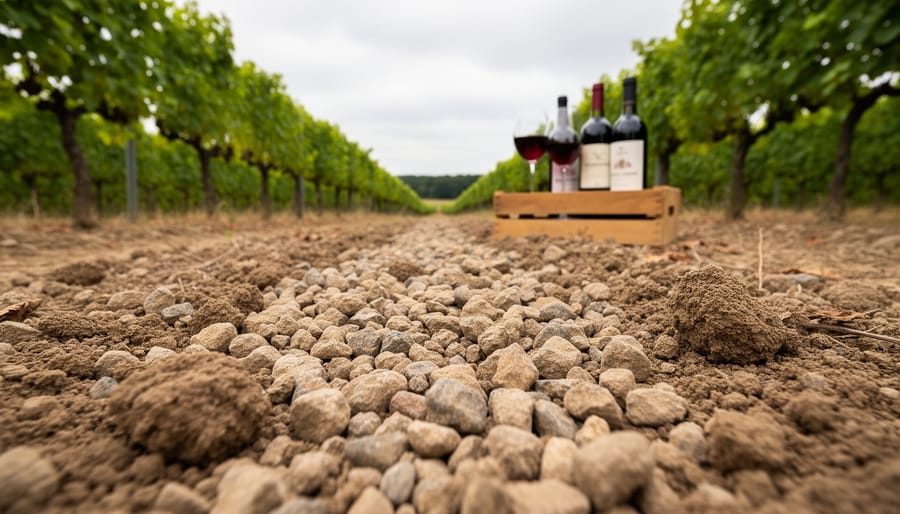
Terroir, that untranslatable French concept, explains why a Margaux tastes nothing like a Pomerol despite being separated by mere kilometres. It encompasses soil type, drainage, sun exposure, proximity to the moderating influence of the Gironde estuary, and even the angle of vineyard slopes. The Left Bank’s deep gravel beds drain quickly and reflect heat, perfect for late-ripening Cabernet Sauvignon. The Right Bank’s clay retains moisture, suiting earlier-maturing Merlot.
UNESCO designated Bordeaux’s jurisdiction a World Heritage Site in 2007, recognizing not just exceptional wine but an “outstanding urban and architectural ensemble” where viticulture has shaped culture, economy, and landscape for two millennia. The classification acknowledges Bordeaux as a living system where historic châteaux, négociant houses along the quays, and meticulous vineyard management represent humanity’s relationship with agriculture at its most refined. For anyone serious about wine, understanding these regions means grasping how place, tradition, and craftsmanship converge to create bottles that age gracefully for decades.
How Bordeaux’s Regional Structure Works
Understanding Bordeaux’s regional structure requires grasping a sophisticated hierarchy that’s evolved over centuries. At the broadest level sits the Bordeaux AOC, Appellation d’Origine Contrôlée, which encompasses the entire wine-producing area of the Gironde département. This regional designation permits wines blended from grapes grown anywhere within Bordeaux’s boundaries, typically representing the most accessible entry point for consumers.
From there, the system narrows progressively. Sub-regional appellations like Médoc or Graves denote larger geographic zones with shared characteristics, while communal appellations, Pauillac, Margaux, Saint-Émilion, identify specific villages or communes where stricter regulations govern grape varieties, yields, and production methods. The tighter the geographic designation, generally the higher the quality expectation and price point.
- AOC (Appellation d’Origine Contrôlée)
- France’s geographical certification system that legally defines where grapes are grown, which varieties may be used, and production methods permitted for a given wine. The more specific the AOC, the stricter the standards and typically the higher the prestige.
- Château
- In Bordeaux, this refers to a wine estate or property, not necessarily a grand building, many are modest farmhouses. The château name on a label indicates the wine was produced from estate-grown grapes and bottled on the property.
- Assemblage
- The art of blending different grape varieties and vineyard parcels to create the final wine. Most Bordeaux wines are assemblages rather than single-varietal expressions, allowing winemakers to balance structure, fruit, and aging potential.
- Premier Cru Classé
- First Growth, the highest classification tier in Bordeaux’s 1855 Classification system. Only five châteaux hold this designation: Lafite Rothschild, Latour, Margaux, Haut-Brion, and Mouton Rothschild.
- Rive Gauche / Rive Droite
- Left Bank and Right Bank, the fundamental geographic division created by the Gironde estuary. Left Bank regions favor Cabernet Sauvignon on gravelly soils, while Right Bank areas showcase Merlot on clay and limestone.
The classification systems add another layer of complexity. The 1855 Classification, commissioned by Napoleon III for the Paris Exposition, ranked 61 Médoc châteaux plus Haut-Brion from Graves into five tiers, from First Growth to Fifth Growth. Despite being based on 19th-century pricing and reputation, this hierarchy remains commercially powerful today, though it’s been modified only once, when Mouton Rothschild ascended to First Growth status in 1973.
Saint-Émilion operates under its own classification, revised roughly every decade, currently recognizing Premiers Grands Crus Classés A and B alongside Grands Crus Classés. The Crus Bourgeois designation covers quality Médoc properties outside the 1855 system, offering exceptional value.
Châteaux are the individual estates that produce and bottle their own wines, ranging from grand properties with hundreds of hectares to tiny family holdings. Négociants, by contrast, purchase grapes or finished wine from multiple sources, blend them, and sell under their own labels, a practice that allows consistency across vintages but lacks the terroir specificity of château bottlings.
Climate and geology fundamentally shape each region’s identity. The Gironde estuary moderates temperatures, protecting vines from spring frost and summer extremes. Left Bank appellations benefit from deep gravel beds deposited by ancient rivers, these warm, well-draining soils suit late-ripening Cabernet Sauvignon. Right Bank regions rest on limestone plateaus and clay slopes that retain moisture, ideal for earlier-ripening Merlot. These geological differences aren’t mere trivia, they’re why a Pauillac tastes nothing like a Pomerol despite being produced thirty kilometers apart.
The Major Bordeaux Wine Regions Decoded
Médoc and Haut-Médoc: The Cabernet Kingdom
The Médoc peninsula stretches along Bordeaux’s Left Bank like a 50-mile ribbon of viticultural excellence, with the Haut-Médoc, its southern, superior half, containing four of the world’s most celebrated wine appellations. This is Cabernet Sauvignon country, where gravelly Günzian soils deposited by ancient glaciers provide the perfect drainage and heat retention for this noble grape to achieve its most structured, age-worthy expression.
Pauillac commands the highest prices and most reverent attention. During a visit to Château Lynch-Bages, I tasted their 2019 from barrel, a wine of such concentrated cassis and graphite minerality that it seemed to compress the essence of those deep gravel beds into liquid form. The tannins gripped firmly yet politely, a hallmark of great Pauillac that promises decades of evolution. Three first growths call this commune home: Lafite Rothschild, Latour, and Mouton Rothschild.
Just south, Margaux produces wines of greater elegance and perfume. The soils here contain more sand alongside the gravel, yielding reds with violet and rose petal aromatics wrapped around a silky structure. Saint-Julien sits between Pauillac and Margaux in both geography and style, powerfully built yet refined, with exceptional consistency across its estates.
Saint-Estèphe, the northernmost commune, stands apart with higher clay content that produces more muscular, earthy wines requiring patience. These are Bordeaux for the long game, often undervalued relative to their southern neighbors yet capable of extraordinary complexity after 15 years in bottle.
Graves and Pessac-Léognan: Where Elegance Meets Power
South of Bordeaux city, the Graves region stretches along the left bank where its namesake gravel beds have shaped exceptional wines since Roman times. The appellation gets its name from the Gascon word for gravel, those deep, well-drained deposits that force vine roots to plunge deep, concentrating flavors and imparting a distinctive mineral backbone.
Within Graves lies Pessac-Léognan, established in 1987 to distinguish the northern sector’s superior terroir. Here, gravel mixes with iron-rich clay and limestone, creating ideal conditions for both Cabernet Sauvignon-based reds and Bordeaux’s most acclaimed dry whites from Sauvignon Blanc and Sémillon. The reds display remarkable elegance, less overtly muscular than Pauillac, more refined than Saint-Émilion, with signature notes of tobacco, cedar, and graphite alongside dark fruit.
What sets this region apart is its mastery of white wine production. Pessac-Léognan whites offer complexity few regions can match: citrus and stone fruit layered with that haunting smoky character, subtle oak integration, and striking minerality. They age magnificently, developing waxy texture and savory depth over decades.
Château Haut-Brion, the only non-Médoc estate in the 1855 Classification, exemplifies Pessac-Léognan’s distinctive sophistication, wines that marry power with an almost ethereal finesse.
Saint-Émilion: The Right Bank’s Merlot Masterpiece
Cross the Dordogne River from Bordeaux’s gravelly Left Bank and you enter a different winemaking universe. Saint-Émilion wraps its vineyards around a medieval hilltop village so picturesque that UNESCO designated the entire jurisdiction, town and terroir together, as a World Heritage Site in 1999. Here, Merlot claims the lead role, typically comprising 60 to 70 percent of most blends, with Cabernet Franc providing structure and aromatics.
The region’s genius lies in its soil diversity. Limestone plateau vineyards near the town produce wines of extraordinary minerality and longevity, while the côtes (slopes) combine clay and limestone for power and finesse. The lower graves secteur toward Pomerol echoes the Left Bank’s gravelly character but retains Merlot’s plush generosity.
Saint-Émilion maintains Bordeaux’s most dynamic classification system, reassessed approximately every decade rather than remaining frozen since 1855. Châteaux can ascend to Premier Grand Cru Classé status or lose their ranking entirely based on current quality, a controversial but meritocratic approach that keeps producers striving for excellence.
The resulting wines showcase riper fruit, silkier tannins, and greater approachability in youth than their Médoc counterparts. You encounter black cherry, plum, and violet aromatics rather than austere cassis, with a voluptuous texture that makes these wines immediately seductive yet still capable of decades of evolution.
Pomerol: The Boutique Jewel
Pomerol occupies just 800 hectares on Bordeaux’s Right Bank, yet it produces some of the world’s most coveted, and expensive, wines. Unlike the structured hierarchies of the Médoc or Saint-Émilion, Pomerol has no official classification system. Reputation here is built purely on quality and terroir, with estates like Pétrus, Le Pin, and Lafleur commanding prices that regularly exceed $3,000 per bottle at release.
The secret lies beneath the vines. Pomerol’s signature blue clay, rich in iron oxide, sits atop a gravel plateau known as the “buttonhole.” This dense clay forces Merlot roots to dig deep, concentrating flavors into wines of extraordinary depth and silky texture. The best Pomerols balance power with refinement, think black cherry, truffle, violet, and wet earth, wrapped in tannins so fine they feel like velvet against the palate.
Production is minuscule. Many estates bottle fewer than 2,000 cases annually, with Pétrus producing around 2,500 in abundant years. This scarcity, combined with near-universal critical acclaim, has turned Pomerol into the collector’s obsession, a tiny appellation where every bottle represents the apex of Merlot’s potential.
Sauternes and Barsac: The Sweet Wine Sanctuaries
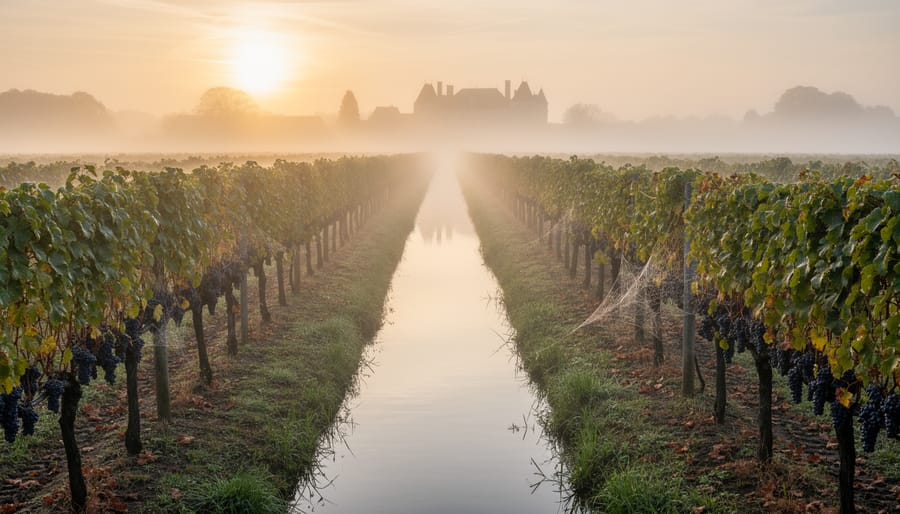
South of Graves, where the cold Ciron River meets the warmer Garonne, autumn mornings cloak the vineyards in thick fog that lingers until midday sun burns it away. This daily cycle creates the perfect conditions for *Botrytis cinerea*, noble rot, to concentrate sugars and flavours in Sémillon, Sauvignon Blanc, and Muscadelle grapes. Producers in Sauternes and its enclave Barsac make multiple passes through the vines, selecting only shriveled, botrytized berries. The result is liquid gold: wines of honeyed apricot, marmalade, and caramelized pineapple balanced by bright acidity.
Château d’Yquem remains the pinnacle, but estates like Climens and Coutet offer extraordinary quality. These wines demand patient winemaking, some fermentations take months, and the best age for decades.
At Toronto’s finest tables, a chilled Sauternes transforms seared foie gras into transcendence, the wine’s sweetness cutting through rich liver while echoing its buttery texture. Roquefort and Sauternes create an equally compelling contrast, the blue cheese’s salt and tang playing against honeyed fruit. Pour these wines in small measures, their intensity rewards contemplation, not volume.
How to Experience Bordeaux Wine Regions
Experiencing Bordeaux wine regions authentically begins with strategic bottle selection at Toronto’s finest wine merchants. I’ve found the most rewarding approach involves building a collection that represents each major region, starting with accessible classified growths from Saint-Julien or Graves before venturing into investment-grade Pauillac or Pomerol. The key is establishing relationships with specialists who can guide you toward producers offering genuine terroir expression rather than merely prestigious labels.
For immediate engagement, consider these curated pathways into Bordeaux:
- Attend comparative regional tastings at Toronto tasting experiences that flight Left Bank against Right Bank styles
- Build a cellar collection targeting one château from each major appellation, tracking how regions evolve differently over five to ten years
- Plan a September or October visit during harvest season when châteaux open their cellars and the energy of vendange permeates the countryside
- Create Bordeaux pairing dinners at home or through Toronto’s sommelier-driven restaurants, matching regional wines to specific courses
Philippe Marchand, head sommelier at Canoe, offers crucial perspective on navigating 2026’s Bordeaux landscape: “The sweet spot now sits in lesser-known appellations like Lalande-de-Pomerol or Côtes de Castillon, where you’re getting authentic Right Bank character without the Pomerol price tag. For cellaring, focus on the 2019 and 2020 vintages, exceptional quality that will reward patience.”
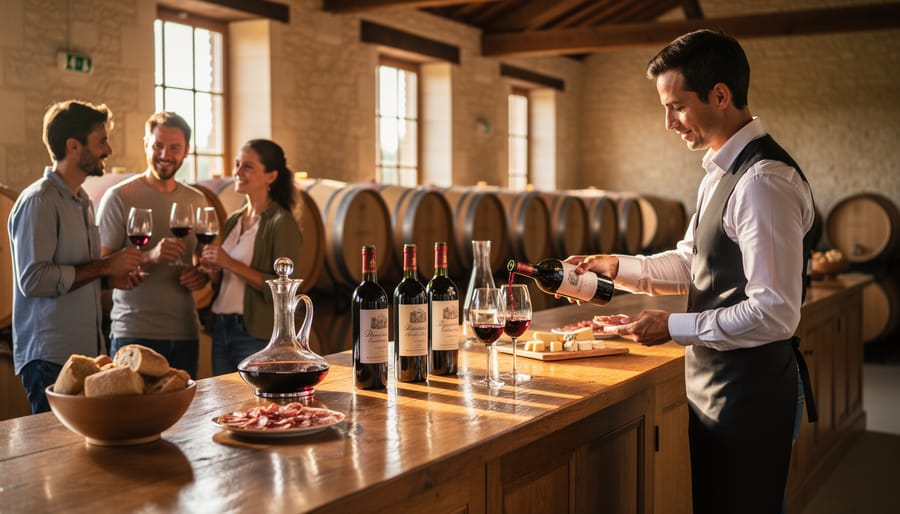
Optimal drinking windows vary dramatically by region and vintage. Young Médoc from top estates demands fifteen to twenty-five years, while approachable Saint-Émilion Grand Cru can shine within five to seven. I keep a rotation of ready-to-drink older vintages alongside developing bottles, allowing spontaneous enjoyment rather than endless waiting.
Wine tourism in Bordeaux has evolved beyond basic cellar tours. Book private tastings directly with châteaux, particularly in Margaux or Pessac-Léognan, where winemakers share vertical tastings spanning decades. Pair these visits with luxury farm-to-fork dining at château restaurants or Michelin-starred establishments in Bordeaux city itself.
Back in Toronto, the real education happens through deliberate tasting. Organize blind flights comparing appellations, or explore unexpected pairings, I’ve discovered Sauternes works beautifully when pairing street snacks like spicy Korean fried chicken, the residual sugar balancing heat magnificently.
Pairing Bordeaux Regions with Culinary Experiences
Matching Bordeaux to the plate requires understanding each region’s structural DNA. Left Bank Cabernet blends from Pauillac or Margaux demand richness, think dry-aged ribeye, lamb rack with rosemary, or duck confit where tannins cut through fat while cedar and cassis notes amplify the char. At Alo, sommelier Patrick Gass pairs a 2015 Pauillac with their venison loin, letting the wine’s graphite minerality echo the jus while firm tannins balance the meat’s intensity.
Right Bank Merlot-dominant wines take a different approach. Saint-Émilion’s plush, fruit-forward character shines with pork tenderloin, mushroom-based dishes, or even miso-glazed black cod, the silky texture and red fruit profile bridge traditional French technique and contemporary fusion. “With Pomerol,” Gass explains, “I look for umami-rich preparations. Truffle gnocchi, beef short rib braised in soy and star anise, even aged Comté, the wine’s velvety tannins and concentrated dark fruit handle complexity without overwhelming delicate flavours.”
Sauternes opens surprising doors beyond foie gras. The botrytized sweetness and vibrant acidity partner brilliantly with blue cheese, roasted pear tarts, or Thai curry, acid cutting through coconut cream while honeyed apricot notes complement lemongrass. Toronto’s seasonal food events increasingly feature Sauternes in unexpected contexts, pairing Barsac with Ontario peach desserts or spiced squash preparations.
For Toronto French-friendly bistros, Graves and Pessac-Léognan whites offer versatility. Their Sauvignon Blanc-Sémillon blend, crisp yet textured, with subtle oak, complements raw oysters, grilled whole fish, or chicken in cream sauce. The smoky minerality particularly suits dishes with herbs de Provence or garlic butter, creating that essential bridge between Old World terroir and New World dining energy.
Frequently Asked Questions About Bordeaux Wine Regions
How do I know which Bordeaux region suits my taste preferences?
If you gravitate toward structured, age-worthy wines with pronounced tannins and cassis notes, explore Left Bank appellations like Pauillac or Saint-Julien where Cabernet Sauvignon dominates. For rounder, more immediately approachable wines with plush fruit and softer tannins, the Right Bank regions of Saint-Émilion and Pomerol showcase Merlot’s seductive character.
What distinguishes a château wine from a négociant bottling?
Château wines are estate-bottled from grapes grown exclusively on that property’s vineyards, offering complete control over quality and a direct expression of that specific terroir. Négociant bottlings are produced by merchants who purchase grapes or finished wine from multiple sources within an appellation, blending them to create consistent regional expressions that typically offer better value but less distinctive character.
Are Bordeaux wines worth the investment in 2026?
The finest classified growths have demonstrated consistent appreciation over decades, particularly in exceptional vintages, making them viable collectibles for those with proper storage and patience. However, the middle tier, Crus Bourgeois, petits châteaux, and quality négociant labels, offers compelling drinking pleasure and cellar-worthiness at accessible price points without requiring investment-grade budgets.
How do I decide whether to drink a Bordeaux now or cellar it?
Regional Bordeaux and most Crus Bourgeois are crafted for drinking within five to eight years and offer immediate pleasure. Classified growths from strong vintages typically need eight to fifteen years to integrate their tannins, while first growths and Pomerol’s elite bottlings can evolve gracefully for two to four decades when properly stored at consistent cool temperatures.
These practical considerations shape how you’ll navigate Bordeaux’s offerings, whether you’re building a collection or simply exploring what each region brings to your table. The beauty of Bordeaux lies in its range, from approachable everyday bottles that complement a Tuesday night roast to profound wines that mark life’s significant moments.
Climate change has subtly reshaped these historic regions over the past two decades, with warmer growing seasons advancing harvest dates and shifting the balance of ripeness. The practical effect for wine enthusiasts is generally positive in cooler vintages that previously struggled to ripen fully, though some traditionalists note a loss of the bracing structure that defined classic Bordeaux. Winemakers have adapted through canopy management, earlier picking decisions, and thoughtful blending adjustments that maintain regional character while accommodating warmer conditions. What this means for your cellar is that recent vintages from previously inconsistent years may surprise you with their completeness, while the legendary cool-climate appellations now achieve ripeness more reliably than a generation ago.
Understanding Bordeaux’s wine regions transforms you from a casual enthusiast into an informed connoisseur capable of navigating one of the world’s most complex and rewarding wine landscapes. The diversity we’ve explored, from the structured Cabernet Sauvignon estates of the Médoc to the plush Merlot masterpieces of Pomerol, from the mineral-driven whites of Pessac-Léognan to the honeyed opulence of Sauternes, reveals why Bordeaux remains the benchmark against which all serious wine regions measure themselves.
This knowledge isn’t merely academic. It empowers you to make confident selections at Toronto’s finest wine merchants, to craft sophisticated pairings at home, and to engage meaningfully with sommeliers who curate these treasures for our city’s premium tables. When you understand the soul of each region, you taste with greater depth and appreciation.
I encourage you to move beyond reading into experience. Visit a château during harvest season and witness noble rot developing on Sémillon grapes. Arrange a vertical tasting of Saint-Julien from different vintages. Explore how Toronto’s top French restaurants interpret these wines alongside contemporary cuisine. Each bottle becomes a liquid conversation with centuries of viticultural mastery.
Bordeaux rewards the curious. Let your newfound understanding guide both your cellar selections and your travel itineraries, deepening the pleasure that comes from truly knowing what fills your glass.