
A gastronomic restaurant is a dining establishment where the culinary experience transcends sustenance to become an exploration of technique, terroir, and creative expression. These venues distinguish themselves through meticulous attention to ingredient provenance, innovative preparation methods, and often a tasting menu format that guides diners through a curated progression of courses. What separates them from conventional fine dining isn’t simply white tablecloths or premium price points, but rather a philosophical commitment to cuisine as art form.
I’ve sat through dozens of these meals across three continents, and the difference reveals itself in specifics: a chef who ferments his own miso for eighteen months, a sommelier who pairs each course with wines from single-estate producers you’ve never heard of, presentations that reference everything from Japanese ikebana to brutalist architecture. The experience demands your full attention and typically three hours of your evening.
The term itself carries French origins, rooted in “gastronomie,” the study of the relationship between food and culture. But in 2026, gastronomic restaurants span every culinary tradition, from Copenhagen’s New Nordic temples to Bangkok’s progressive Thai kitchens. What unites them is intentionality. Every element on the plate, every ambient detail in the room, exists by design rather than convention.
This article clarifies what defines a gastronomic restaurant, how the experience typically unfolds from reservation to final course, the spectrum of approaches you’ll encounter (from hyper-local to globally inspired), and when choosing this style of dining serves your occasion best. Understanding these distinctions helps you invest your time and resources wisely, whether you’re celebrating a milestone or simply seeking to expand your palate beyond the familiar.
What a Gastronomic Restaurant Means

A gastronomic restaurant operates on principles that transcend conventional fine dining. Where many upscale establishments focus on luxury ingredients or polished service, gastronomic restaurants position themselves as stages for culinary philosophy, places where every element, from the sourcing of a single herb to the angle of a plate’s presentation, reflects a coherent artistic vision. The chef functions less as a cook and more as an auteur, constructing experiences that challenge, surprise, and educate diners about what food can communicate.
Ingredient provenance stands as a non-negotiable foundation. These kitchens don’t simply buy premium products; they cultivate relationships with specific farmers, foragers, and artisan producers whose methods align with the restaurant’s ethos. A gastronomic restaurant might feature Ontario asparagus not because it’s local, but because a particular grower in Prince Edward County harvests at dawn to preserve a specific texture that survives the kitchen’s preparation method. This devotion to sourcing connects to the broader farm-to-table movement, yet pushes beyond proximity to demand precision in every supply chain decision.
- Haute Cuisine
- The classical French tradition of meticulous technique, refined presentation, and rigid culinary standards that laid the foundation for modern gastronomic excellence. It emphasizes mastery of fundamental preparations and the elevation of ingredients through skill.
- Terroir-Driven Menus
- An approach that roots dishes in the specific geography, climate, and cultural traditions of a place, translating landscape into flavor. Menus evolve with what the immediate ecosystem produces rather than global market availability.
- Chef’s Vision
- The singular creative perspective that unifies a gastronomic restaurant’s identity, guiding ingredient selection, technique application, and the narrative arc of the dining experience. This vision distinguishes interpretation from mere execution.
- Seasonality
- The practice of designing menus around ingredients at their peak rather than forcing year-round availability. True gastronomic kitchens celebrate ephemerality, building anticipation for flavors that exist only briefly.
- Artisanal Techniques
- Labor-intensive methods, fermentation, aging, curing, traditional preservation, that add layers of complexity unavailable through industrial processes. These techniques require time, knowledge, and often failure before mastery.
Technique mastery separates gastronomic kitchens from their peers. A sauce might require three days of preparation, incorporating fourteen ingredients that bloom and fade at precise temperatures. The kitchen becomes a laboratory where chefs question inherited wisdom, testing whether a two-degree temperature shift alters a protein’s texture or whether a forgotten heirloom variety offers flavors lost in commercial agriculture. This experimental mindset explains why art meets plate in these spaces, presentation isn’t decoration but visual language that prepares the diner for textural and flavor revelations.
The cultural institution dimension matters equally. Gastronomic restaurants document their moment, preserving techniques that might otherwise disappear while pioneering methods that shape the next generation’s approach. They serve as training grounds where young cooks apprentice under exacting standards, learning not just recipes but the discipline of perfection. In Toronto’s evolving dining landscape, these establishments anchor conversations about what Canadian cuisine means, how immigrant traditions inform contemporary cooking, and whether luxury dining can exist sustainably.
How a Gastronomic Experience Unfolds
The Tasting Menu Architecture
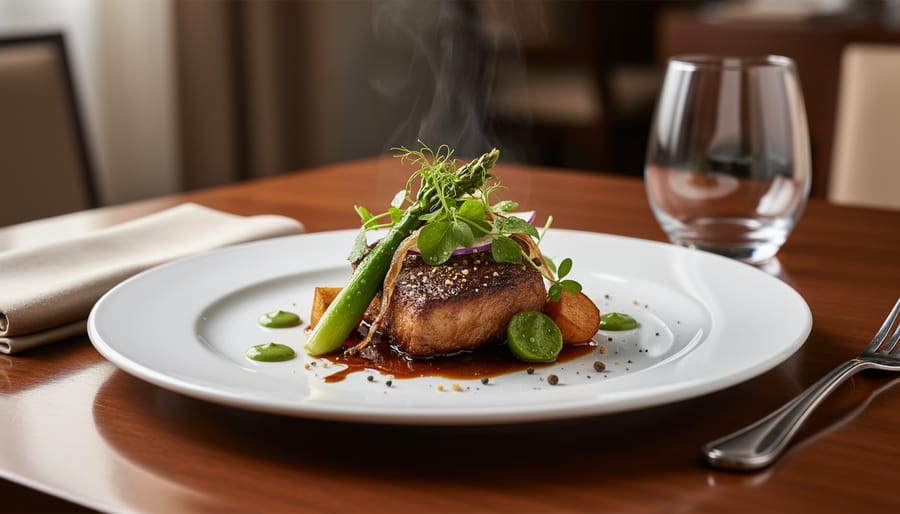
A gastronomic tasting menu operates as choreographed theatre, where each course advances a deliberate narrative rather than simply showcasing ingredients in isolation. Chefs architect these menus around flavor arcs, typically opening with delicate, palate-awakening preparations before building intensity through the middle courses, then gradually resolving complexity toward a clean, satisfying conclusion. At Alo, executive chef Patrick Kriss structures his progression to mirror dramatic tension: early courses featuring raw preparations and bright acidity establish baseline sensitivity, middle plates introduce richer proteins and layered sauces at peak intensity, then the sequence gracefully descends through cheese, pre-dessert, and final sweet courses that reset the palate entirely.
This intentional progression requires chefs to map not just flavors but textures, temperatures, and cooking techniques across the evening. You won’t encounter two consecutive courses with identical preparations, a seared protein follows something raw or braised; a warm plate precedes something chilled. The rhythm prevents palate fatigue while maintaining engagement, transforming what could be gluttony into an educational journey through culinary possibility.
The best Toronto tasting experiences demonstrate this architectural thinking by building thematic coherence, seasonal ingredients appearing in variations across multiple courses, or a single technique explored through different applications, creating intellectual satisfaction beyond mere satiation.
Service as Performance
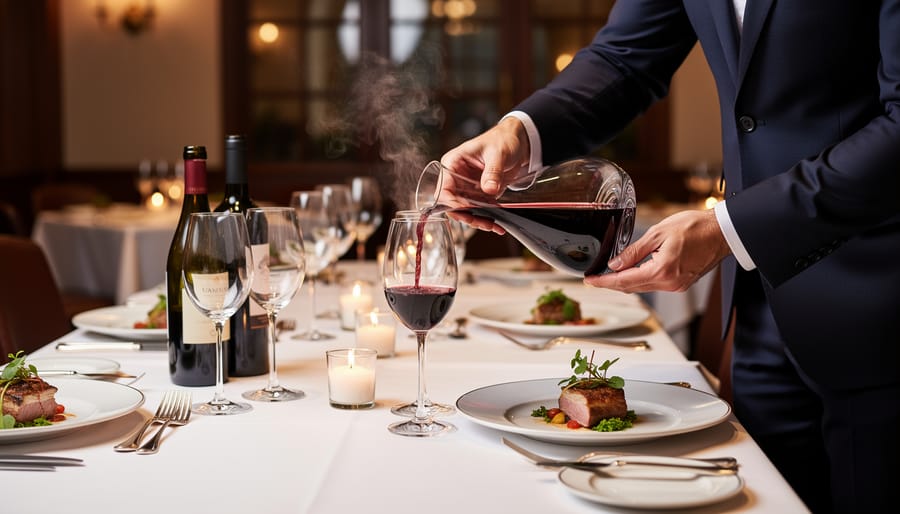
The moment a sommelier tilts the bottle and begins narrating the vineyard’s slope, the soil’s mineral composition, and the winemaker’s philosophy on aging, you realize service in a gastronomic restaurant operates as theater. Every interaction is choreographed, yet feels spontaneous, a paradox that defines the craft.
Sommeliers function as storytellers, bridging the kitchen’s vision with your palate. They don’t simply pour wine; they decode each pairing’s rationale, explaining why a Chablis with flinty minerality complements raw oysters better than a fruit-forward Chardonnay. Top sommeliers anticipate preferences from minimal conversation, adjusting selections mid-meal if they detect a preference for brighter acidity or fuller body.
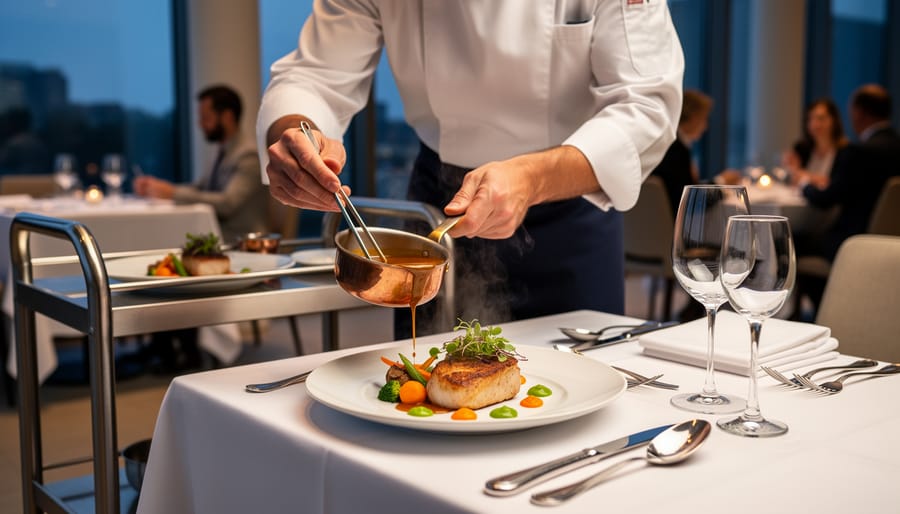
Table-side preparations transform cooking into spectacle. When a server carves duck breast beside your table, explaining the breed, the farm’s feeding regimen, and the resting process that preserves moisture, the act becomes educational ritual. Flambéed desserts, tableside emulsifications, and aged spirits decanted from crystal, these moments punctuate the evening with drama.
Course descriptions matter more than many diners expect. A skilled server doesn’t recite ingredients robotically. They highlight the Québec pork’s heritage breed, mention the chef’s two-day preparation involving koji fermentation, or note the foraged mushrooms gathered that morning from a specific forest. This context reshapes how you taste, priming your senses to detect nuances you might otherwise miss.
The cumulative effect elevates dining into something immersive. Service staff read the table’s energy, timing courses to conversation lulls, noticing when water glasses need refilling before you consciously register thirst. This attentiveness, invisible yet constant, distinguishes gastronomic service from efficient hospitality. The meal becomes collaboration between kitchen, sommelier, servers, and guests, a shared performance where everyone plays a role.
Forms of Gastronomic Expression
Gastronomic restaurants defy singular definition because they embrace radically different philosophies, each representing a legitimate path to culinary excellence. What unites them is not method but ambition, the relentless pursuit of transformation through technique, ingredient mastery, and conceptual rigor.
Classical haute cuisine remains the foundation many establishments build upon, drawing from the French tradition that codified gastronomic principles through Escoffier and beyond. These kitchens execute technically flawless preparations where mother sauces, classical garnishes, and impeccable plating follow time-honored conventions. Toronto’s most traditional gastronomic establishments demonstrate this lineage through dishes where Dover sole meunière arrives tableside or where foie gras preparations showcase centuries-refined technique. The emphasis lies in perfect execution of established forms rather than radical innovation.
Progressive kitchens have rewritten gastronomic language entirely, employing modernist techniques that seemed experimental a decade ago but now define contemporary luxury dining. Sous vide precision, spherification, foams, and dehydration become tools for textural exploration and flavor concentration. Chefs in this tradition deconstruct familiar dishes, isolating and recombining components to create entirely new sensory experiences. A tomato might appear as gel, powder, water, and compressed flesh within a single course, each form revealing different facets of the ingredient’s identity.
The spectrum of gastronomic approaches includes:
- Classical haute cuisine grounded in French technique and tradition
- Progressive modernist kitchens employing scientific methods and avant-garde presentations
- Terroir-focused restaurants celebrating regional ingredients and local ecosystems
- Cultural gastronomy that elevates specific culinary traditions to fine dining sophistication
- Fusion artistry bridging culinary cultures through thoughtful technique integration
- Ingredient-driven minimalism where pristine sourcing and restraint define the experience
Terroir-focused establishments anchor their menus to place, building relationships with farmers, foragers, and artisanal producers to express regional identity through food. These restaurants function as agricultural storytellers, where each course communicates something specific about Ontario’s seasons, lakes, or farmland. The seafood indulgence at waterfront gastronomic venues exemplifies this approach, showcasing Lake Ontario’s bounty or Atlantic Canadian harvests through preparations that honor rather than obscure the ingredient’s origin.
Cultural gastronomy takes traditional cuisines seriously enough to apply gastronomic rigor while maintaining authentic flavor profiles and techniques. Japanese kaiseki, Nordic foraging traditions, or Peruvian ingredient biodiversity become frameworks for sophisticated tasting menus that educate while they delight. These restaurants reject fusion’s blending impulse, instead deepening specific culinary traditions through meticulous sourcing, refined technique, and elevated presentation.
The ingredient-driven minimalist approach strips away elaboration, allowing exceptional raw materials to speak with minimal intervention. Three components on a plate, each treated with surgical precision, demonstrate that gastronomic artistry need not mean complexity. This philosophy demands flawless sourcing because nothing hides behind layered sauces or architectural plating.
When and Why to Choose a Gastronomic Restaurant
A gastronomic restaurant earns its place on your calendar when the experience itself matters as much as the occasion. Milestone celebrations, engagements, anniversaries, significant birthdays, find their natural home in these establishments because the multi-course journey mirrors the gravity of the moment. The deliberate pacing, the theatrical reveals, the accumulation of flavors throughout the evening create a shared memory that outlasts a single meal.
Beyond celebration, these restaurants serve as culinary classrooms for the genuinely curious. If you’ve been following a chef’s career, reading about a particular technique, or developing your palate with intention, a gastronomic experience delivers education you cannot replicate at home. You taste how koji transforms proteins, witness how temperature affects texture across six preparations of the same ingredient, understand why certain wine pairings work through direct sensory evidence. This learning happens without lectures, the food itself teaches.
Business entertainment represents another compelling use case, though with caveats. A gastronomic restaurant signals both taste and investment in the relationship, and the structured pacing creates natural conversation breaks between courses. However, the intimacy of these spaces and the attention demanded by each dish can complicate deal-making. Choose this setting when relationship-building matters more than negotiation, when you want to demonstrate sophistication rather than close a contract over dinner.
The investment delivers maximum value when you approach it with the right mindset. Rushing through a tasting menu to make theater curtain negates the point. Coming with rigid expectations about portion size or “normal” restaurant rhythms creates friction. These experiences reward openness, to unfamiliar ingredients, to the chef’s vision, to surrendering control for an evening. If that sounds exhausting rather than appealing, your money serves you better elsewhere.
Toronto’s must-visit gastronomic establishments require advance planning, particularly for weekend reservations. Most release tables 30 to 60 days ahead, and prime slots disappear within hours for in-demand venues. Weeknight dining offers better availability and often showcases the kitchen at its most relaxed and creative, freed from weekend volume pressures.
How far in advance should I book a gastronomic restaurant?
Reserve 30-60 days ahead for weekend tables at Toronto’s premier establishments, as prime time slots fill quickly. Weeknights typically offer better availability with the same quality experience.
What should I expect to pay for a gastronomic dining experience?
Toronto’s gastronomic restaurants typically range from $150 to $350 per person for the tasting menu alone, before wine pairings, tax, and gratuity. Budget $250-500 per person for the complete experience including beverages.
How long does a gastronomic meal last?
Plan for three to four hours minimum. The pacing is intentional, with courses arriving at measured intervals to allow proper appreciation and digestion between plates.
Can dietary restrictions be accommodated?
Most gastronomic kitchens handle allergies and restrictions with advance notice, though some ingredients or techniques may be central to the experience. Communicate requirements when booking rather than upon arrival.
Consider timing within your own dining evolution. A gastronomic experience makes more sense after you’ve explored a city’s broader restaurant landscape, developed some reference points, and cultivated genuine curiosity about elevated cuisine. Jumping directly to the pinnacle without context can feel overwhelming rather than revelatory. These restaurants represent the culmination of a dining education, not its starting point.
My Evening at Alo: A First-Person Account
I arrived at Alo on a crisp November evening, the discreet entrance on Spadina Avenue giving no hint of the transformation awaiting on the third floor. The elevator doors opened to reveal a space where soft candlelight danced across white tablecloths, and the hum of quiet conversation blended with the clink of crystal stemware. Our table overlooked the open kitchen, where Chef Patrick Kriss and his brigade moved with the precision of a ballet company.
The meal began not with food but with intention. Our server, Emily, explained that the evening would unfold across thirteen courses, each building on the last. The wine pairing, she noted, would veer from conventional paths, the sommelier had selected producers working with minimal intervention, chosen to challenge rather than simply complement.
The first course arrived: Hokkaido scallop, razor-thin and raw, draped over a pool of celeriac cream infused with black truffle. A single nasturtium leaf provided a peppery counterpoint. The scallop dissolved on my tongue, its sweetness amplified by the earthy cream, while the truffle, used with restraint rather than excess, added depth without dominance. The accompanying Riesling, from a small Mosel producer, cut through the richness with bright acidity and a flinty minerality that reset my palate completely.
By the fifth course, I understood the architecture Emily had described. A foie gras preparation gave way to halibut with beurre blanc, which transitioned to squab with cherry gastrique. Each dish answered the one before it, alternating between richness and lightness, land and sea, classical technique and modern restraint. The squab arrived medium-rare, its gamey intensity balanced by the tartness of preserved cherries. Our server explained the aging process for the bird and the source farm in Quebec, transforming context into flavor.
The kitchen’s technical mastery revealed itself in what seemed simple. A single langoustine, barely kissed by heat, required split-second timing to achieve its texture, firm yet yielding, sweet without fishiness. The accompanying shellfish bisque, reduced to syrup consistency, concentrated weeks of work into a few drops that coated the plate.
Between courses, I watched the kitchen’s choreography through the glass partition. Cooks plated dishes in seconds, every element positioned with tweezers and spoons, while Kriss moved between stations, tasting and adjusting. The final savory course, Wagyu beef with bone marrow and fermented mushroom, demonstrated the philosophy underpinning the entire evening: world-class ingredients, treated with reverence but pushed beyond their expected forms.
As we finished the meal with a deconstructed apple tart and mignardises, I tallied three hours at table. The experience had been both intellectually engaging and sensuously satisfying, a demonstration that gastronomic restaurants operate at the intersection of craft, artistry, and hospitality.
How A Gastronomic Restaurant Works
Behind the scenes, a gastronomic restaurant operates as a tightly choreographed production where every element serves the chef’s vision. The kitchen brigade works from detailed mise en place protocols, with each station prepping components hours, sometimes days, in advance. Specialized equipment like sous vide circulators, anti-griddles, and rotary evaporators enable the precision techniques that define modern gastronomy.
Timing drives everything. When you make a reservation, the kitchen begins planning your evening, calculating prep schedules so each course arrives at peak temperature and texture. The expeditor coordinates plating with military precision, ensuring synchronized delivery to your table while the sommelier tracks your wine service rhythm.
Revenue models differ from conventional restaurants. Lower turnover and higher ingredient costs mean pricing reflects the labor intensity: a single dish might require three days of preparation across multiple cooks. Many operate on tasting menu-only formats to control kitchen flow and ingredient waste, eliminating the unpredictability of à la carte ordering. This structure allows chefs to showcase seasonal ingredients at their absolute prime while maintaining the creative freedom that separates gastronomic restaurants from production-focused fine dining operations.
How A Gastronomic Restaurant Is Used
Gastronomic restaurants serve distinct purposes that extend beyond ordinary dining out. The most common application is celebrating life’s defining moments, engagements, anniversaries, promotions, where the multi-hour commitment and elevated cost align with the significance of the occasion. The structured progression of courses creates natural pauses for conversation and reflection, while the memorable nature of each dish provides shared talking points that outlast the evening itself.
These establishments also function as culinary education platforms. Diners curious about advanced techniques, unfamiliar ingredients, or wine regions use gastronomic experiences to expand their palate vocabulary. A chef’s explanation of dry-aging methods or a sommelier’s guided tasting through Burgundy’s vineyard hierarchy delivers knowledge that cookbooks and wine lists cannot.
Business professionals leverage gastronomic restaurants for high-stakes client entertainment, where the caliber of the venue signals respect and investment in the relationship. The pacing allows for substantive discussion between courses, and the neutral yet impressive setting keeps focus on connection rather than distraction.
Some treat these restaurants as laboratories for their own cooking, observing plating techniques, flavor combinations, and ingredient treatments they can adapt at home. The tasting menu format exposes diners to a breadth of ideas in a single evening, compressed culinary inspiration that might otherwise require months of restaurant visits.
A gastronomic restaurant represents far more than an expensive meal, it’s a deliberate, orchestrated encounter with culinary artistry at its most refined. These establishments function as laboratories where chefs interrogate ingredients, test the boundaries of technique, and translate personal vision into edible form. The servers aren’t mere order-takers; they’re interpreters who bridge the kitchen’s creative intent with your sensory experience. Everything from the glassware selection to the pause between courses exists by design.
In Toronto’s dining landscape, gastronomic restaurants matter because they refuse to settle. While trends chase approachability and casual formats dominate, these kitchens maintain standards that demand patience, skill, and substantial investment. They preserve techniques that might otherwise fade, champion ingredient integrity when convenience tempts shortcuts, and create employment for sommeliers, foragers, and artisans whose expertise thrives only in this rarefied environment.
The value proposition extends beyond the meal itself. You’re funding a form of culinary research and development, supporting an ecosystem that elevates Toronto’s global reputation, and participating in an experience that lingers in memory long after the final course. Not every occasion warrants this level of commitment, but when you seek dining that challenges, delights, and occasionally surprises you with what food can accomplish, a gastronomic restaurant delivers something genuinely irreplaceable. It’s theater, education, and pleasure woven into a single, unforgettable evening.