
A tea ritual is a formalized ceremony centered on the preparation, serving, and consumption of tea, rooted in cultural tradition and designed to foster mindfulness, connection, and respect. These practices transcend simple beverage consumption, transforming tea into a medium for spiritual reflection, social bonding, and the preservation of centuries-old customs that continue to shape communities across Asia, the Middle East, Africa, and beyond.
For the discerning palate accustomed to the ceremonial decanting of fine wine or the precise craft of cocktail mixing, tea rituals offer a parallel world of sensory refinement and cultural depth. The Japanese tea ceremony demands the same attention to terroir and technique that informs a Burgundian tasting. Moroccan mint tea service echoes the convivial theater of tableside preparations in Toronto’s finest restaurants. Chinese gongfu cha rivals the complexity of spirits nosing with its nuanced appreciation of aroma, body, and finish across multiple infusions.
This exploration reveals how diverse cultures have elevated tea preparation into art forms that engage all the senses. You’ll discover the philosophical underpinnings of Japanese chanoyu, where every gesture carries symbolic weight. You’ll learn how British afternoon tea codified social hierarchy through porcelain and petit fours, much as ancient grains once signaled wealth and civilization. You’ll understand why Moroccan hosts pour from dramatic heights and why Chinese tea masters obsess over water temperature with the precision of sous vide cooking.
Whether you seek to recreate these rituals at home or experience them through Toronto’s growing tea culture, this guide provides both the cultural context and practical knowledge to appreciate tea ceremony as a sophisticated culinary practice. The mechanics, regional variations, and local resources ahead will equip you to participate meaningfully in these timeless traditions.
Understanding Tea Rituals: Definition and Cultural Significance
A tea ritual transcends the simple act of steeping leaves in hot water. It is a formalized, intentional practice that elevates beverage preparation into a cultural statement, a meditative discipline, and a choreographed expression of values. Where casual tea drinking serves a functional purpose, caffeine, warmth, refreshment, a tea ritual introduces layers of meaning through prescribed steps, specialized vessels, and deliberate pacing. The distinction lies not in the quality of the leaves themselves, but in the attention and structure surrounding their preparation. Just as food history reveals how cooking techniques shape civilizations, tea rituals document cultural philosophies through centuries-old ceremonies that continue to evolve.
What transforms tea preparation into ritual? First, intention. A ritual begins before the water boils, with a conscious decision to slow time and heighten awareness. Second, structure. Each movement follows a learned sequence, water temperature calibrated to the leaf type, precise steeping durations, specific pouring techniques. These aren’t arbitrary preferences but accumulated wisdom passed through generations. Third, specialized tools. A Japanese tea whisk carved from bamboo, a Yixing clay pot seasoned with decades of use, a silver English strainer from Victorian times, these objects carry cultural memory and demand respect in their handling.
The cultural significance extends beyond aesthetics. In Japan, the tea ceremony embodies Zen principles of harmony and tranquility, training practitioners in presence and humility. Chinese Gongfu Cha translates as “making tea with skill,” positioning the tea master as a cultivated individual who demonstrates refinement through brewing technique. British afternoon tea established social hierarchies and gender roles while creating a structured pause in the workday. Moroccan tea service functions as negotiation, hospitality test, and relationship builder. Indian chai rituals punctuate daily life with communal moments that transcend class boundaries.
These rituals serve as meditation practices, forcing attention to texture, aroma, temperature, and taste across multiple senses simultaneously. They create social bonds through shared participation and observation, establishing trust and respect. The ritualized framework provides structure for contemplation, conversation, or simply being present, luxuries increasingly rare in contemporary life. Understanding this depth allows sophisticated drinkers to approach tea with the same reverence they bring to a wine cellar, recognizing each tradition as a living archive of cultural wisdom.
How Tea Rituals Work: The Anatomy of Ceremony
At their core, tea rituals around the world operate through a carefully orchestrated sequence that transforms the quotidian act of brewing into something transcendent. Unlike the rushed dunking of a bag in a mug, ceremonial tea preparation demands deliberate attention to each phase: selecting and measuring the leaves, heating water to a precise temperature, warming the vessels, controlling steeping time, and finally, serving with intentionality. This structured choreography functions much like the protocol surrounding wine service in fine dining, both rituals slow the pace of consumption and frame the beverage as worthy of contemplation rather than mere hydration.
The vessels themselves carry significance beyond utility. Clay teapots season over time, absorbing oils that enhance future brews. Porcelain gaiwans allow precise control of infusion strength. Cast iron tetsubin moderate water temperature. Each tool embodies generations of refinement, selected for how it affects flavor, aroma, and the tactile experience of handling. The weight of a well-crafted cup in your palm, the curve of a spout designed for controlled pouring, these details anchor participants in the present moment.
Water temperature and timing separate ritual from routine. Green teas demand cooler water around 70-80°C to prevent bitterness; black teas tolerate boiling water; oolongs often require temperatures between these extremes. Steeping duration varies from seconds to several minutes depending on the leaf type, with many traditions employing multiple short infusions that reveal evolving flavor profiles, akin to decanting wine to expose different aromatic layers. This precision requires knowledge passed down through practice, not guesswork.
The serving protocol establishes hierarchy and respect. Who pours, who receives first, whether the cup is filled completely or left partly empty, these gestures communicate cultural values. In many traditions, the host serves guests before themselves, a physical manifestation of hospitality that has shaped human history across civilizations. The act of receiving tea with both hands, pausing to appreciate its fragrance before drinking, mirrors the ritual of examining a wine’s color and bouquet.
What truly distinguishes ceremonial tea drinking is the requirement of presence. The ritual creates a threshold between ordinary time and heightened awareness, where the mind focuses on sensory input, the earthy aroma of aged pu-erh, the delicate sweetness lingering on the palate, the warmth spreading through cupped hands. This meditative framework doesn’t just produce a well-brewed cup; it produces a state of mindful attention, transforming participants while the tea steeps.
Types of Tea Rituals: A Global Survey
Japanese Chanoyu: The Way of Tea
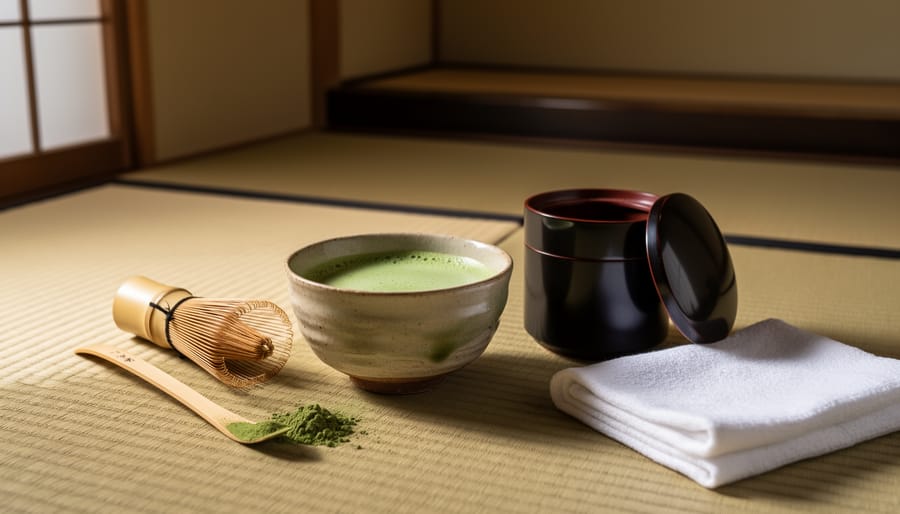
Chanoyu, literally “hot water for tea”, represents the pinnacle of Japanese ceremonial refinement, a practice where every gesture carries meaning and every object embodies wabi-sabi aesthetics. The ceremony transforms the simple act of preparing powdered green tea into a meditation on impermanence, beauty, and connection. I experienced an authentic chanoyu in a machiya townhouse in Kyoto, where the tearoom’s shoji screens filtered afternoon light into a soft glow, and the quiet scrape of bamboo against ceramic became the only sound in a world suddenly slowed to ritual pace.
- Chanoyu
- The formal Japanese tea ceremony, literally “hot water for tea”, a choreographed practice rooted in Zen Buddhism that elevates tea preparation to a spiritual discipline.
- Matcha
- Stone-ground powder from shade-grown green tea leaves, whisked with hot water to create a frothy, jade-green beverage with concentrated umami and subtle bitterness.
- Chashaku
- A curved bamboo tea scoop used to measure and transfer matcha powder from its container to the tea bowl.
- Chasen
- A bamboo whisk with fine-split tines that aerates and froths the matcha into a smooth, creamy suspension.
- Chawan
- The tea bowl, often a handcrafted ceramic piece chosen for its seasonal appropriateness and aesthetic resonance with the ceremony’s theme.
- The Four Principles
- Wa (harmony), Kei (respect), Sei (purity), and Jaku (tranquility), the foundational concepts that guide every aspect of the tea ceremony and the practitioner’s spiritual cultivation.
The tea master’s movements follow a centuries-old choreography: three scoops of vivid matcha into the chawan, hot water added in a precise arc, the chasen moving in rapid M-patterns until foam crowns the surface. The bowl is then rotated twice before presentation, its most beautiful side facing the guest, a gesture of respect and aesthetic generosity. Seasonal elements permeate the experience: in autumn, a chrysanthemum scroll hangs in the alcove, the wagashi sweet echoes persimmon hues, and the chawan’s glaze suggests falling leaves. This attention to seasonal harmony mirrors the sommelier’s consideration of terroir and vintage, transforming tea service into a multisensory narrative.
Chinese Gongfu Cha: The Art of Skillful Brewing
Where Japanese tea ceremony seeks to still the mind through ritual precision, Chinese Gongfu Cha pursues the restless perfection of flavor itself. The name translates roughly as “making tea with skill,” and the practice demands exactly that: the technical mastery to coax distinct personalities from premium leaves across a sequence of brief, intense infusions.
Unlike Western steeping where tea leaves drown for minutes in oversized pots, Gongfu Cha employs small vessels, high leaf-to-water ratios, and infusions measured in seconds. A practiced hand might extract six to ten steepings from a single portion of oolong or aged pu-erh, each revealing different aromatic layers, textural shifts, and evolving bitterness or sweetness. The first infusion awakens the leaf, the second and third peak with concentrated flavor, the middle rounds soften and reveal subtleties, and the final steepings whisper their farewell.
The vessels matter profoundly. Yixing clay teapots, unglazed and porous, season over years of use, building an interior patina that enhances subsequent brews. Serious collectors dedicate individual pots to specific tea categories, never mixing oolong with pu-erh. The alternative, a lidded gaiwan bowl, offers transparency and control, allowing the brewer to monitor leaf unfurling and adjust timing accordingly.
For those who approach wine with attention to terroir, vintage variation, and evolving structure in the glass, Gongfu Cha offers parallel satisfactions. High-mountain oolongs express their elevation in floral brightness and mineral backbone. Aged pu-erhs develop earthy complexity and medicinal depth across decades, not unlike vintage ports. Each infusion becomes a tasting note in motion.

British Afternoon Tea: Social Elegance and Tradition
British afternoon tea represents less a tea ritual and more a choreographed social performance, a cultural tradition that emerged in the 1840s when Anna, Duchess of Bedford, sought to bridge the gap between lunch and late Victorian dinners. What began as a private indulgence evolved into an elaborate institution complete with its own etiquette, specialized equipment, and rigid conventions.
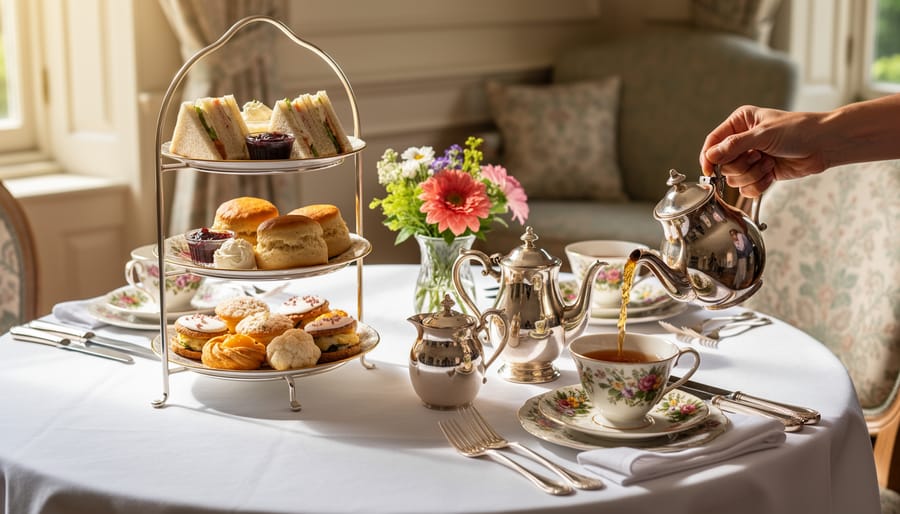
The architecture of proper afternoon tea demands a three-tiered stand: savory finger sandwiches on the bottom (crusts removed, naturally), scones with clotted cream and jam on the middle tier, and delicate pastries crowning the top. You consume from bottom to top, each layer offering a progression from savory to sweet that mirrors the structure of a formal French meal.
The china matters enormously. Bone china’s translucency and lightness elevate the experience beyond mere refreshment, while the teapot’s silver strainer and warmer maintain optimal temperature. Then comes the milk-first debate, a class marker disguised as preference: historically, adding milk before tea protected cheaper porcelain from cracking, making the practice a tell of social standing.
Today’s luxury hotels from London’s Claridge’s to Toronto’s King Edward have revived afternoon tea as theater, complete with white-gloved service, live piano, and Champagne options. The parallels to fine dining are deliberate: seasonal menus, tableside service, carefully curated beverage pairings. Both rituals slow time, demanding you savor rather than consume, transforming a meal into an occasion worth dressing for.
Moroccan Mint Tea: Hospitality in a Glass
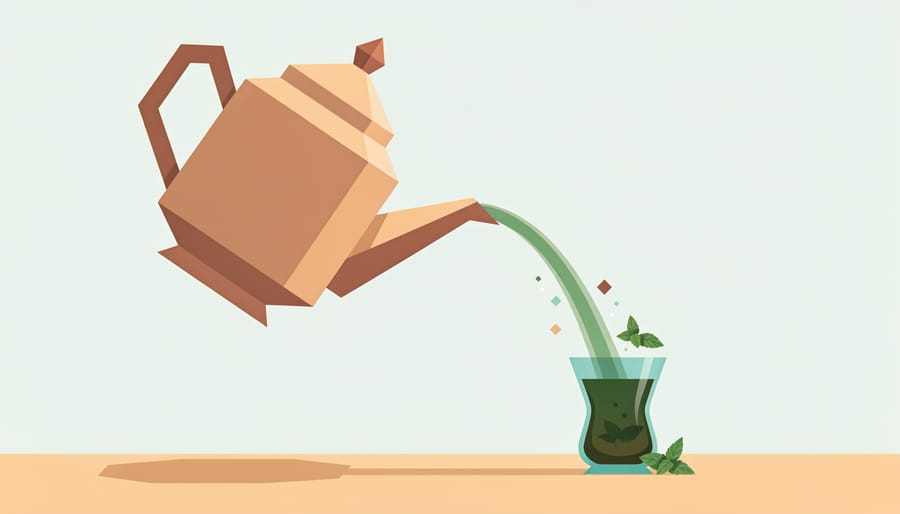
In Morocco, tea transcends beverage status to become a choreographed expression of welcome, its preparation and service as vital to hospitality as the meal itself. The ritual centers on three servings, each poured from progressively greater heights to aerate the brew and create a distinctive foam. That theatrical pour isn’t mere showmanship, the cascading stream cools the tea slightly while releasing aromatic oils from the fresh mint leaves that define the drink.
The foundation is Chinese gunpowder green tea, its tightly rolled pellets unfurling in boiling water, complemented by generous handfuls of fresh spearmint (nana mint, specifically) and an amount of sugar that would startle Western sensibilities. The first glass arrives bitter and strong; the second, steeped longer with the same leaves, achieves balance; the third turns sweet and mellow. “Doux comme la vie,” Moroccans say, sweet as life itself. Refusing the first glass risks offense; declining all three signals you’ve overstayed.
I’ve watched this ritual mediate business negotiations in Marrakech souks and seal friendships in Berber mountain homes. The heavy silver teapot, the jewel-toned glasses, the rhythmic pour repeated until foam crowns each serving, these elements create pauses in conversation, moments of shared appreciation that mirror the extended tastings I’ve experienced in Burgundy cellars. Here, tea functions as social lubricant and timer, its three-act structure pacing interactions with ceremonial grace.
Indian Chai Culture: Spice, Milk, and Community
Unlike the meditative stillness of Japanese tea ceremony or the refined pouring of Moroccan mint, Indian chai culture thrives on motion, noise, and spontaneity. From the clatter of railway platforms where chai wallahs pour milky tea from height into clay cups, to the bubbling pots in home kitchens that signal the arrival of guests, chai functions as India’s social lubricant, a ritual of connection rather than contemplation.
The preparation itself is deliberate yet unfussy. Black CTC tea (crush, tear, curl) goes directly into boiling water with crushed spices: cardamom pods for aromatic sweetness, fresh ginger for heat, cinnamon for warmth, cloves for depth. Milk and sugar follow, and the mixture boils vigorously until the liquid darkens to caramel and the spices release their oils. Some recipes call for black pepper or fennel; others keep it minimal. The result is a brew that coats the palate with tannin, sweetness, and spice in equal measure, more beverage than infusion, closer in texture to a light dessert than tea as the Japanese or Chinese understand it.
Chai punctuates the Indian day: morning wake-up, mid-morning break, afternoon refresh, evening wind-down. It accompanies negotiations, gossip, business deals, and long drives. The ritual lies not in prescribed steps but in the act of offering, accepting, and sharing, a cup extended means welcome, and refusal borders on insult. Street vendors personalize their masala blends like Toronto baristas dial in espresso, and regulars return for a specific wallah’s signature ratio of spice to milk.
Experiencing Tea Rituals in Toronto: Where Tradition Meets Modernity
Toronto’s cosmopolitan food scene has embraced traditional tea rituals with the same enthusiasm it reserves for craft cocktails and natural wine, creating a landscape where centuries-old ceremony meets modern gastronomy. The city’s diverse cultural communities have established authentic tea houses that transport visitors from the Annex to Kyoto or from Yorkville to Hangzhou, while luxury hotels have reimagined afternoon tea as contemporary culinary theater.
For those seeking traditional Japanese chanoyu, Cha-no-yu Kai at the Japanese Cultural Centre in North York offers monthly tea ceremonies led by certified tea masters trained in the Urasenke tradition. Here you’ll kneel on tatami mats in a purpose-built tea house, experiencing the full ritualized sequence from the kaiseki meal to the final bowl of thick matcha. The ceremony typically runs three hours and requires advance booking.
- Ten Ren’s Tea Time in Markham, Authentic Gongfu Cha service with a rotating selection of premium oolongs, pu-erhs, and single-origin teas served in traditional Yixing clay vessels and gaiwans
- The King Edward Hotel’s Victoria Room, Contemporary British afternoon tea featuring house-blended teas, warm scones with Devonshire cream, and seasonal finger sandwiches in a gilded Edwardian salon
- Tealish on Queen West, Approachable introduction to tea ceremony with guided tastings, proper brewing demonstrations, and an extensive retail selection of loose-leaf teas and Japanese ceramics
- Cha Le Tea House in Kensington Market, Chinese tea ceremony experiences paired with dim sum, emphasizing terroir and vintage variations in aged pu-erh
Elena Chen, tea sommelier at Canoe Restaurant, has pioneered tea pairings for their tasting menus, matching delicate white teas with raw seafood and robust aged pu-erhs with game. “Tea offers the same complexity as wine, with tannins, minerality, and vintage variation,” she explains. “A 2018 Wuyi rock oolong can hold its own against our boldest dishes.”
For home practice, Maru Coffee and Tea Bar in Little Italy stocks authentic Japanese matcha sets, while Dobra Tea near Bloor-Yonge carries hand-thrown Korean bowls and antique gaiwans. The Art Gallery of Ontario’s gift shop surprisingly offers museum-quality Japanese tea ceremony implements, curated to reflect the same aesthetic principles as their collection.
how it works
At their essence, tea rituals transform the mundane act of brewing leaves into a choreographed meditation on attention and respect. The mechanics begin with preparation: sourcing quality tea, heating water to the precise temperature for the varietal (cooler for delicate greens, near-boiling for robust blacks), and arranging specialized vessels, teapots, cups, whisks, or trays, in their prescribed positions. This spatial arrangement isn’t arbitrary; it creates a stage where each gesture carries intention.
The brewing sequence follows deliberate steps that vary by tradition but share common principles. Whether whisking matcha in circular motions, rinsing Yixing clay with the first steep, or pouring Moroccan tea from dramatic heights to aerate, each action serves both practical and symbolic purposes. Water temperature and steeping duration extract specific compounds, amino acids, polyphenols, volatile aromatics, that define the tea’s character, much as temperature and decanting shape wine’s expression.
The serving protocol channels hospitality through prescribed gestures: presenting the cup with both hands, observing the tea’s color and steam, inhaling before sipping. This ritualized consumption, slower than grabbing coffee to-go, creates space for sensory appreciation and social connection. Like how remarkable food becomes transformative through mindful eating, tea ceremonies elevate a simple beverage into an anchoring practice that heightens awareness of taste, temperature, texture, and the present moment itself.
Types or components
Tea rituals around the world share common structural components that transform simple brewing into ceremonial practice. Understanding these universal elements reveals how different cultures adapt the same basic framework to express their unique values and aesthetics.
The Tea Itself forms the foundation, whether powdered matcha, compressed pu-erh, loose-leaf Darjeeling, or gunpowder green with mint. Each tradition selects specific tea types that align with its brewing method and cultural preferences.
Specialized Vessels and Tools define the ritual’s character. Japanese ceremonies employ ceramic bowls and bamboo whisks, Chinese Gongfu uses tiny Yixing clay pots, British tradition demands proper porcelain, and Moroccan service requires ornate silver teapots with long curved spouts.
Water Treatment proves crucial across all traditions, temperature control, source selection, and heating method significantly impact the final cup’s quality.
Prescribed Preparation Sequences distinguish ritual from casual brewing. The choreographed movements, precise timing, and deliberate pacing create a meditative structure that honors the tea and the moment.
Serving Protocol and Etiquette govern how tea is offered, received, and consumed, transforming a beverage into a vehicle for expressing respect, hospitality, and social bonds.
Across continents and centuries, tea rituals around the world reveal a remarkable convergence: whether whisking matcha in Kyoto, performing the theatrical pour of Moroccan mint tea, or orchestrating multiple infusions of oolong in a Gongfu ceremony, each tradition elevates brewing into an act of mindfulness, hospitality, and sensory engagement. These ceremonies transform tea from mere beverage into cultural expression, slowing our frenetic pace and demanding full presence in ways that mirror the contemplative appreciation we reserve for exceptional wine.
Understanding these rituals enriches every dimension of tea experience. Travel becomes deeper when you recognize the cultural weight behind a three-pour Moroccan service or the seasonal aesthetics shaping a Japanese tea room. Home practice gains sophistication when you approach temperature, timing, and vessel selection with the same precision a sommelier brings to wine service, recognizing that terroir, processing, and brewing method profoundly shape flavor profiles and aromatic complexity.
What equipment is needed to start a tea ritual at home?
Begin with quality loose-leaf tea, a temperature-controlled kettle, and appropriate vessels for your chosen tradition: a gaiwan or Yixing pot for Chinese teas, a whisk and bowl for matcha, or a proper teapot and cups for British service. Specialized tools enhance the experience but aren’t essential for exploring ritual mindfulness.
How do tea rituals compare to wine tasting protocols?
Both emphasize terroir, production methods, and sensory evaluation through appearance, aroma, and flavor. Tea rituals often involve multiple infusions that reveal evolving characteristics, similar to decanting wine, while demanding equal attention to temperature, timing, and serving vessels.
Can tea rituals be adapted for modern entertaining?
Absolutely. Contemporary hosts blend traditional elements with modern contexts: Gongfu-style tastings as alternatives to wine flights, matcha service as pre-dinner palate preparation, or afternoon tea reimagined with artisanal pastries and rare single-estate leaves.
In cosmopolitan centers like Toronto, tea rituals continue evolving without losing their essence. Luxury hotels reinterpret British afternoon tea with local ingredients, Japanese tea masters offer ceremonies in contemporary spaces, and innovative restaurants pair rare teas with multi-course tasting menus. This ongoing dialogue between tradition and modernity confirms that tea rituals aren’t museum pieces but living practices, inviting sophisticated exploration with every carefully brewed cup.