
Seek out the vendors who’ve mastered single-dish excellence rather than sprawling menus. Toronto’s most compelling culinary stories unfold at intimate counter spaces where chefs focus their entire craft on perfecting three or four preparations. The cart operator who sources heritage pork from Mennonite farms in Wellington County for their bánh mì, or the pop-up chef aging their own pastrami for two weeks before serving it on house-baked rye, these specialists deliver experiences that rival any white-tablecloth establishment.
Arrive during off-peak hours, typically between 2:30 and 4:30 PM, when proprietors have time to discuss their sourcing decisions and preparation methods. I’ve discovered that conversations during these quiet periods reveal the stories behind each dish: the grandmother’s recipe that inspired a filling, the specific varietal of tomato chosen for acidity balance, the reason they cure their own pancetta instead of buying it prepared. These insights transform a simple meal into something memorable.
Pair unconventional combinations by matching intensity rather than tradition. The marriage of street food and wine succeeds when you consider weight, fat content, and spice levels. A Grüner Veltliner’s white pepper notes complement the heat in jerk chicken, while an off-dry Riesling cuts through the richness of duck confit poutine. The conventional wisdom about casual food deserving casual beverages misses entirely the sophistication possible in thoughtful pairings.
Document your experiences with specific details: the exact temperature of that freshly fried arancini, the crystalline snap of properly tempered chocolate on a dessert taco, the way steam rises from soup dumplings the moment they’re pierced. These sensory observations separate genuine reviews from superficial assessments and help fellow enthusiasts decide where to invest their dining hours in this sprawling, diverse city.
The New Guard: Where Street Meets Sophistication
Toronto’s dining scene has undergone a remarkable metamorphosis over the past five years, and nowhere is this evolution more pronounced than in the street food arena. What was once the domain of quick bites and convenience has transformed into a sophisticated culinary movement, championed by classically trained chefs who’ve traded white tablecloths for mobile kitchens without sacrificing refinement.
During my recent visit to a pop-up beneath the Gardiner Expressway, I watched Chef Marcus Chen, formerly of Alo, prepare duck confit tacos with the same meticulous attention he once reserved for tasting menus. His mise en place rivaled any Michelin-starred kitchen. The duck leg, confited for eighteen hours in rendered fat infused with star anise and Sichuan peppercorns, was shredded tableside and nestled into house-made corn tortillas. A pickled ramp and elderflower crema finished the composition.
“The technique doesn’t change because the venue does,” Chen explained, adjusting the temperature on his precision induction burner. “If anything, the constraints of a mobile kitchen demand greater discipline.”
This philosophy separates genuine gourmet street food from elevated casual dining. The distinction lies not in presentation alone but in fundamental culinary integrity. True gourmet street vendors source ingredients with the scrutiny of fine dining establishments. They employ classical techniques like sous vide, fermentation, and proper stock reduction. Temperature control is obsessive. Plating, though streamlined, demonstrates compositional understanding.
The cultural shift reflects changing consumer expectations. Sophisticated diners no longer accept the false choice between quality and accessibility. They seek provenance, technique, and flavor complexity regardless of the setting. Street food operators have responded by creating dishes that honor both their culinary training and the format’s democratic spirit.
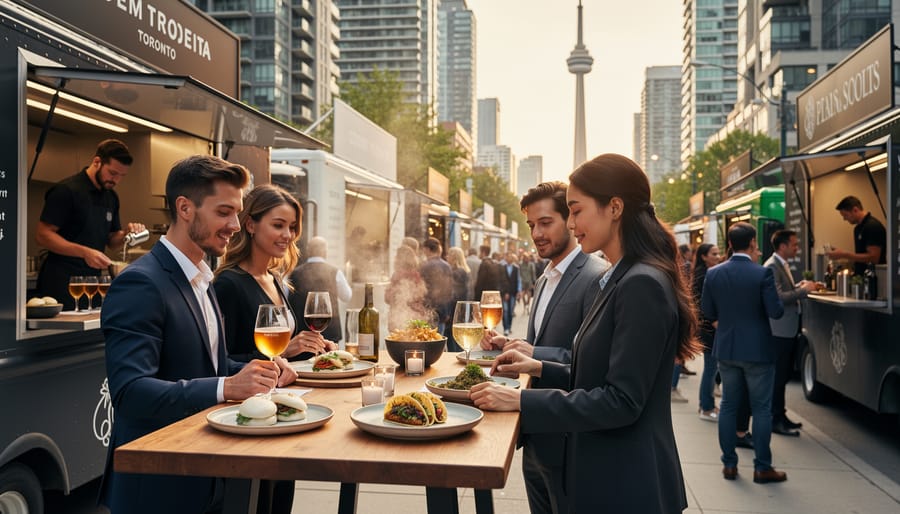
I’ve tasted Perigord truffle risotto served from a carefully climate-controlled cart, paired with a crisp Gavi di Gavi poured into proper stemware. The experience was transcendent, proving that sophistication isn’t bound by brick and mortar.
Signature Pairings Worth the Queue
Asian Fusion Meets Natural Wine
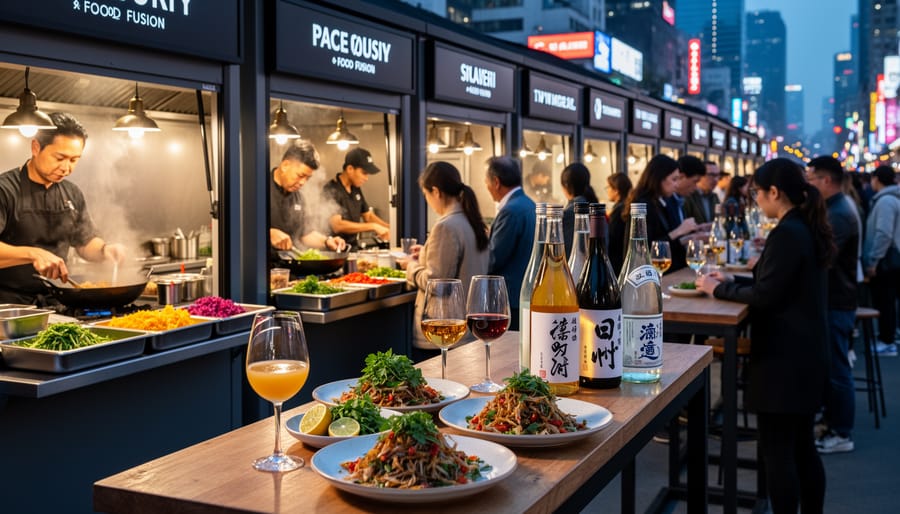
My first encounter with Toronto’s Asian fusion street food scene paired with natural wines happened on a crisp October evening at a pop-up inside Kensington Market. The vendor, a former izakaya chef, was serving compressed watermelon with shiso and compressed cucumber, finished with yuzu kosho, alongside a cloudy amber wine from Slovenia. The pairing shouldn’t have worked on paper, but the wine’s oxidative notes amplified the fermented complexity of the yuzu kosho while its subtle tannins cut through the fruit’s sweetness. This is where wine pairing expertise meets intuitive culinary innovation.
I’ve since become a regular at several vendors who treat their beverage programs with the same rigor as their food. At a Japanese-Peruvian stall near Trinity Bellwoods, I sampled miso-glazed octopus tacos alongside a funky orange wine from Georgia. The wine’s skin-contact fermentation created textural harmony with the charred octopus, while its bright acidity balanced the miso’s umami depth.
The most revelatory pairing came from a Korean fried chicken specialist who stocks an impressive selection of natural sake and Japanese whisky. Their gochujang-honey wings paired with a kimoto sake revealed how the sake’s lactic, yogurt-like character tempered the gochugaru heat while its mineral finish cleansed the palate between bites.
One vendor owner explained his philosophy: finding flavor bridges between traditional Asian ingredients and unconventional wines creates dialogue rather than competition on the palate. His karaage paired with a low-intervention Beaujolais proved the point. The wine’s bright cherry notes and carbonic maceration created a counterpoint to the fried chicken’s richness without overwhelming the ginger-soy marinade.
These aren’t casual experiments. They represent serious beverage curation meeting approachable street food formats.
Elevated Comfort Food and Craft Spirits
Toronto’s culinary landscape has undergone a remarkable transformation, and nowhere is this more evident than in the sophisticated reinterpretation of street food classics. The city’s top establishments are reimagining hot dogs, tacos, and burgers with premium ingredients and techniques typically reserved for fine dining, creating an entirely new category of indulgent comfort cuisine.
During a recent tasting at The Carbon Bar, I experienced their dry-aged beef burger adorned with foie gras and truffle aioli, paired expertly with a bourbon flight featuring Basil Hayden’s and Angel’s Envy. The richness of the burger demanded the caramel notes and spice of the bourbon, creating a harmonious dialogue between food and spirit that transcended typical pub fare.
Executive Chef Marcus Chen of Street Alchemy explained his philosophy: “We source our brisket from local Ontario farms and smoke it for fourteen hours before grinding it fresh daily. This isn’t about nostalgia. We’re creating something entirely new while respecting the soul of street food.”
The craft cocktail movement has found its perfect companion in this gourmet street food renaissance. Bar Raval’s mezcal-based cocktails complement their lobster tacos with remarkable precision, while Park Slope’s house-made charcuterie hot dogs pair beautifully with their collection of Canadian craft spirits, including Dillon’s Unfiltered Gin and Goodridge & Williams Bourbon.
These pairings require thoughtful consideration. The acidity in a well-crafted margarita cuts through the richness of Korean-style short rib tacos, while an Old Fashioned’s bitters and sweetness balance the umami depth of wagyu beef burgers topped with aged cheddar and bacon jam.
What distinguishes these establishments from conventional gastropubs is their commitment to provenance and technique. Every component receives careful attention, from house-baked brioche buns to spirits selected specifically to enhance rather than overpower the cuisine.
Mediterranean Small Plates and Regional Wines
Toronto’s Mediterranean street food scene has matured beyond basic falafel stands into something genuinely refined. During my recent exploration of the city’s elevated outdoor dining options, I discovered vendors who’ve transformed the traditional street food model into sophisticated tasting experiences that rival seated restaurants.
At the St. Lawrence Market periphery, I encountered Oleada, a mobile operation specializing in Iberian charcuterie boards paired with Spanish vermouths. The proprietor, formerly a sommelier at Alo, curates selections that change weekly based on imported products and locally-sourced ingredients. Their jamón ibérico de bellota arrives with house-made membrillo and Marcona almonds, served on slate boards that somehow feel entirely appropriate in an outdoor setting. The pairing with La Quintinye Rouge vermouth showed remarkable restraint, the botanical notes complementing rather than overwhelming the acorn-fed pork.
Trinity Bellwoods hosts Aegean Ember on weekends, where chef Dimitri Kalakos prepares fire-grilled octopus and lamb chops over charcoal braziers. The octopus possessed that elusive tender-yet-charred quality that separates exceptional preparation from competent cooking. Kalakos told me he sources wines exclusively from small Greek and Cypriot estates, most unavailable at LCBO. His Assyrtiko from Santorini, with its volcanic minerality and citrus profile, proved an inspired match for the seafood preparations.
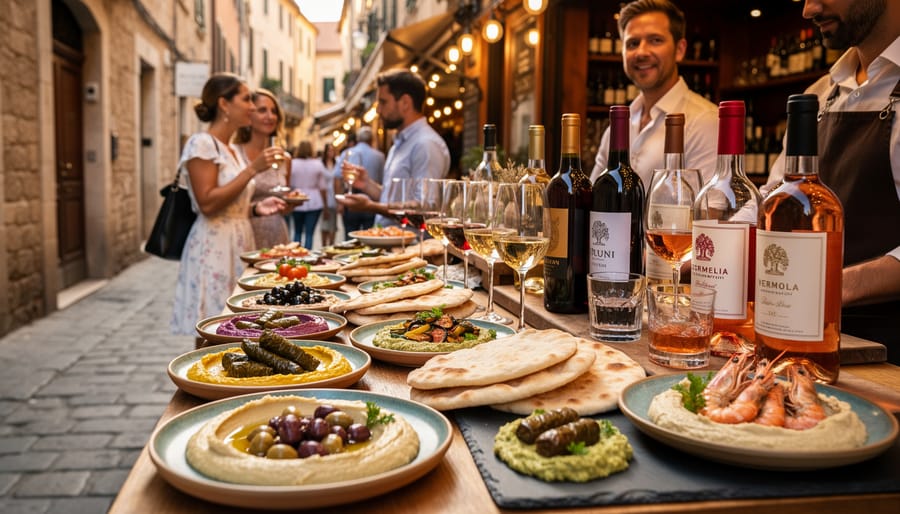
The mezze approach at Levantine Table near Kensington Market deserves particular mention. Their muhammara achieves proper depth through Aleppo pepper and pomegranate molasses, while the baba ganoush carries the smoky essence of eggplant charred over open flame. These aren’t simplified versions for mass appeal. The wine list focuses on Lebanese and Israeli producers, including an exceptional Château Musar rosé that demonstrated considerable complexity.
These vendors represent something beyond convenience dining. They’ve created legitimate culinary experiences that happen to unfold outdoors, challenging our preconceptions about what street food can deliver.
The Art of the Pairing: What Makes It Work
The principles that govern successful pairings at Toronto’s premier street food establishments mirror those found in fine dining, yet adapt brilliantly to the constraints of handheld cuisine. During my recent explorations, I consulted with certified sommelier Marcus Chen, who explained that the balance and contrast principles remain fundamental, but portability introduces fascinating variables. A delicate Grüner Veltliner alongside a Vietnamese bánh mì works because the wine’s crisp acidity cuts through rich pâté while its subtle white pepper notes echo the pickled vegetables.
Regional harmony offers another compelling approach. The most memorable pairing I encountered featured a Korean short rib taco paired with a chilled sake from Niigata. The umami depth of the fermented gochujang complemented the sake’s amino acid profile, creating what Chen describes as “synergistic resonance.” This kind of thoughtful pairing transforms street food into curated tasting experiences worthy of serious gastronomes.
The interplay between temperature and texture becomes particularly crucial in portable formats. I observed how a sparkling rosé cava maintains its refreshing qualities alongside a warm, crispy jerk chicken roti, while the bubbles cleanse the palate between bites. The contrast prevents flavour fatigue, something essential for street eating where you lack the structured courses of formal dining.
Consider also the logistical elegance required. Glassware must be sturdy yet refined. Serving temperatures need stability despite outdoor conditions. The most successful vendors I reviewed have mastered these practicalities without compromising sophistication. One purveyor uses double-walled stemless glasses for their natural wine pairings, maintaining temperature while remaining genuinely portable.
The weight of components matters too. A heavy imperial stout overwhelms delicate fish tacos, but a session IPA with restrained bitterness provides just enough hop character to complement citrus-forward ceviche. Through multiple tastings across the city, I’ve learned that the best pairings acknowledge both the intensity of flavours and the casual nature of consumption, achieving refinement without pretension.
Seasonal Events and Pop-Up Pairing Experiences
Toronto’s culinary calendar transforms dramatically with the seasons, and discerning enthusiasts who track these shifts are rewarded with extraordinary pairing opportunities that go far beyond the standard food festival fare.
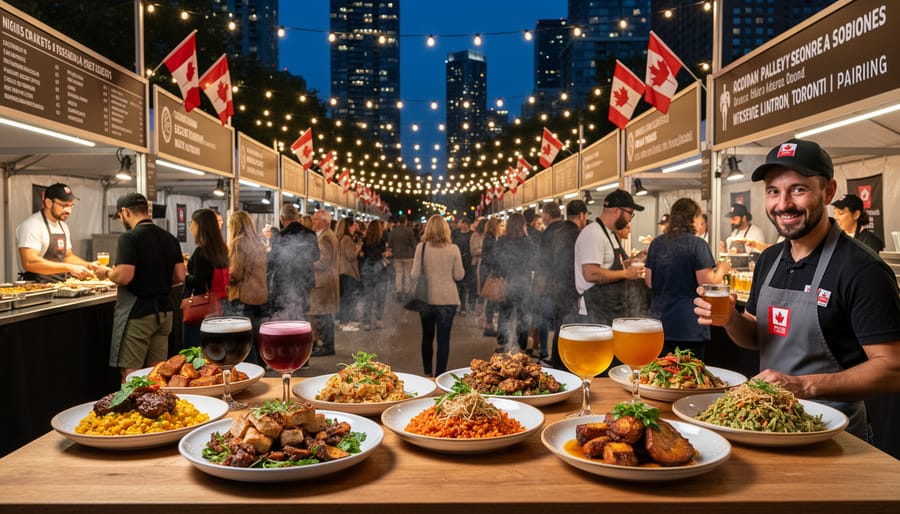
The flagship event remains the Toronto Night Market at Markham, running Fridays through Sundays from May through October. What distinguishes this from typical street food gatherings is the curated beverage program introduced in 2023, featuring sake sommeliers who match Japanese imports with Taiwanese bao and Korean fried chicken. I discovered last summer that arriving before 6 PM means shorter queues and access to the premium tasting stations before the crowds arrive. The vendors here rotate seasonally, but the Sapporo beer garden and natural wine pop-ups have become permanent fixtures.
During my conversation with beverage director Marcus Chen, he revealed that the Winter Brewhouse Series at Evergreen Brick Works pairs craft microbrews with elevated comfort street food from December through February. These Saturday afternoon sessions offer warming porchetta sandwiches alongside barrel-aged stouts, creating a sophisticated alternative to the summer market circuit. Tickets sell out within days of release, typically announced six weeks in advance through their newsletter.
The Distillery District hosts quarterly Spirits & Small Plates events, where boutique distilleries collaborate with rotating food vendors to showcase seasonal ingredients. The spring edition focuses on gin botanicals paired with fresh herb-forward dishes, while autumn brings whiskey alongside smoked meats and root vegetables. These Thursday evening affairs attract serious beverage collectors and provide rare access to limited-release spirits not available in retail channels.
For the truly committed, the Toronto Underground Supper Club organizes clandestine street food pairing dinners monthly at undisclosed locations. Registration requires membership, but the $150 prix fixe format delivers six courses with matched natural wines and craft cocktails. The June edition last year featured Cambodian street specialties paired with orange wines from Niagara, an unexpectedly brilliant combination that challenged conventional pairing wisdom.
Plan ahead. The best experiences require advance booking and insider knowledge of release dates.
Navigating the Experience: Insider Recommendations
During my countless evenings exploring Toronto’s vibrant street food corridors, I’ve learned that timing makes all the difference between a mediocre experience and a transcendent one. The optimal window for gourmet street food pairings falls between 6:30 and 8:00 PM on weekdays, when vendors have settled into their rhythm but before the late-night rush dilutes the quality of service. Weekend afternoons, particularly during the summer festival circuit, offer a more leisurely pace for those who prefer unhurried tastings.
Approaching multiple vendors requires strategic planning. I recommend selecting three to four carts maximum for a single outing, allowing proper time to savor each pairing without palate fatigue. Start with lighter preparations and delicate wines, progressing toward richer proteins and fuller-bodied selections. According to Toronto’s street food licensing framework, vendors must maintain specific quality standards, yet I’ve found that direct conversation with operators reveals which items they’re most proud of that evening.
Budget considerations vary considerably. A premium street food pairing experience typically ranges from $45 to $85 per person, depending on beverage selections. Natural wines and craft spirits command higher prices, yet many vendors offer half-portions that allow broader sampling without excessive expenditure.
Etiquette matters more than many realize. Cash remains king at most operations, though contactless payments have expanded. Arrive with smaller bills. Don’t monopolize vendors during peak hours with lengthy deliberations. If you’re photographing, be discreet and respectful of other patrons. Most importantly, provide genuine feedback. These artisans appreciate thoughtful observations about flavor profiles and pairing success far more than generic compliments.
During my months exploring Toronto’s gourmet street food pairing scene, I’ve witnessed something extraordinary: the careful dismantling of barriers between haute cuisine and everyday accessibility. This movement doesn’t compromise on technique or quality. Rather, it reimagines how we experience culinary excellence, removing the pretense while preserving the precision.
Toronto has positioned itself at the forefront of this transformation. Walking through markets where vendors discuss terroir while plating bánh mì, or finding natural wine sommeliers collaborating with taco stands, I’ve seen fine dining principles applied outside traditional dining rooms. The city’s multicultural fabric makes it uniquely suited for this evolution, where a Korean fried chicken purveyor can confidently suggest a Grüner Veltliner pairing without a trace of irony.
This is dining culture evolving in real time, becoming more inclusive without sacrificing sophistication. I encourage you to seek out these experiences yourself. Begin with the vendors I’ve profiled, engage with their pairing recommendations, and taste how Toronto is redefining what premium dining means. You’ll discover that exceptional food and thoughtful beverage pairings need not arrive on white tablecloths to deliver genuine culinary artistry.