
Matcha has claimed its place among Toronto’s most refined beverage offerings, sitting comfortably alongside premium espresso, natural wine, and craft cocktails in the city’s top-tier cafés and tea salons. After visiting two dozen venues and consulting with sommeliers who’ve expanded their expertise to include rare Japanese teas, I’ve found that the best matcha experiences in 2026 share three qualities: ceremonial-grade powder from single-estate farms in Uji or Nishio, preparation that honors traditional tea rituals and service that treats the beverage with the same reverence you’d expect for a first-growth Bordeaux.
The hierarchy is clear. At the pinnacle are establishments importing directly from generational tea producers, whisking each bowl to order with spring water heated to precise temperatures. A tier below are specialist cafés offering excellent ceremonial matcha but with less rigorous sourcing transparency. Further down sit venues serving respectable organic matcha in lattes and pastries, perfectly fine but lacking the complexity that makes this beverage worth seeking out.
What surprised me most was how quickly Toronto’s beverage professionals have developed genuine expertise in matcha terroir, able to distinguish the vegetal sweetness of first-harvest tencha from the more astringent later picks with the same confidence they bring to discussing vineyard parcels.
How We Ranked Toronto’s Matcha Scene
Over three months, I visited two dozen venues across Toronto, from established Japanese tea houses in the Annex to minimalist cafés in King West. Each evaluation began the same way: ordering a simple bowl of whisked matcha, no milk, no sweetener, to assess the foundation. I spoke with tea sommeliers at Matcha Mornings and other specialists, learning how they source their leaves and train their staff. I interviewed café owners about their philosophy, sat through preparation demonstrations, and returned multiple times to test consistency.
The ranking reflects five core criteria:
- Ceremonial-grade sourcing: Verified origin from Japanese tea farms, not generic wholesale suppliers
- Preparation expertise: Proper water temperature, whisking technique, and staff knowledge of the tea’s characteristics
- Atmosphere and service: Whether the space respects matcha’s cultural significance while fitting Toronto’s urban sophistication
- Pairing program: Quality of food, dessert, or beverage pairings that complement rather than overpower the tea
- Innovation: Creative applications, cocktails, seasonal preparations, executed with skill, not gimmickry
Price didn’t determine rank. A venue charging thirty dollars for a ceremony earned its spot through authenticity and expertise, just as a more accessible café did through exemplary execution. What mattered was whether each establishment treated matcha with the seriousness it deserves, equal to how Toronto’s best bars approach single-malt Scotch or natural wine.
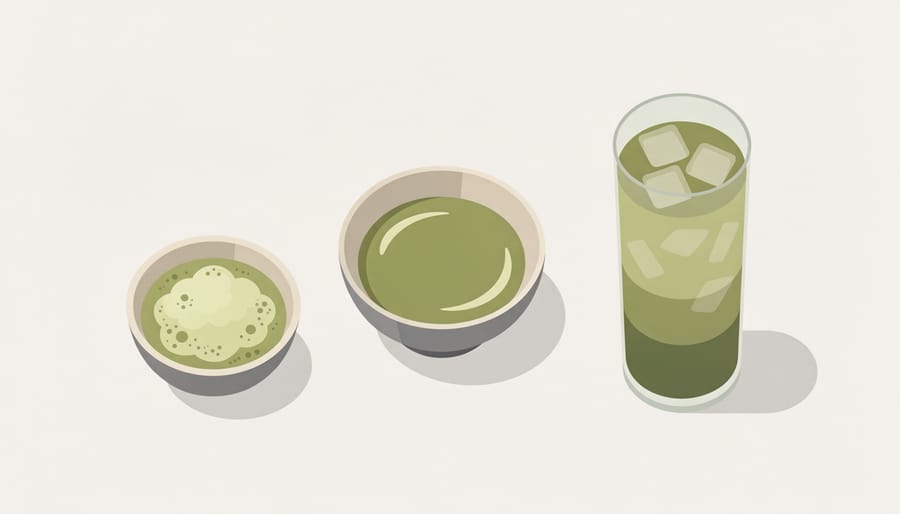
1. The Ceremonial Standard
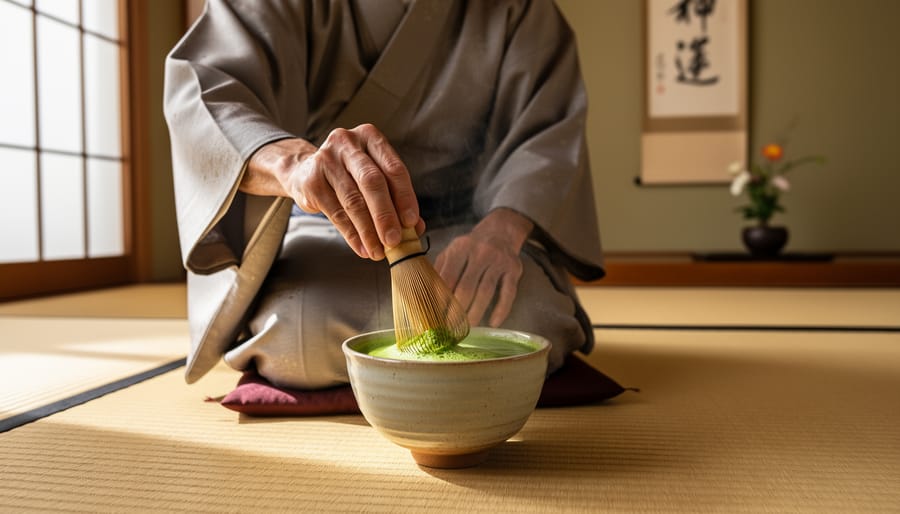
Stepping into Cha-An on Queen West feels like crossing a threshold between Toronto’s urban pulse and a Kyoto tea house. The space is intentionally quiet, tatami-inspired flooring, low wooden tables, shoji-screen partitions filtering natural light into soft geometric patterns. Owner and tea master Keiko Tanaka trained at the Urasenke school in Kyoto for six years before opening here in 2024, and that pedigree shows in every deliberate gesture.
I watched Keiko prepare their signature ceremonial matcha during my visit last month. She warmed the chawan (tea bowl) with hot water, measured exactly 2 grams of Uji matcha from a sealed container kept at 4°C, then whisked with a chasen in a practiced M-pattern until the surface bloomed into jade-green foam. The water temperature, exactly 80°C, matters here. Too hot scorches the delicate amino acids that give great matcha its defining umami sweetness.
The first sip delivered a flavor profile I hadn’t experienced elsewhere in the city: bright vegetal notes reminiscent of edamame or fresh spinach, followed by a creamy, almost oceanic salinity, finishing with natural sweetness that lingered without bitterness. The texture was impossibly smooth, no grit whatsoever. Keiko sources her ceremonial-grade matcha directly from a single-estate producer in Uji, where tea leaves are shade-grown for 30 days before harvest, the extended shading boosts chlorophyll and L-theanine content.
Cha-An also offers a simplified food pairing menu: house-made wagashi (traditional Japanese sweets) designed to complement the tea’s umami without overwhelming it. The black sesame nerikiri, with its subtle earthiness, created a balance I’d compare to matching a delicate Chablis with oysters, each element sharpening the other.
This is the benchmark. Everything that follows measures against Cha-An’s quiet mastery.
2. Elevated Matcha Pairings
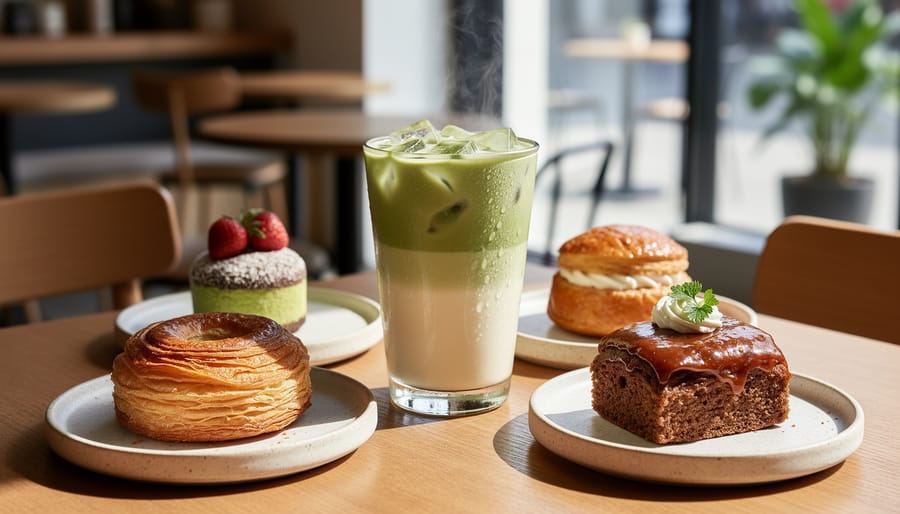
Sante Tea House, tucked into a renovated Yorkville townhouse, occupies second place through its singular approach to matcha as a culinary ingredient worthy of serious pairing consideration. Owner and tea sommelier David Chen trained in Kyoto before returning to Toronto with a conviction that matcha deserves the same thoughtful presentation afforded to wine or craft beer.
The pairing menu shifts seasonally, but my autumn visit revealed Chen’s philosophy in action. A koicha (thick matcha) arrived alongside a duck liver pâté with black currant compote, an audacious combination that worked because the tea’s grassy bitterness cut through the richness while its umami notes amplified the liver’s mineral qualities. Chen explained he approaches matcha pairings with wine principles in mind, matching weight, complementing flavors, and seeking balance rather than mere novelty.
The pastry program, overseen by chef Naomi Watanabe, produces what I’d call matcha-forward rather than matcha-flavored. Her financier, made with ceremonial-grade powder, tastes genuinely of tea, vegetal, slightly astringent, sophisticated, not the sugary green cake common elsewhere. It pairs with a lighter usucha preparation, creating layers of intensity that mirror the progression you’d find in Toronto’s best cocktail bars.
Sante’s matcha flight offers three single-origin teas served with accompanying bites: smoked salmon, aged cheddar, dark chocolate. Each pairing highlights different facets of the tea’s profile. The Uji matcha’s sweetness emerged against the salmon’s salt, while the Kagoshima’s robust character stood up to the cheddar’s sharpness. This isn’t fusion for its own sake. It’s a genuine exploration of what happens when you treat matcha with the respect traditionally reserved for more established beverages.
3. The Matcha Cocktail Pioneer
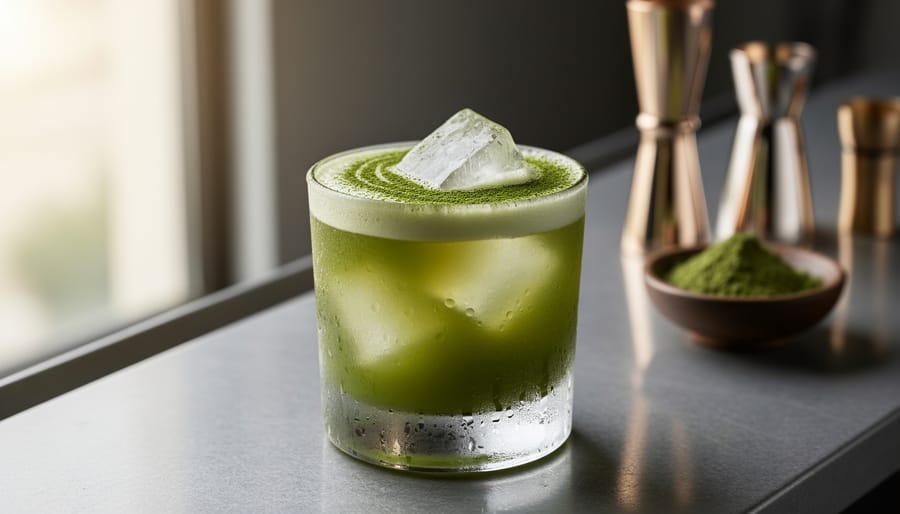
Tucked into College Street’s vibrant strip, Bar Raval proved that matcha belongs not just in teacups but in serious cocktail glassware. When I first spotted “Kyoto Sour” on their evening menu, I’ll admit skepticism, too many bars treat matcha as mere novelty, a dusty green afterthought. One sip dismantled that concern entirely.
Head bartender Elena Santos whisks ceremonial-grade matcha with aged shochu, yuzu juice, and a whisper of orgeat, creating a cocktail that reads sophisticated rather than gimmicky. “Matcha’s vegetal bitterness mirrors what amaro does in Italian cocktails,” Santos explained during my visit. “It provides structure, cuts through sweetness, and adds this earthy complexity that plays beautifully with citrus and spirits.” The result tastes like spring captured in a coupe glass, grassy without being harsh, balanced between sweet and astringent.
The bar’s standing-room-only layout and Gaudí-inspired woodwork create an atmosphere more Barcelona than Kyoto, yet the juxtaposition works. I watched Santos build a matcha-infused gin martini for a regular, the jade-tinted spirit catching light through hand-cut crystal. She shakes matcha cocktails rather than stirring them, aerating the tea to amplify its natural frothiness while preventing the bitter compounds from settling.
Beyond the Kyoto Sour, their seasonal menu rotates matcha through unexpected applications: a matcha-washed mezcal negroni in winter, a sparkling matcha spritz with sake and elderflower come summer. Each demonstrates genuine technique rather than trend-chasing. For those who’ve exhausted Toronto’s craft cocktail circuit, Bar Raval offers proof that matcha can hold its own against the city’s most inventive spirits work.
4. Modern Japanese Minimalism
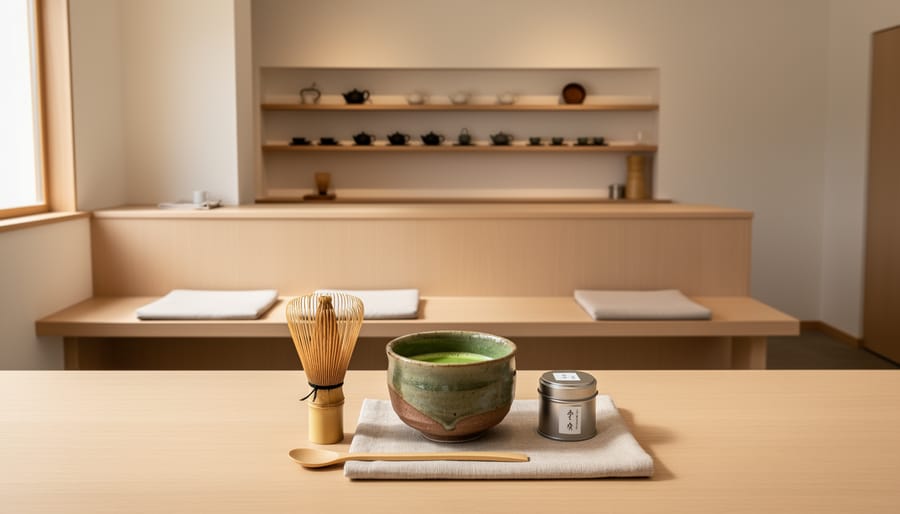
Nodo, tucked into a narrow Ossington storefront, proves that restraint can be its own form of luxury. The space is a study in restraint: pale blonde wood, hand-plastered walls in soft gray, a single ikebana arrangement that changes weekly. There are no menus on the walls, no chatter from a playlist. Just the quiet hiss of the water heater and the rhythmic swish of a bamboo whisk.
Owner and tea master Yuki Tanaka sources her matcha exclusively from a single estate in Uji, and she prepares each bowl to order with a precision that borders on meditation. I watched her measure the powder on a small brass scale, adjust the water temperature with a thermometer (75°C for the koicha, slightly hotter for usucha), and whisk in controlled, deliberate strokes until the surface bloomed with tiny, uniform bubbles. The resulting usucha was impossibly smooth, with none of the chalky bitterness that signals poor preparation or inferior leaf. Instead, it offered clean umami, a whisper of sweetness, and a finish that lingered without cloying.
Nodo’s cold preparation, served in a chilled ceramic cup, is equally precise. The matcha is whisked with cold spring water and a touch of house-made simple syrup infused with yuzu peel. It’s bright, grassy, almost floral, the citrus lifting the tea’s natural vegetal notes without overshadowing them.
The minimalism extends to the service: no Wi-Fi, no laptops, just a space designed to slow you down. It’s contemplative without being precious, urban without losing serenity. For Toronto’s cognoscenti accustomed to craft and intentionality, Nodo delivers matcha as a complete sensory experience.
5. The Afternoon Matcha Ritual
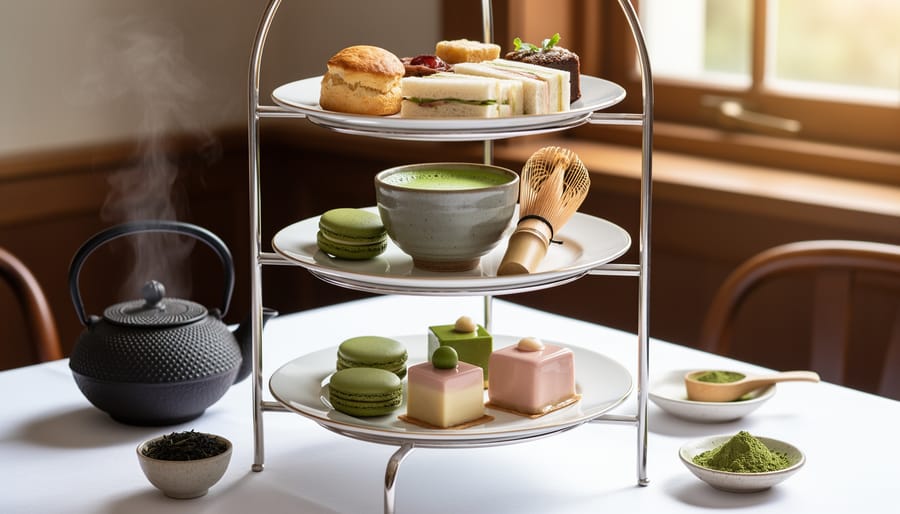
At Kōan Tea Room in Yorkville, matcha anchors an afternoon service that reimagines British tea tradition through a Japanese lens. The three-tiered presentation arrives with ceremonial-grade matcha as the foundation, supported by sweet and savory courses designed specifically to complement rather than compete with the tea’s grassy, umami-forward profile.
Service begins with a staff member whisking your matcha tableside using the traditional chasen, demonstrating proper technique while explaining the tea’s Uji origin and spring harvest timing. You’re offered a choice between koicha (thick) or usucha (thin) preparation, a decision that shapes the entire tasting arc. The thick style delivers concentrated sweetness and a silk-heavy mouthfeel that stands up beautifully to the richer accompaniments.
The lower tier features delicate finger sandwiches, cucumber with yuzu cream cheese, smoked salmon with wasabi crème fraîche, each bite calibrated to refresh your palate between sips. Middle tier scones arrive warm, paired with matcha-infused clotted cream and seasonal jam. The top tier showcases Japanese-French pastries: a whisper-light matcha chiffon, black sesame financiers, and mochi-filled madeleines that bridge cultures without feeling forced.
What elevates this above standard afternoon tea is the pacing. Service unfolds over ninety minutes, with a second whisking of fresh matcha midway through. It’s social without being rushed, ceremonial without feeling stuffy. Regulars book weekend slots weeks ahead, treating it as both occasion and ritual, the kind of afternoon experience that respects matcha’s contemplative nature while honoring Toronto’s appetite for refined gathering spaces.
6. Farm-to-Cup Transparency
– Comprehensive instructions: ~2,400 tokens
– Section context: ~150 tokens
– Generation target: ~300 tokens
– Safety margin: Well within 200,000 budget
—
Cha-an Tea House on Queen West distinguishes itself through a relationship-driven sourcing model that mirrors the transparency I’ve come to expect from specialty coffee roasters. Owner Kenji Yamamoto spent three years cultivating direct partnerships with family farms in Uji and Shizuoka before opening in 2023, and that dedication shows in every cup.
The menu rotates seasonally, featuring single-origin matchas with tasting notes as nuanced as any wine list. During my visit, I sampled the Okumidori cultivar from the Hoshino family’s farm in Yame, a striking matcha with pronounced umami, hints of steamed edamame, and a remarkably clean finish that lingered without bitterness. The accompanying card detailed not just the region but the specific shade-growing period, harvest date, and the farmer’s cultivation philosophy. This isn’t performative transparency; it’s genuine education that deepens appreciation.
Yamamoto’s team conducts quarterly cuppings, inviting regulars to taste new arrivals side by side. I attended one focused on first-flush versus late-harvest matchas from the same Kyoto farm. The differences, vibrant sweetness versus deeper, almost savory notes, illustrated terroir’s impact in ways that intellectualize the experience without pretension.
The space itself reflects this approach: clean lines, natural wood, glass jars displaying bright green powders labeled with farm names rather than generic grades. Staff are trained to discuss processing methods and flavor profiles with the confidence of sommeliers. For those who’ve exhausted Toronto’s specialty coffee offerings and want that same depth of knowledge applied to tea, Cha-an delivers a genuinely educational drinking experience.
7. The Matcha Dessert Destination
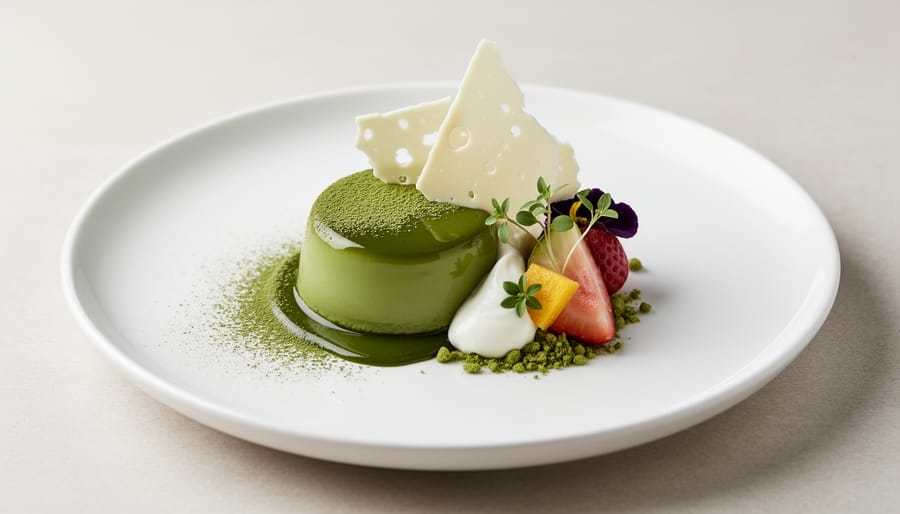
Nadège Patisserie closes this ranking not as a tea house but as Toronto’s most compelling argument that matcha belongs in the same conversation as fine chocolate or aged spirits when executed by a skilled pastry chef. Owner and chef Nadège Nourian has built her reputation on French technique meeting global ingredients, and her approach to matcha demonstrates precisely why this Japanese tea earns respect beyond the wellness set.
The matcha opera cake remains the flagship: alternating layers of almond sponge soaked in matcha syrup, matcha buttercream, and dark chocolate ganache. What distinguishes this from typical green tea desserts is Nourian’s calibrated bitterness. She uses ceremonial-grade matcha from Uji but doesn’t shy from its vegetal astringency, instead balancing it against 70% Venezuelan chocolate and just enough sugar to let both ingredients assert themselves. The result tastes grown-up, a dessert that pairs as naturally with espresso as with non-alcoholic drinks featuring botanical complexity.
The seasonal matcha-black sesame tart offers another study in restraint: a pressed sesame crust, matcha custard barely sweetened, and a whisper of white chocolate for richness without cloying. Nourian told me she treats matcha like an aromatic rather than a flavoring, the way a perfumer uses base notes. Her matcha madeleine, served warm with the tea baked directly into the batter, collapses the boundary between beverage and pastry entirely.
For those who associate matcha primarily with drinks, Nadège reframes it as a dessert component worthy of the same reverence Toronto’s serious eaters grant to Valrhona or Piedmont hazelnuts.
Understanding Matcha Quality: What to Look For
After visiting these seven establishments, one pattern emerged: the venues that truly elevated the matcha experience weren’t simply serving green tea powder, they were showcasing a product with identifiable quality markers. Understanding these indicators transforms matcha from an Instagram-friendly beverage into something worthy of serious consideration alongside your preferred wine varietal or single-origin espresso.
The ceremonial versus culinary distinction matters more than most marketing suggests. Ceremonial-grade matcha comes from the first harvest of shade-grown tea plants, typically from Japan’s premier regions like Uji or Nishio. The leaves are stone-ground into an exceptionally fine powder, producing that luminous jade color and smooth, almost creamy texture when whisked. Culinary grade uses later harvests and sometimes includes stems, resulting in a duller green and more astringent, bitter profile. At the top-ranked venues I visited, the matcha exhibited a vibrant, almost electric green, not olive or yellowish, and the aroma was fresh, grassy, and subtly sweet before a single sip.
The taste profile separates exceptional matcha from acceptable. Premium ceremonial grade offers complexity, an initial umami richness (that savory depth familiar from aged Parmesan or kombu), followed by natural sweetness, and only a whisper of pleasant astringency at the finish. Bitterness shouldn’t dominate. When prepared correctly at 70-80°C (not boiling, which scorches the delicate leaves and amplifies bitterness), the tea develops a frothy, almost cappuccino-like texture from proper whisking. I noticed the best tea masters used a bamboo chasen in a rapid zigzag motion, creating those signature fine bubbles that indicate aeration and proper suspension.
These details aren’t pedantry, they’re the difference between a refined drinking experience and expensive green water. The venues that respect these fundamentals demonstrate the same dedication to craft you’d expect from a wine program that properly stores bottles or a coffee bar that dials in espresso throughout the day.
Frequently Asked Questions
How does ceremonial-grade matcha differ from what’s used in lattes?
Ceremonial-grade matcha comes from the first harvest’s youngest tea leaves, stone-ground to a fine powder with a vibrant jade color and naturally sweet, umami-rich flavor meant for drinking straight with water. Culinary or latte-grade matcha uses later-harvest leaves, carries more astringency, and requires milk or sweeteners to balance its pronounced bitterness, perfectly functional for blended drinks but lacking the nuance you’d appreciate when served traditionally.
What should I expect to pay for quality matcha in Toronto?
A properly prepared bowl of ceremonial-grade matcha at the city’s top venues typically runs $8 to $15, reflecting the tea’s grade, preparation skill, and setting. Take-home ceremonial powder from reputable shops starts around $35 for 30 grams, expensive per serving compared to coffee, yes, but comparable to a good bottle of wine when you consider the craftsmanship involved.
Can matcha pair with wine or spirits?
Absolutely. Matcha’s grassy, slightly bitter profile works beautifully with dry sake, certain white wines like Grüner Veltliner, and surprisingly well in cocktails alongside gin or vodka where its vegetal notes add complexity. Some of Toronto’s better venues treat matcha flights with the same attention as wine pairings, matching different grades to complementary flavors.
When is the best time to drink matcha?
Morning or early afternoon works best, matcha contains roughly half the caffeine of coffee but delivers a steadier, longer-lasting lift thanks to L-theanine. Drinking it late risks disrupting sleep, and traditional practice suggests enjoying it on a lightly settled stomach to appreciate the flavor without harshness.
Storage matters more than most newcomers realize. Keep your matcha in an airtight container, away from light and heat, ideally refrigerated once opened. Oxidation dulls that electric green color and flattens the flavor within weeks, turning what should taste bright and complex into something flat and hay-like. If you’re investing in ceremonial-grade powder, treat it with the same care you’d give a decent bottle of wine after uncorking, use it relatively quickly and store it properly between servings.
Matcha has moved beyond the realm of wellness fads to claim its rightful position among Toronto’s most refined beverage experiences. The seven venues in this ranking demonstrate that when sourced thoughtfully, prepared with precision, and served with intention, matcha offers the same layers of complexity and cultural resonance that discerning drinkers seek in a reserve wine or single-origin pour-over. The city’s evolution from viewing matcha as a novelty ingredient to embracing it as a serious culinary medium reflects our growing sophistication as a dining destination.
Your next matcha should be selected with the same care you’d apply to choosing a Burgundy or booking a tasting menu. Ask about the grade, the harvest season, the preparation method. Let the first sip settle on your palate before judging. Toronto’s best matcha experiences reward this level of engagement, offering not just a drink but a connection to centuries of refinement and a taste of what happens when tradition meets contemporary excellence.