
A classic mojito requires just five ingredients and eight minutes of your time: white rum, fresh mint, lime juice, sugar, and soda water. This Cuban cocktail, born in Havana’s sultry heat, has endured for centuries precisely because its method is deceptively simple yet demands attention to technique. The difference between a mediocre mojito and an exceptional one lies entirely in how you handle the mint.
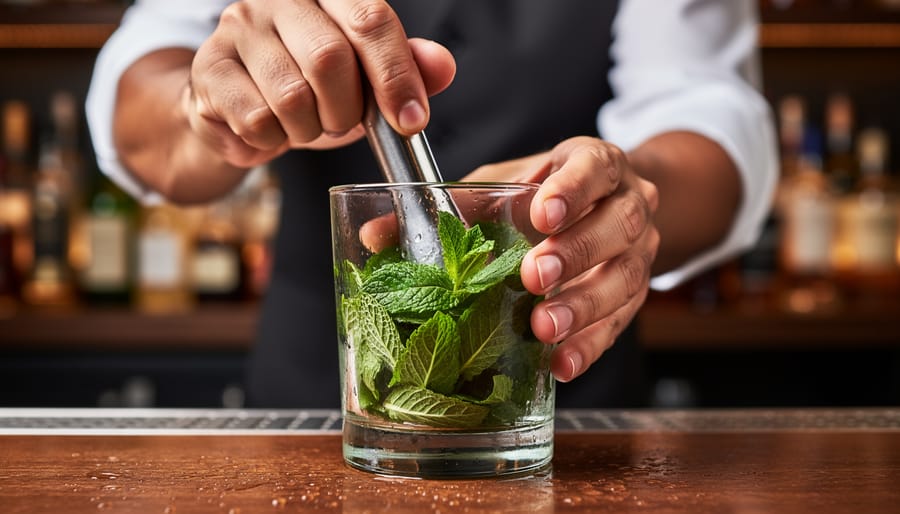
During a late evening at Toronto’s Libertad Cocktail Bar, I watched bar manager Sofia Ramirez demonstrate the crucial muddle. “Most home bartenders assault the mint,” she explained, pressing the leaves gently against granulated sugar with a wooden muddler. “You want to coax the oils out, not pulverize the chlorophyll that turns your drink bitter and brown.” That single insight transformed my approach to this deceptively straightforward cocktail.
The mojito’s resurgence in home mixology, particularly over the past year, reflects a broader desire for cocktails that feel simultaneously refined and refreshing. Unlike spirit-forward drinks that showcase barrel aging or botanical complexity, the mojito celebrates botanical brightness and textural balance. When properly constructed, the mint provides aromatic lift without dominating, the lime offers acidity that lengthens each sip, and the rum’s subtle molasses notes anchor what could otherwise read as simply sweet soda.
What follows is the precise method I’ve refined after two years of weekly experimentation, guest feedback, and professional guidance.
What Makes an Authentic Mojito
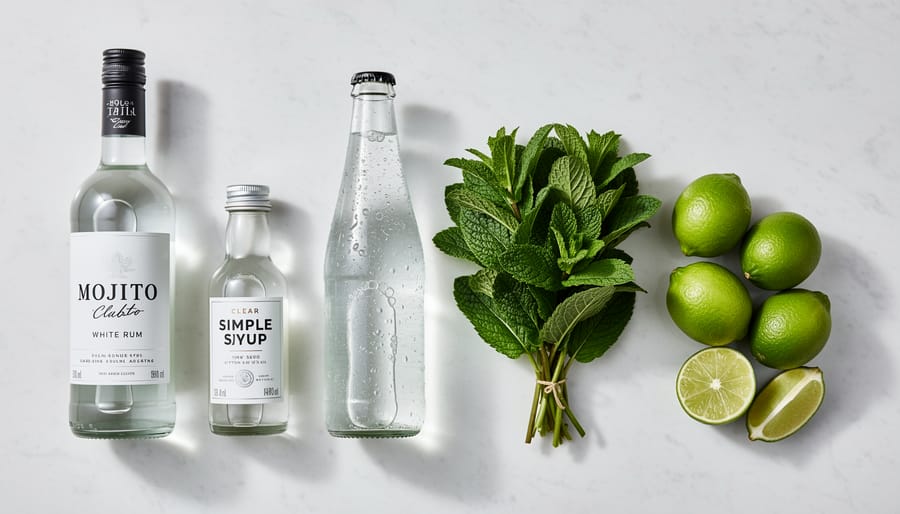
An authentic mojito isn’t built on a single star ingredient, it’s a precise balance where five components work in concert. White rum provides the clean, subtle spirit base that lets the other elements shine rather than compete. Fresh mint delivers the aromatic signature: cooling menthol notes that define the drink’s character without overpowering. Lime juice contributes essential acidity, cutting through sweetness and creating the bright, refreshing quality that makes a mojito so satisfying in warm weather. Simple syrup tempers that acidity while enhancing the mint’s natural sweetness, and club soda adds effervescence that lifts the entire composition, transforming static flavors into something lively and layered.
The difference between an ordinary mojito and an exceptional one lies almost entirely in ingredient quality. Mass-market white rum can taste harsh and one-dimensional, whereas a refined Cuban or Dominican expression brings subtle vanilla and sugarcane complexity that complements rather than fights the mint. Fresh mint picked hours before use releases more volatile oils than wilted sprigs languishing in a grocery cooler for days. Hand-squeezed lime juice offers bright, complex acidity that bottled alternatives simply cannot match, the preservatives and pasteurization strip away the vibrant top notes that make the drink sing.
Toronto’s leading bartenders consistently emphasize this ingredient hierarchy. At premium establishments across King West and Ossington, you’ll notice they muddle mint leaves from local herb suppliers delivered daily, squeeze limes to order, and carefully calibrate their simple syrup ratios based on the rum’s inherent sweetness. These aren’t pretentious flourishes, they’re fundamental choices that determine whether your mojito tastes like a thoughtfully crafted cocktail or a sugary approximation of one.
Tools and Materials You’ll Need
Assembling a well-equipped home bar transforms mojito preparation from haphazard muddling to refined mixology. While you can technically make this cocktail with improvised tools, the right equipment ensures consistent results and respects the craft that Toronto’s premium establishments have elevated into an art form.
The muddler stands as your most critical investment. This pestle-shaped tool gently releases the mint’s essential oils without pulverizing the leaves into bitter fragments, a distinction that separates an aromatic mojito from a grassy, astringent disappointment. Opt for a wooden muddler with a flat, textured head rather than a pointed design; the broader surface distributes pressure evenly across the mint leaves.
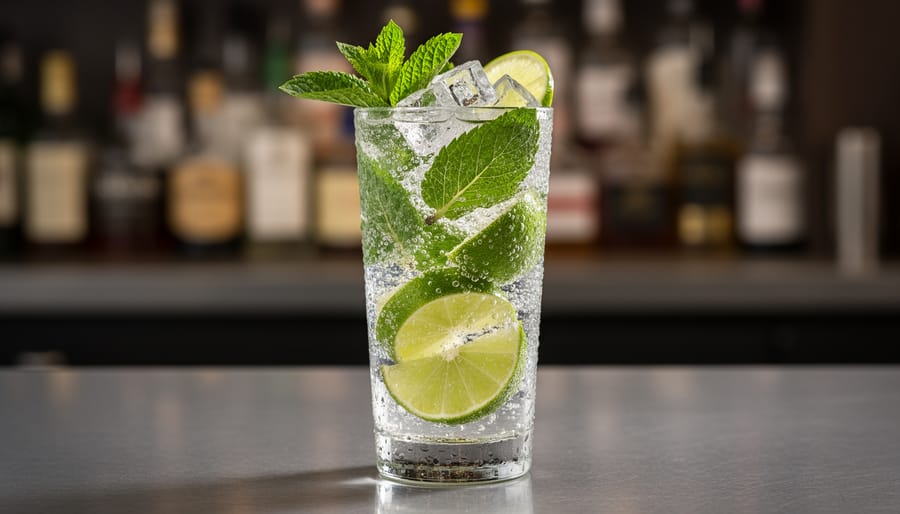
Your highball glass (also called a Collins glass) provides the canvas for presentation. The tall, narrow shape preserves carbonation and showcases the drink’s visual layers, mint leaves suspended in translucent liquid crowned with crushed ice. A 12 to 14-ounce capacity gives adequate room for ice and club soda without overflow.
- Muddler (wooden, flat-head design preferred for gentle mint extraction)
- Highball or Collins glass (12-14 oz capacity for proper ice and carbonation)
- Jigger (dual-sided 1 oz/2 oz for accurate spirit and syrup measurement)
- Bar spoon (long-handled for stirring and layering ingredients)
- Citrus press or reamer (for fresh lime juice extraction)
- Lewis bag and mallet (optional upgrade for crushing ice to ideal texture)
The jigger guarantees precision. Free-pouring might look theatrical, but accurate measurement of white rum and simple syrup establishes the delicate balance between sweetness, acidity, and spirit strength. A standard dual-sided jigger (one ounce on one end, two ounces on the other) handles both components efficiently.
A proper bar spoon, with its twisted handle and shallow bowl, integrates ingredients without excessive agitation that would flatten carbonation. The length reaches the glass bottom easily, while the spoon’s back can gently layer club soda over the muddled base.
Finally, invest in a quality citrus press. Fresh lime juice defines the mojito’s bright acidity, and a handheld press extracts maximum juice while straining seeds and pulp, far superior to pre-bottled alternatives that lack the vibrant, just-squeezed character this cocktail demands.
Selecting Your Ingredients
The foundation of an exceptional mojito begins before you reach for your muddler. White rum serves as the spirit base, and your choice here matters profoundly, select a light, clean rum such as Bacardi Superior or Havana Club 3 Años rather than darker, aged varieties that would overpower the drink’s delicate mint and citrus notes. When sourcing ingredients, exploring the finest alcohol in Toronto will connect you with specialized retailers who stock premium Caribbean rums that elevate this cocktail beyond the ordinary.
Fresh mint represents the mojito’s aromatic soul. Look for spearmint over peppermint; spearmint offers a sweeter, more traditional Cuban profile whereas peppermint can dominate with its menthol intensity. Examine leaves for vibrant green color without browning edges, and choose bunches with firm stems that snap crisply when bent. Toronto bartender Marcus Chen from Canoe emphasizes that wilted or refrigerated mint loses essential oils rapidly, diminishing the cocktail’s signature freshness.
Lime selection demands equal attention. Choose fruits that feel heavy for their size, indicating high juice content, with thin, smooth skin that yields slightly to pressure. Avoid limes with hard, thick rinds or brown spots. Freshly squeezed lime juice is non-negotiable, bottled versions lack the bright acidity and aromatic oils from the zest that balance the cocktail’s sweetness.
For sweetening, simple syrup (equal parts sugar dissolved in water) integrates more smoothly than raw sugar, which can settle grittily at the bottom. Finally, select a neutral club soda or sparkling water; heavily mineralized options compete with rather than complement the drink’s flavor balance.
Step-by-Step Mojito Preparation
Place eight to ten fresh mint leaves in the bottom of your highball glass. Grip your muddler firmly and press down with gentle, deliberate twists, never pound or grind. The goal is to release the mint’s essential oils without shredding the leaves into bitter fragments. You’ll know you’ve muddled correctly when you catch the first wave of fresh mint aroma rising from the glass, bright and herbaceous but not grassy or sharp.
- Add half an ounce of fresh lime juice and three-quarters of an ounce of simple syrup to the muddled mint. Stir briefly with your bar spoon to combine these elements with the mint, creating your flavor foundation.
- Fill the glass three-quarters full with crushed ice, packing it down lightly. The crushed ice creates more surface area for dilution, which is essential for proper mojito texture and temperature.
- Pour two ounces of white rum directly over the ice. Use your jigger for precision, eyeballing leads to unbalanced drinks that taste either weak or overwhelmingly alcoholic.
- Stir the mixture vigorously for fifteen seconds with your bar spoon, working from bottom to top. This step integrates all the elements and begins the controlled dilution that softens the rum’s edge.
- Top the glass with two to three ounces of club soda, pouring slowly down the inside edge to preserve carbonation. Stop when the liquid reaches about half an inch from the rim.
- Give one final, gentle stir, just three or four rotations, to marry the soda with the rest of the drink without killing all the bubbles.
- Garnish with a fresh mint sprig, slapping it once between your palms before placing it in the drink. This releases additional aromatics that greet your nose with each sip. Add a lime wheel on the rim for visual appeal.
The difference between a competent mojito and an exceptional one often comes down to ice management and carbonation preservation. Many home bartenders add too little ice initially, then watch their drink become watery within minutes. Others stir too aggressively after adding soda, leaving a flat cocktail. Professional bartenders maintain a light touch throughout, understanding that each movement affects texture and flavor balance. Your finished mojito should feel lively on the tongue, with sustained effervescence carrying the mint and lime notes through to the last sip.
Safety and Best Practices
Responsible preparation begins with precise measurement. A standard mojito contains 1.5 to 2 ounces of white rum, which constitutes one alcoholic drink serving. Use a jigger rather than pouring freely, accuracy prevents overserving and maintains the drink’s intended balance. Always measure rum in well-lit conditions to avoid errors, particularly when preparing multiple servings.
Handle glassware carefully throughout the process. Highball glasses crack under excessive muddling pressure, especially at the base. Hold the glass steady with one hand while muddling gently with the other. Inspect glasses for chips or cracks before use, as damaged glassware presents cutting hazards when handled or consumed.
Consider guest needs proactively. Mint allergies, though uncommon, occur and can cause oral irritation or digestive discomfort. Ask about sensitivities before serving. For guests preferring lower alcohol content, reduce rum proportionally and maintain balance by slightly decreasing simple syrup. Virgin mojitos replicate the experience by omitting rum entirely while preserving all other components.
Never serve alcohol to minors or visibly intoxicated individuals. When hosting, provide substantial food alongside cocktails and offer non-alcoholic alternatives. Refrigerate unused mint and lime juice promptly, discarding any ingredients left at room temperature beyond two hours to prevent bacterial growth.
How to Verify Your Mojito Is Perfect
A perfectly executed mojito reveals itself through four distinct sensory dimensions that transform a simple mixed drink into a refined cocktail experience. Understanding these evaluation criteria allows you to replicate professional standards at home and recognize when adjustments are necessary.
Begin with visual inspection. Your mojito should present crisp clarity in the liquid with visible mint leaves suspended throughout, their vibrant green contrasting against the pale liquid. The glass should frost immediately upon pouring, and you’ll notice a gentle stream of bubbles rising continuously from the bottom. Cloudy appearance or mint that has turned dark signals over-muddling, a common mistake that releases bitter chlorophyll and tannins instead of aromatic oils.
The aromatic profile should hit you before the glass reaches your lips. Fresh mint should dominate without overwhelming, think bright and herbaceous rather than toothpaste-like. You’ll detect subtle citrus notes from the lime oils and a faint sweetness, but if you can smell the rum prominently, your proportions need recalibration. Many Toronto establishments offering alcohol delivery include fresh mint specifically to ensure this aromatic integrity survives transit.
- Balanced sweetness that enhances rather than masks the rum and mint
- Bright lime acidity that provides clean finish without puckering sourness
- Mint presence that registers as fresh and cooling, never medicinal
- Active carbonation that tingles on the tongue throughout the drink
- No bitter aftertaste from over-extracted mint
Taste balance requires the most nuanced assessment. Your first sip should deliver simultaneous sweetness, acidity, and mint cooling without any single element dominating. The rum’s character should come through as a warm, slightly sweet foundation rather than aggressive alcohol burn. Flat carbonation indicates you’ve stirred too vigorously or waited too long before serving, the effervescence should remain lively through your last sip.
Common Questions About Making Mojitos
Making mojitos at home inevitably raises practical questions about technique, timing, and adaptation. Here are answers to the concerns I encounter most frequently from guests and readers exploring home mixology.
Can I prepare mojito components in advance?
You can muddle mint with simple syrup and lime juice up to two hours ahead, storing the mixture refrigerated. However, add the white rum and club soda only when serving to preserve carbonation and freshness.
Does the type of mint matter?
Spearmint delivers the traditional mojito profile with its sweeter, gentler flavor, while peppermint offers sharper, more intense menthol notes. Most bartenders prefer spearmint for authenticity, though either works if the leaves are fresh and aromatic.
Why does ice type affect the drink?
Crushed ice melts faster, creating more dilution and a colder initial temperature that some prefer for refreshment. Cubed ice maintains carbonation longer and offers better control over dilution rate, which matters for balanced flavor throughout the drinking experience.
How do I scale this recipe for entertaining?
Multiply the base recipe proportionally, six mojitos require six ounces of white rum, six tablespoons of simple syrup, and juice from six limes. Prepare a large batch of the muddled mint-lime-syrup mixture, then build individual drinks with rum and club soda to maintain proper carbonation.
Adjusting sweetness requires a delicate touch. Start with one tablespoon of simple syrup per drink, then taste before adding club soda. You can always increase sweetness, but correcting an overly sweet mojito demands additional lime juice and rum, which throws off the entire balance. The goal is achieving harmony where no single element dominates, the mint should refresh, the lime should brighten, and the sweetness should support rather than overwhelm. Trust your palate and adjust incrementally.
Mastering the classic mojito at home connects you to a craft that Toronto’s finest bartenders continue to refine and celebrate. The city’s cocktail culture has evolved beyond predictable drink menus, and establishments from King West to Queen East now treat the mojito with the same reverence they apply to rare spirits and seasonal ingredients. Yet the most accomplished mixologists in these spaces will tell you that their creative variations, Thai basil infusions, barrel-aged rum experiments, tropical fruit reinterpretations, only succeed because they respect the foundational technique.
Perfect your fundamental method first. Understand how proper muddling releases mint oils without bitterness, recognize the precise balance between sweetness and acidity, feel the difference that fresh lime juice makes against bottled alternatives. Once these core skills become intuitive, you’ll appreciate why Toronto’s premium cocktail bars command attention: they’ve mastered the basics, then pushed boundaries with intention rather than novelty.
Visit these establishments not just to drink, but to observe. Watch how experienced bartenders handle their tools, note the quality of ingredients they select, ask questions about their process. The mojito you’ve learned to craft at home becomes your baseline for evaluating excellence elsewhere, and your foundation for eventually creating your own thoughtful variations.
verification
This mojito recipe draws on traditional Cuban preparation methods and insights from Toronto’s craft cocktail community, where expertise in classic drinks remains central to the city’s speakeasy culture and contemporary bar scene. The techniques outlined, particularly proper muddling, ingredient sequencing, and balance verification, reflect standards upheld at the best bars in Toronto where bartenders routinely demonstrate mastery of fundamental cocktails before exploring innovative variations.
The core recipe uses white rum, fresh mint, lime juice, and simple syrup as verified ingredients across canonical mojito preparations. While specific measurements and step sequences vary among professional bartenders, the principles of gentle muddling, proper dilution, and taste balance remain consistent. This guide prioritizes technique over rigid formula, acknowledging that ingredient quality and individual palate preferences warrant slight adjustments while maintaining the cocktail’s essential character.