
Winter solstice celebrations across Toronto unfold over a three-week window, from mid-December through early January, with the precise timing shaped by lunar calendars, regional traditions, and each restaurant’s seasonal programming. The astronomical solstice falls around December 21st, but the most significant culinary observances follow the lunar calendar, particularly for Chinese, Korean, and Vietnamese communities marking Dongzhi, which can shift by several weeks year to year.
I’ve spent the past six winters tracing these traditions through Toronto’s dining rooms, from the hand-rolled tang yuan at Scarborough dumpling houses to the ritual bowls of red-bean porridge served in Koreatown’s family restaurants. What strikes me each season is how these ancient foods, some recipes unchanged for millennia, anchor communities through the darkest days while offering sophisticated diners a portal into living cultural practice.
The foods themselves are remarkably intentional. Dongzhi’s glutinous rice balls symbolize reunion and the year’s turning point. Japanese chefs prepare kabocha squash and azuki bean porridge for Toji, while Persian tables showcase whole roasted nuts and pomegranates for Yalda. Scandinavian traditions bring lutefisk and rice pudding, each dish calibrated to the season’s darkness and the body’s need for warmth and sustenance.
Toronto’s culinary landscape offers an exceptional advantage: the city’s diversity means nearly every solstice tradition finds authentic expression, often at tables where third-generation chefs prepare recipes passed down through their families. Timing your visit requires understanding both the celestial calendar and the cultural specificity of each tradition.
The Solstice Window: When Toronto Celebrates
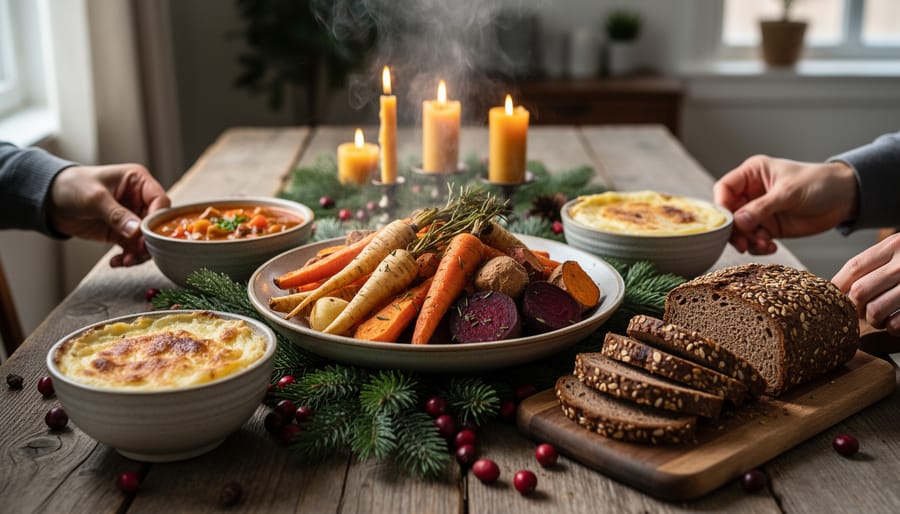
The astronomical winter solstice occurs December 21-22 each year in the Northern Hemisphere, marking the shortest day and longest night. In Toronto, this precise moment triggers a culinary celebration window that extends far beyond those forty-eight hours. The city’s premium dining scene observes an expanded solstice season running from mid-December through early January, reflecting both the astronomical event and the overlapping cultural calendars of Toronto’s diverse communities.
This elongated timeframe serves the city’s food culture remarkably well. Chinese dong zhi celebrations traditionally begin on the solstice date itself but continue for twelve days afterward. Scandinavian restaurants in Toronto honor St. Lucia Day on December 13 as the opening salvo of their winter feasting traditions, running julbord menus through Christmas and beyond. Persian communities gather for shab-e yalda on the solstice night specifically, filling Iranian restaurants to capacity with families sharing pomegranates and poetry.
The extended window also addresses practical realities. December 21-22 reservations at Toronto’s premium establishments book solid weeks in advance, particularly for restaurants offering specialized solstice menus. Celebrating a few days before or after the astronomical event grants access to the same traditional dishes, often with better seating availability and more relaxed service. Ingredient quality remains exceptional throughout this period, with root vegetables, winter squash, and specialty imports like fresh tang yuan wrappers at their seasonal peak. The overlap with holiday schedules means Toronto’s culinary community treats the entire span as solstice season rather than a single-date affair.
Traditional Solstice Dishes Across Toronto’s Culinary Landscape
Chinese Dong Zhi: The Reunion Feast
At a family-run restaurant in Markham last December, I watched three generations gather around a simmering lamb hotpot as the chef’s grandmother carefully ladled tang yuan into bowls of ginger-infused broth. This scene captures dong zhi, the Chinese winter solstice festival celebrating reunion and the year’s longest night.
Tang yuan, those pillowy glutinous rice spheres filled with black sesame or peanut paste, float in sweetened broth flavored with fresh ginger and rock sugar. The rounded shape symbolizes family unity, and sharing them marks the official turn toward longer days. I paired mine with a late-harvest Riesling from Niagara; the wine’s honeyed notes complemented the sesame filling while its acidity cut through the sticky-sweet broth.
The lamb hotpot that followed, rich with goji berries, jujubes, and warming spices, demanded a bolder match. The restaurant’s sommelier suggested a Côtes du Rhône, its peppery grenache harmonizing with star anise and cinnamon in the bubbling broth. Winter melon soup, served between courses, offered delicate respite with its subtle sweetness and tender pork.
Dong zhi feasting runs from the solstice through a traditional counting period, giving Toronto diners nearly two weeks to experience these reunion dishes at their seasonal peak.
Scandinavian Julbord & St. Lucia Traditions
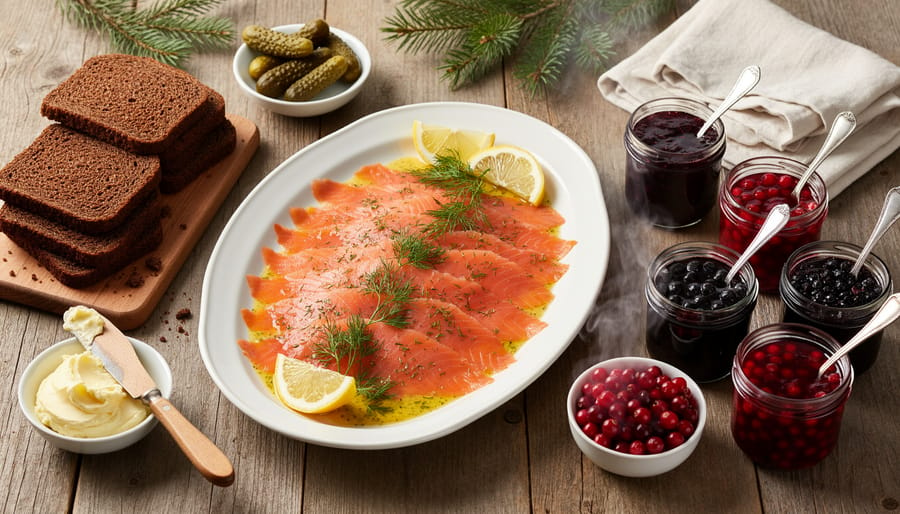
In Sweden and Norway, winter solstice merges seamlessly with the jul (Christmas) season, creating weeks of feasting that honour the return of light. The julbord, a lavish smorgasbord, anchors these celebrations, transforming dining tables into landscapes of cured, pickled, and smoked delicacies that reflect centuries of Nordic preservation techniques.
Gravlax holds pride of place: salmon cured with salt, sugar, and fresh dill, sliced paper-thin and served with hovmästarsås, a sweet mustard-dill sauce that cuts through the fish’s richness. Toronto’s Nordic establishments cure their gravlax for 48 to 72 hours, achieving that silky texture and balanced flavour. Alongside it, you’ll find pickled herring in cream sauce, smoked mackerel, and, for the adventurous, lutfisk, air-dried cod rehydrated in lye, creating a gelatinous texture that divides diners sharply into devotees and sceptics.
Roasted meats follow: spiced Christmas ham glazed with mustard and breadcrumbs, meatballs simmered in cream gravy, and sausages fragrant with allspice. Root vegetables, beets, carrots, turnips, appear pickled or roasted with honey.
Aquavit, that caraway-and-dill-infused spirit, serves ice-cold in small glasses, its clean bite refreshing the palate between rich bites. Mulled wine (glögg), simmered with cinnamon, cardamom, and cloves, warms from within, its spiced sweetness perfect against the savoury spread.
Persian Shab-e Yalda: The Longest Night
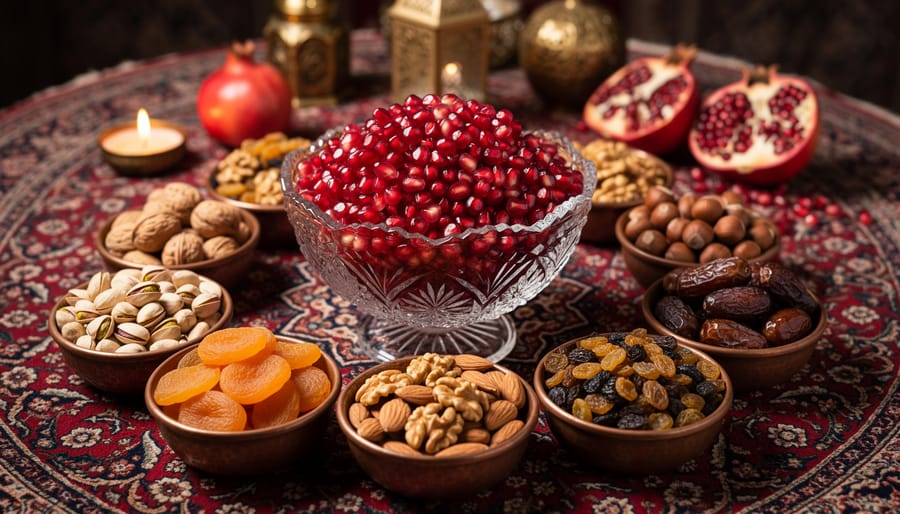
On the longest night of the year, Persian families across Toronto gather for Shab-e Yalda, transforming winter darkness into a celebration of light, poetry, and abundance. The table becomes a canvas of symbolic foods, each carrying centuries of meaning.
Pomegranates reign supreme, their jewel-like seeds represent the ruby glow of dawn breaking through winter’s grip. Chef Maryam Tavakoli of Azin Restaurant explains: “We split the pomegranate at the table so everyone sees the arils scatter like stars. It’s not just fruit; it’s hope made visible.” Watermelon appears despite the season, its summer-red flesh a deliberate contrast to December cold. Nuts, pistachios, almonds, hazelnuts, offer concentrated energy, while dried figs, apricots, and mulberries stack in colorful pyramids.
Between bites, families read Hafez, letting poetry guide their fortune for the coming year. Tavakoli pairs this spread with pomegranate-walnut stew (fesenjān), its sweet-tart depth echoing the fruit’s symbolism. “The meal isn’t rushed. We eat, recite, eat again, it mirrors the slow turn from darkness to light.”
For authentic experiences, head to Ravagh Persian Grill in North York or Shiraz Restaurant on Yonge. Both offer Yalda feasts where the poetry books sit beside the menu, and midnight arrives softened by saffron and conversation.
Indigenous & Local Seasonal Foods
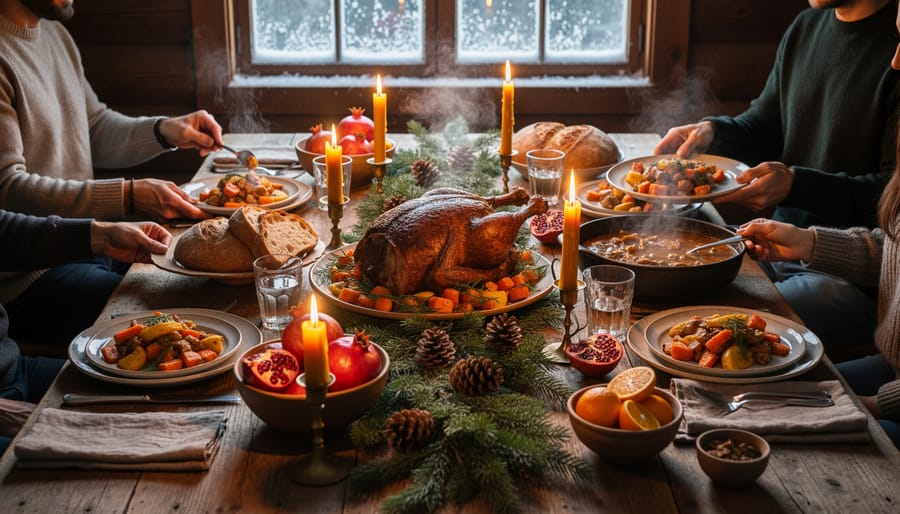
Toronto’s culinary landscape honors First Nations traditions through dishes that celebrate the land’s winter abundance. At establishments like Ku-kum Kitchen and NishDish, chefs prepare venison and bison stews slow-cooked with root vegetables, turnips, parsnips, and Jerusalem artichokes, that evoke the warming sustenance of traditional Indigenous winter feast gatherings. The Three Sisters, corn, beans, and squash, appear in hearty succotash preparations enriched with maple syrup and wild rice.
Chef Shawn Adler at Pow Wow Café shared how his wild game pies and bannock stuffed with seasonal ingredients connect December dining to centuries of winter solstice ceremonies. Pair smoked lake trout with a crisp Ontario Riesling, or complement rich bison with a Niagara Cabernet Franc. This approach to Indigenous cuisine honors the solstice’s themes of gratitude and renewal through food that’s both ancestral and unmistakably refined.
What Influences Solstice Dining Timing in Toronto
The astronomical winter solstice may occur on a fixed date, December 21 or 22, but when Torontonians actually celebrate their culinary traditions around this turning point varies considerably. Understanding these influences helps you secure the best tables and the freshest seasonal ingredients.
Cultural calendar systems create the most significant timing variations. Chinese Dong Zhi follows the lunar calendar, which means the celebration date shifts each year relative to the Western calendar, sometimes falling days before or after the astronomical solstice. Persian Shab-e Yalda, conversely, aligns precisely with the astronomical event. This means that in any given year, you might find tang yuan feasts happening on December 18 while Scandinavian julbord spreads peak on the 21st itself. Savvy diners track both calendars to catch authentic celebrations at their cultural peak rather than approximations scheduled for Western convenience.
Restaurant booking patterns intensify as multiple traditions converge. Premium establishments offering traditional solstice menus often accept reservations 30 to 60 days in advance, and the best time slots, particularly Friday and Saturday evenings within the solstice window, fill within hours of opening their books. I learned this the hard way in 2025 when I attempted to book a Dong Zhi dinner at a celebrated Markham restaurant just two weeks out, only to find myself relegated to a Tuesday lunch slot.
Several practical factors shape celebration timing:
- Lunar calendar shifts move Chinese Dong Zhi celebrations by days or weeks relative to the astronomical solstice
- Restaurant booking competition peaks when solstice falls on weekends or overlaps with holiday parties
- Fresh seasonal ingredient availability reaches its zenith in mid-December for root vegetables and game meats
- Christmas and Hanukkah scheduling forces many families to celebrate solstice traditions a week early or late
- Weather conditions favor warming hotpots during polar vortex events while milder stretches encourage lighter Persian fruit spreads
Ingredient availability plays a subtler but crucial role. Winter squash for Japanese tōji preparations peaks in quality from late November through December, while the pomegranates essential to Shab-e Yalda arrive at Toronto markets in early December. Chefs I’ve interviewed time their menu launches to coincide with these ingredient windows, which don’t always align perfectly with the solstice date itself.
The holiday gauntlet between mid-December and early January creates scheduling pressures. Corporate holiday parties monopolize premium dining rooms from December 10 to 20, while family Christmas commitments consume December 23 to 26. This compression pushes many solstice celebrations into the quieter window between December 27 and January 2, when restaurants often extend their seasonal menus to capture post-Christmas diners seeking something beyond turkey leftovers.
Pairing Premium Beverages with Solstice Traditions
The interplay between traditional winter solstice dishes and carefully chosen beverages transforms a meal into something transcendent. During my recent conversation with Elara Chen, head sommelier at Canoe, she stressed that “solstice foods demand wines and spirits with enough structure and warmth to match their ceremonial weight, yet sufficient elegance to avoid overpowering delicate symbolic preparations.”
For Chinese dong zhi celebrations, the sweet, slippery texture of tang yuan finds its perfect counterpoint in late-harvest Riesling or Canadian ice wine, the concentrated fruit and balanced acidity cut through the syrup while amplifying the ginger notes often present in the broth. When tackling lamb hotpot’s rich, fatty intensity, reach for a Châteauneuf-du-Pape or Amarone; these bold reds possess the tannin backbone and warming alcohol to stand up to spiced broth and tender meat. Chen recommends keeping a bottle of aged baijiu tableside for toasts, its sorghum-based fire a traditional accompaniment that cleanses the palate between bites.
Scandinavian julbord spreads present a different puzzle. The cured fish, pickled vegetables, and rich meatballs span a remarkable flavour spectrum that benefits from aquavit’s caraway-fennel clarity. I’ve found that a chilled Krogstad or Linie cuts through herring’s oiliness without competing with dill-forward preparations. For those preferring wine, white Burgundy, particularly a village-level Chablis, offers the mineral precision and weight to navigate from gravlax to janssons frestelse. Don’t overlook glögg, the spiced mulled wine that anchors Swedish solstice gatherings with its warming cinnamon-cardamom embrace.
- Aquavit
- Scandinavian grain or potato spirit flavoured with caraway, dill, and fennel; served ice-cold to cut through rich, pickled, and cured dishes at winter feasts.
- Glögg
- Spiced mulled wine traditional to Swedish and Norwegian celebrations, simmered with cinnamon, cardamom, cloves, and often fortified with brandy or aquavit.
- Baijiu
- Clear Chinese spirit distilled from sorghum with intense, funky aromatics; consumed in ceremonial toasts during dong zhi reunions, typically at room temperature.
- Ice Wine
- Intensely sweet dessert wine made from grapes frozen on the vine; Canada’s signature contribution pairs beautifully with tang yuan’s ginger-infused syrup.
- Umeshu
- Japanese plum liqueur with honeyed sweetness and tart fruit character; complements tōji kabocha’s earthy pumpkin flavours and works in yuzu-spiked cocktails.
Persian shab-e yalda spreads, centred on jewel-toned pomegranates and pistachios, call for dessert wines with enough fruit concentration to honour the celebration’s abundance. A tawny port or PX sherry echoes the dried fruit and nut elements, while pomegranate-based cocktails, say, a Negroni variation with pomegranate molasses and Campari, tie the beverage directly to the table’s symbolic offerings. Toronto bartender Marco Velluto crafts a winter solstice Martinez using umeshu, sweet vermouth, and pomegranate bitters that bridges Eastern and Western traditions with remarkable finesse.
Where to Experience Authentic Solstice Dining in Toronto
Toronto’s solstice dining scene rewards those who know where to look. I’ve found the city’s most compelling celebrations unfold across distinct neighbourhoods, each offering its own cultural lens on the longest night.
In Markham’s Unionville district, Casablanca Restaurant serves an exceptional Persian shab-e yalda spread from mid-December through the solstice. Their pomegranate-studded table arrangements and house-made ajil (mixed nuts and dried fruits) capture the poetry-reading tradition beautifully. Expect $75-$95 per person, and the jewel-toned dining room feels appropriately intimate. Book before December 10 for solstice night itself.
For Chinese dong zhi traditions, I recommend Chef Tony Seafood Restaurant in North York, where their winter solstice set menu ($68-$120 per person) includes hand-rolled tang yuan and a magnificent lamb hotpot with fourteen warming spices. The banquet-style seating encourages the reunion spirit central to this celebration. Downtown, Crown Princess Fine Dining offers a more intimate version with private rooms available for family gatherings.
Scandinavian traditions shine at Fika Café on Bathurst, which transforms into a julbord feast hall during solstice week. Their gravlax, pickled herring, and aquavit selection ($55-$75) feel refreshingly authentic, though space is limited, reserve by early December. The minimalist Nordic aesthetic suits contemplative winter dining.
Closer to home, several establishments honouring First Nations traditions operate year-round but create special winter feast menus around the solstice. Toronto Indigenous chefs at Nish Dish downtown and Ku-kum Kitchen in Kensington Market prepare game meats and Three Sisters dishes with modern sophistication. Expect $80-$110 and a warm, storytelling atmosphere that connects each plate to seasonal cycles.
The Annex and Little Italy hold smaller gems worth exploring: Trattoria Nervosa occasionally features Roman solstice dishes, while Little Tibet Restaurant offers traditional Losar preparations that align with winter turning points. Each venue brings genuine cultural knowledge to the table, which matters more than polish when seeking authentic celebration.
Extending the Celebration: Post-Solstice Traditions
The astronomical moment passes, but Toronto’s winter solstice traditions stretch far beyond December 21st. Many cultures I’ve encountered celebrate for days or weeks after the shortest day, creating an extended season of feasting that bridges the solstice into the new year.
Chinese families observe the 12-day Dong Zhi period, with tang yuan reappearing at family tables throughout. I’ve watched Markham restaurants maintain special winter menus well into early January, acknowledging that the celebration isn’t a single-day affair. Scandinavian traditions follow an even longer arc. St. Knut’s Day on January 13th officially closes the Christmas season, and several Toronto Nordic establishments continue their julbord service through that date. The extended timeline means you have flexibility if December 21st doesn’t align with your schedule.
For those inspired to host at home, sourcing authentic ingredients becomes easier when you know where Toronto’s specialty communities shop. Glutinous rice flour for tang yuan is readily available in Pacific Mall or any major Chinese grocer along Spadina. Persian markets in North York stock the specific pomegranate varieties and ajil nut mixes central to Shab-e Yalda. Scandinavian Imports on Dupont carries proper lutfisk, lingonberry preserves, and aquavit selections you won’t find elsewhere.
Hosting an elegant post-solstice gathering requires thoughtful planning:
- Select your cultural tradition as the anchor, whether Chinese, Scandinavian, Persian, or a fusion approach that honors multiple heritages.
- Source authentic ingredients from specialty markets two to three days ahead, particularly for items requiring advance preparation or special order.
- Plan beverage pairings that complement your chosen dishes, consult the pairing guidance earlier in this article for specific wine, spirit, and cocktail recommendations.
- Set ambiance with appropriate lighting (candles for Yalda’s longest night theme, warm string lights for Nordic gatherings) and seasonal evergreen or citrus elements.
- Honor symbolic elements by explaining the significance of each dish to guests, transforming the meal into a cultural experience rather than mere dinner.
The key is treating these post-solstice weeks as their own season. I’ve found that late December and early January actually offer better restaurant availability than the solstice date itself, with the same traditional menus but easier reservations. Many establishments prepare larger batches of specialty items during this period, meaning the tang yuan or julbord components are often at their freshest.
For home gatherings, consider a progressive approach. Start with a restaurant experience on the solstice, then recreate a simplified version at home in early January using ingredients and techniques you observed. This extends your celebration while deepening your understanding of the traditions.
Common Questions About Winter Solstice Dining in Toronto
Do restaurants require advance booking for winter solstice dining?
Most premium establishments require reservations one to three weeks ahead for December 21-22, particularly for Chinese dong zhi dinners and Scandinavian julbord feasts. Call directly rather than relying on booking platforms, as many restaurants add special seatings during this period.
Are solstice menus prix fixe or à la carte?
It varies by tradition and venue. Scandinavian restaurants typically offer prix fixe julbord spreads, while Chinese establishments usually serve à la carte with tang yuan and hotpot available individually. Persian venues tend toward mixed formats, with platters designed for sharing.
Can dietary restrictions be accommodated in traditional dishes?
Many restaurants adapt classics for vegetarian, vegan, and gluten-free diners. Tang yuan can be filled with sesame or red bean instead of meat, and vegetable-based hotpots are increasingly common. Restaurants focusing on seasonal Indigenous cooking often highlight plant-forward winter preparations alongside game options.
What’s the typical price range?
Expect $60-$150 per person for premium solstice dining, with Scandinavian julbord feasts and multi-course Persian spreads at the higher end. Chinese restaurants tend toward the lower range for individual dishes, though premium hotpot selections with specialty meats and seafood can climb higher.
Are children welcome at solstice celebrations?
Most Chinese and Persian restaurants warmly welcome families, as solstice traditions center on multi-generational gatherings. Scandinavian and fine-dining establishments may prefer adult diners during evening seatings but often accommodate families at lunch.
How do I choose between cultural traditions?
Follow your palate and curiosity. Rich, warming stews and hotpots suit cold nights, while Persian fruit-and-nut spreads offer lighter, sweeter contrasts. First-timers might start with Chinese tang yuan for its accessibility, then explore more adventurous options like Nordic lutfisk or Indigenous game preparations in subsequent years.
These questions surface every December as Torontonians plan their solstice dining. The key is booking early and communicating preferences clearly. Many chefs take pride in adapting traditional recipes while honoring their cultural significance, so don’t hesitate to ask about modifications or unfamiliar ingredients when you call.
Toronto’s winter solstice dining scene stands as perhaps the most compelling testament to the city’s cultural richness I’ve encountered in twenty years of food writing. The same week might find you savouring tang yuan in a Markham dining room filled with multigenerational families, then raising aquavit at a Scandinavian julbord, then breaking pomegranates at a Persian feast that runs past midnight. Each tradition honors the same astronomical moment, the year’s longest night, yet expresses it through entirely distinct culinary languages.
This diversity creates extraordinary opportunities for the curious diner. Don’t confine yourself to the traditions you inherited. The beauty of Toronto’s premium dining landscape lies in its invitation to cross cultural boundaries with respect and genuine interest. A sophisticated palate develops through exploration, and solstice season offers the perfect framework for that journey.
Last December 21st, I finished dinner at a restaurant serving authentic Indigenous dishes bison braised until tender, wild rice harvested by hand, root vegetables that tasted of Ontario soil. Outside, snow fell through streetlight, and inside, strangers became companions over shared plates. That’s the essence of every solstice tradition, regardless of origin: we gather against the darkness, we feast on foods that carry memory and meaning, and we light our way forward together. Toronto’s exceptional restaurants make that ancient ritual accessible in its most refined form.