
Reserve your table at Toronto’s finest kosher establishments during Passover, Shavuot, and Sukkot to experience the sacred intersection of ancient pilgrimage traditions and contemporary culinary artistry. These festivals, historically requiring Jews to journey to Jerusalem’s Temple, now manifest through elaborate feasting rituals that transform dining rooms into spiritual destinations, making modern culinary pilgrimages as meaningful as their ancient counterparts.
Align your wine cellar selections with each festival’s specific requirements months in advance, particularly securing kosher-for-Passover vintages from premier producers like Dalton Winery or Yarden, whose Katzrin Chardonnay offers the minerality and structure to complement traditional brisket and matzo ball soup during the week-long celebration.
Study the agricultural symbolism embedded in each festival’s menu to elevate your understanding beyond mere sustenance: Shavuot’s dairy-centric feasts honor the giving of the Torah with blintzes, cheesecakes, and kugel, while Sukkot demands eating within temporary shelters, creating intimate al fresco dining experiences featuring harvest vegetables, pomegranates, and honey-glazed proteins that celebrate the ingathering season.
Engage with Toronto’s accomplished kosher chefs and sommeliers who reinterpret these ancient observances through modern gastronomic techniques, transforming gefilte fish into elegant terrines, reimagining charoset with single-origin dates and rare spices, and pairing ceremonial wines with courses that honor both kashrut dietary laws and contemporary fine dining standards. These pilgrimage festivals offer sophisticated palates an extraordinary opportunity to explore how religious obligation and culinary excellence converge, creating dining experiences where every bite carries millennia of tradition alongside exceptional flavor profiles that rival any premium tasting menu in the city.
The Sacred Trio: Understanding Judaism’s Pilgrimage Festivals
In ancient times, Jewish families would journey from across the land to Jerusalem three times each year, their provisions carefully packed, their hearts filled with anticipation. These three pilgrimage festivals—known collectively as the Shalosh Regalim—commanded the faithful to ascend to the Temple, bearing offerings from their harvests and herds. Pesach in spring, Shavuot in early summer, and Sukkot in autumn formed a sacred calendar deeply intertwined with the agricultural rhythms of the land.
Each festival carried its own spiritual narrative while sharing a common thread of gratitude and renewal. Pesach commemorated the Exodus from Egypt, celebrating liberation with the season’s first barley harvest. Shavuot marked the wheat harvest and the giving of the Torah at Mount Sinai. Sukkot, the most jubilant of the trio, coincided with the final ingathering of grapes, olives, and fruits—a time when ancient Israelites would construct temporary dwellings and feast with abundance.
These journeys transformed mere sustenance into sacred culinary experiences. The requirement to share offerings at the Temple created a communal dining culture where spiritual devotion and gastronomic pleasure became inseparable. Families would prepare their finest foods, select their most prized livestock, and carry the season’s choicest fruits through dusty roads to reach Jerusalem’s gates.
Today, though the Temple no longer stands, these agricultural and spiritual foundations continue to shape extraordinary culinary traditions. The festivals’ connection to harvest cycles informs not only what appears on the table but how we approach these meals—with intention, reverence, and celebration. Understanding this historical context enriches our appreciation for the sophisticated dishes, carefully selected wines, and elaborate preparations that define contemporary observance. For the discerning palate, these festivals offer an opportunity to explore how ancient wisdom and seasonal bounty converge in refined, meaningful cuisine that honors both heritage and craft.
Pesach: The Passover Seder as Spiritual Theater and Culinary Symphony
The Four Cups: Wine as Sacred Narrative
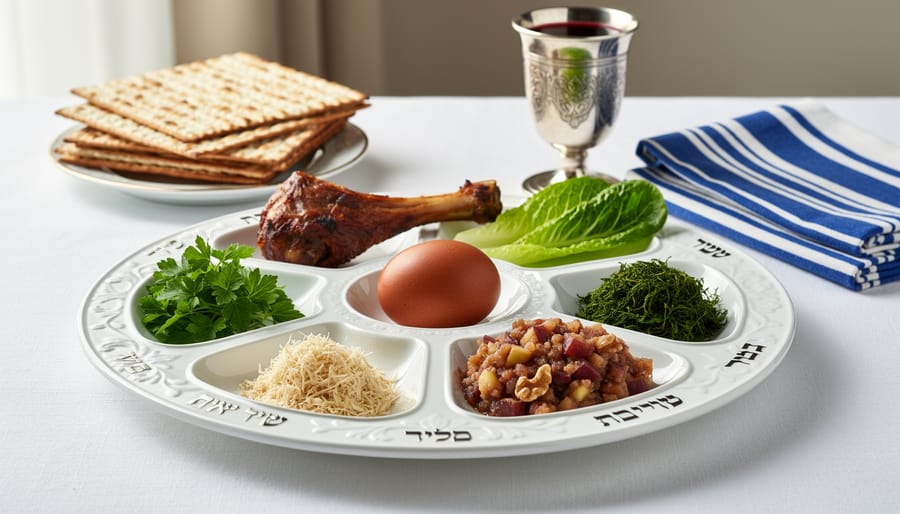
The ritual of the four cups of wine transforms the Passover Seder from a commemorative meal into a choreographed spiritual journey, with each cup marking a distinct divine promise of redemption. Traditionally, sweet Concord grape wines like Manischewitz dominated Seder tables, their syrupy character often more nostalgic than nuanced. However, Toronto’s sophisticated kosher wine market has elevated this ancient practice into an opportunity for exceptional wine pairing.
At a recent Seder I attended in Forest Hill, our host curated an impressive selection from the LCBO’s expanding kosher portfolio. We began with a crisp Galil Mountain Sauvignon Blanc from Israel’s Upper Galilee region for the kiddush, its citrus notes providing refreshing contrast to the ritual’s opening moments. The second cup, consumed during the maggid narrative, featured a balanced Covenant Cabernet Sauvignon from California, its structured tannins complementing the bitter herbs without overwhelming the palate.
For the third cup following the meal, we savored a boutique Israeli Syrah from the Judean Hills, its velvety complexity harmonizing beautifully with the roasted lamb and root vegetables. The final cup, traditionally the most celebratory, paired with a Bartenura Moscato d’Asti, its gentle effervescence and honeyed sweetness embodying the joy of redemption. This thoughtful progression demonstrated how premium kosher wines can honor tradition while delivering the sophisticated experience discerning palates deserve.
Charoset Across Cultures: A Culinary Pilgrimage Within
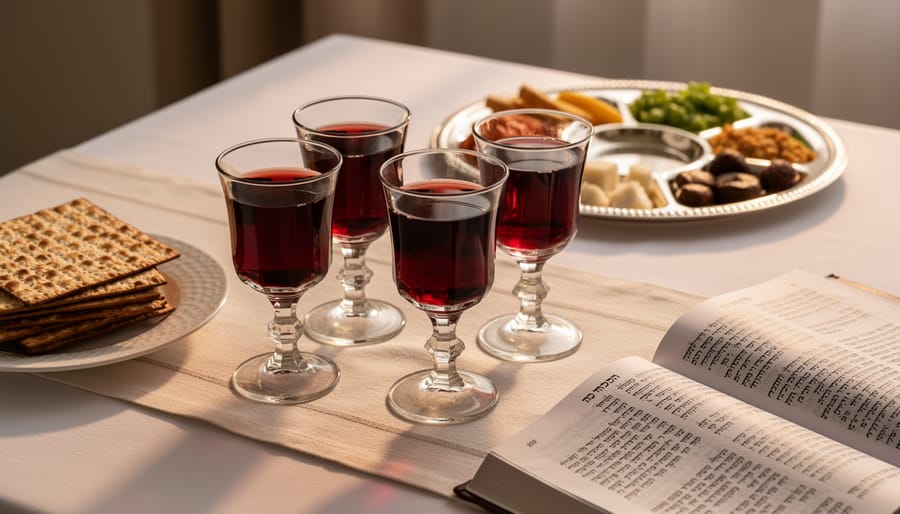
During my recent conversation with Rabbi Sarah Goldstein, a culinary historian specializing in Sephardic traditions, she drew a compelling parallel: charoset possesses its own terroir, much like the great wines we cherish. This symbolic Passover paste, representing the mortar used by enslaved Israelites, transforms dramatically across Jewish diasporas, each version reflecting its landscape of origin.
The Ashkenazi interpretation presents a robust composition of apples, walnuts, sweet wine, and warming cinnamon—elements reminiscent of Eastern European orchards and the spice trade routes that passed through these communities. I’ve sampled versions where the apples are deliberately left coarse, creating a textural experience that mirrors the roughness of actual mortar.
Venture into Sephardic traditions, and the palette shifts entirely. Moroccan charoset incorporates dates and sesame, while Persian Jews craft theirs with pomegranate molasses and pistachios, echoing the ancient gardens of Persia. Italian Jews, influenced by Mediterranean abundance, blend figs and chestnuts with a generous pour of sweet Marsala. Each variation pairs exquisitely with different wines: the apple-based Ashkenazi version complements late-harvest Rieslings, while date-forward Sephardic iterations harmonize beautifully with tawny ports. This edible geography invites us to taste centuries of migration, adaptation, and resilience in every spoonful.
Shavuot: Dairy Delicacies and the Feast of First Fruits
Blintzes, Cheesecake, and Beyond: The Dairy Imperative
The dairy imperative of Shavuot transforms Toronto’s culinary landscape each spring, where ancient tradition meets contemporary sophistication. During my recent exploration of the city’s finest establishments, I discovered that the customary consumption of dairy foods—rooted in the metaphor of Torah as nourishing as milk and honey—has evolved into an extraordinary showcase of artisanal craftsmanship.
At Harbord Room, Chef Jonathan Poon elevates the humble blintz into haute cuisine territory. His interpretation features paper-thin crepes enveloping house-made ricotta infused with Meyer lemon zest and vanilla bean, finished with a delicate drizzle of acacia honey and edible flowers. “We’re honoring the tradition while celebrating the finest dairy our Ontario producers offer,” he explained during our conversation, gesturing toward wheels of artisanal cheese aging in his temperature-controlled vault.
The cheesecake, perhaps the most iconic Shavuot dessert, receives equally refined treatment throughout the city. I was particularly captivated by the deconstructed version at Alo Restaurant, where executive pastry chefs reimagine this classic with goat cheese panna cotta, graham cracker soil, and compressed strawberries macerated in late-harvest Riesling.
For the discerning home cook, mastering these dairy delicacies requires selecting premium ingredients: cultured butter from local dairies, organic cream cheese, and farmstead cheeses that showcase terroir. The key lies in balancing richness with brightness—a principle that extends seamlessly to wine pairing, where crisp Champagnes and mineral-driven white Burgundies cut through the luxurious textures with refreshing precision.

Sukkot: Dining Under the Stars in Temporary Dwellings
The Etrog and Wine: Aromatic Connections
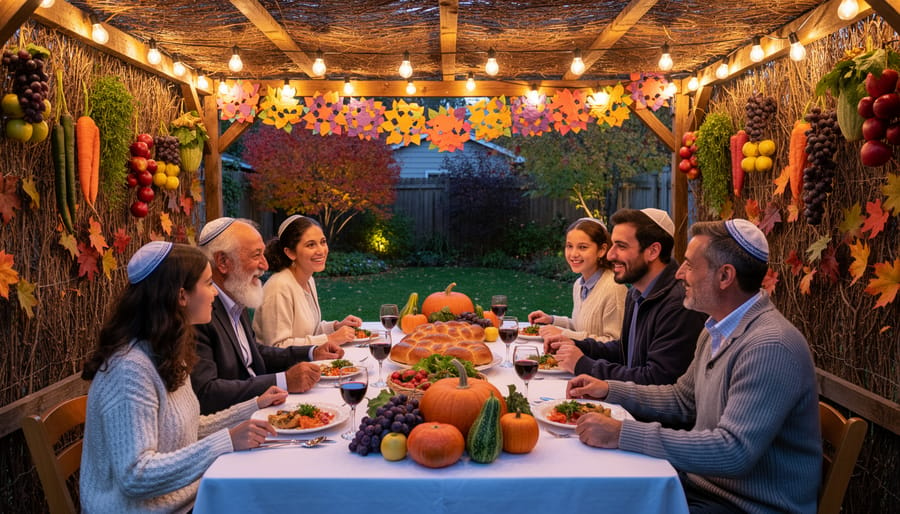
The etrog, or citron, stands as one of Sukkot’s most enigmatic ritual objects—a luminous, fragrant citrus fruit that must meet exacting standards of perfection for ceremonial use. I first encountered its intoxicating aroma during a visit to a specialized etrog merchant in Toronto’s Bathurst corridor, where the proprietor explained how this ancient fruit commands reverence not merely for its beauty, but for its profound aromatic complexity.
Beyond the synagogue, the etrog finds remarkable expression in artisanal liqueurs and preserves. Master distillers have begun crafting small-batch etrog spirits that capture the fruit’s distinctive bouquet—a marriage of lemon, bergamot, and floral notes with an almost resinous depth. During a recent tasting, sommelier David Lawrason shared how these citron-based aperitifs pair exquisitely with the harvest’s bounty: “The etrog’s brightness cuts through rich squash dishes while its subtle bitterness complements earthy root vegetables.”
For wine pairings during Sukkot feasts, consider crisp Vermentino or Assyrtiko—Mediterranean whites that echo the etrog’s citrus character while offering mineral complexity. These selections honor the agricultural roots of the festival while elevating contemporary celebration tables with sophisticated, food-friendly profiles that enhance rather than overpower the season’s naturally abundant flavors.
Toronto’s Sacred Tables: Where to Experience Jewish Pilgrimage Feasts
Toronto’s culinary landscape offers discerning diners remarkable opportunities to experience the profound gastronomic traditions of Jewish pilgrimage festivals, whether you’re seeking orthodox kosher certification or contemporary interpretations that honor these ancient celebrations.
For those pursuing authentic festival experiences, Café Sheli in Thornhill stands as the city’s premier destination for traditional Passover dining. During the spring festival, I’ve witnessed their meticulous preparation of hand-rolled matzah and experienced their expertly executed seder plates featuring house-made charoset blending Medjool dates, toasted walnuts, and vintage sweet wine. Their Sukkot celebrations transform the dining room with an elegantly appointed sukkah, where guests enjoy stuffed cabbage and braised brisket under a canopy of seasonal harvest decorations. Executive Chef Miriam Stein shared with me that she sources heritage grains for Shavuot preparations, creating silken cheesecakes and blintzes using organic cream cheese from local dairies.
The upscale kosher steakhouse Marky’s offers a sophisticated take on festival cuisine, particularly during Sukkot when their seasonal tasting menu showcases autumn’s bounty. Their signature dish—slow-braised short ribs glazed with pomegranate molasses and served alongside roasted squash—exemplifies how traditional festival ingredients can achieve fine-dining elevation. The sommelier’s carefully curated kosher wine list features exceptional Israeli vintages, including Yarden Mount Hermon reds that pair magnificently with their rich, festival-appropriate preparations.
For those interested in contemporary fusion interpretations, the King West establishment Parallel Brothers reinvents festival traditions through a modern lens, though not kosher-certified. Their Shavuot-inspired menu features locally sourced ricotta agnolotti with preserved lemon and honey, while their Passover collaboration dinners eliminate chametz ingredients while maintaining culinary sophistication through innovative vegetable-forward compositions.
Caterers including Kosher Gourmet and Zane Caplansky’s Events Division provide bespoke festival services for private celebrations, delivering everything from intimate family seders to grand corporate Sukkot gatherings. When I consulted with Kosher Gourmet’s culinary director, she emphasized their commitment to seasonal, artisanal ingredients that honor festival requirements while meeting contemporary palates’ expectations for refinement and presentation.
These establishments collectively demonstrate that Toronto’s Jewish culinary community successfully bridges ancient pilgrimage traditions with today’s sophisticated dining standards, offering experiences that nourish both spirit and palate.
Pairing Sacred Traditions: Wine and Spirit Recommendations for Each Festival
The intersection of sacred tradition and fine winemaking creates extraordinary opportunities during the pilgrimage festivals, where kosher certification meets world-class viticulture. Toronto’s sophisticated kosher wine market has evolved dramatically over the past decade, offering discerning oenophiles remarkable selections that honor both halachic requirements and refined palates.
During my recent conversation with sommelier David Silber at a prominent Bloor West establishment, he emphasized that “modern kosher winemaking has transcended its historical limitations, producing bottles that compete directly with their non-kosher counterparts in international competitions.” This evolution is particularly evident in premium Israeli wineries like Yatir, Tulip, and Recanati, all readily available through Toronto’s specialty importers.
| Festival | Recommended Style | Specific Selection | Tasting Profile |
|---|---|---|---|
| Passover | Full-bodied Cabernet | Yatir Forest 2018 | Dark cherry, Mediterranean herbs, structured tannins |
| Shavuot | Crisp white blend | Recanati White Reserve | Citrus blossom, minerality, bright acidity |
| Sukkot | Elegant Syrah | Tulip Vineyard Reserve | Black pepper, plum, smooth finish |
For Passover’s extended Seder meals, seek robust reds that complement brisket and roasted lamb. The Judean Hills appellation produces exceptional Cabernet Sauvignons with the depth necessary for multiple ceremonial cups throughout the evening. Shavuot’s dairy focus calls for sophisticated whites or delicate rosés—consider Galil Mountain’s Viognier, whose floral aromatics beautifully enhance blintzes and cheesecake.
Sukkot presents unique opportunities for exploring food and wine trails through the Upper Galilee and Golan Heights appellations, where elevation and terroir produce distinctive expressions. The Herzog Special Reserve series, widely distributed in Toronto, offers consistent quality across varietals.
For spirits enthusiasts, premium kosher options have expanded beyond traditional sweet wines. Seek out Barkan Classic Brandy for digestifs or Carmel Vineyards’ port-style offerings, which provide elegant conclusions to festival meals. These selections demonstrate that observance and excellence need not exist in opposition—they enhance one another, creating deeper appreciation for both tradition and craft.
The convergence of culinary exploration and spiritual observance finds its most profound expression in Judaism’s pilgrimage festivals, where ancient traditions transform into extraordinary gastronomic experiences that resonate deeply with contemporary food enthusiasts. These festivals—Passover, Shavuot, and Sukkot—extend far beyond simple sustenance, offering instead a sophisticated interplay of ritual, symbolism, and remarkable cuisine that elevates dining to a transcendent act of cultural participation.
For the discerning palate, engaging with these traditions presents an opportunity to experience food in its most meaningful context. Whether attending a meticulously prepared Seder where each element carries millennia of significance, savoring the dairy delicacies of Shavuot paired with exceptional wines, or dining beneath the stars in a beautifully appointed sukkah, these festivals invite us to slow down and appreciate the profound connections between what we eat, how we eat, and why we gather.
Toronto’s vibrant Jewish community offers unparalleled access to these experiences, from intimate family celebrations to lavish communal feasts at renowned establishments. The city’s sophisticated culinary landscape, complemented by its thriving wine culture and proximity to exceptional Toronto vineyards, creates ideal conditions for exploring these spiritual feasts.
I encourage you to embrace these opportunities—whether as a participant in traditional observances or through thoughtful culinary tourism. Seek out authentic experiences, engage with local communities, and allow these ancient practices to deepen your appreciation for food as a vehicle of memory, meaning, and transcendence. In doing so, you’ll discover that the most memorable meals are those that nourish both body and soul.