
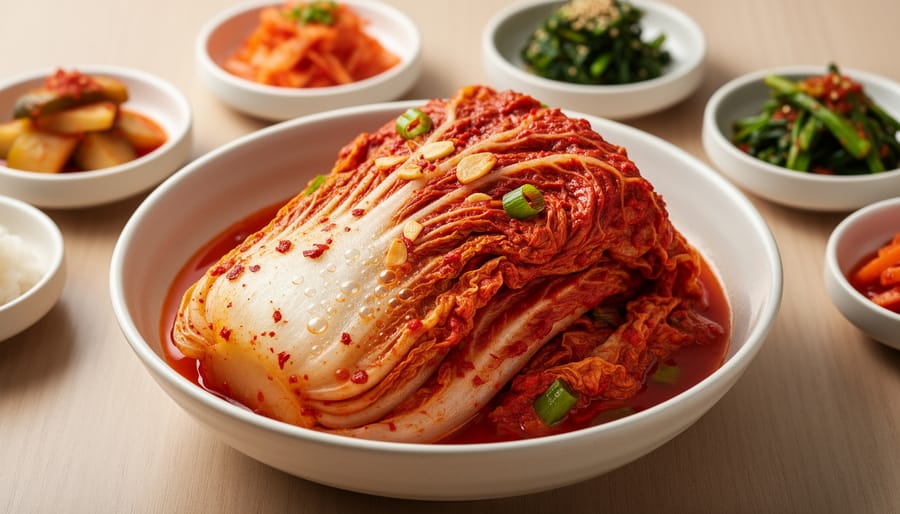
Kimchi has transcended its traditional role as a Korean banchan to become a sophisticated culinary tool in fine dining, prized by sommeliers and chefs for its complex fermentation profile, umami depth, and remarkable versatility in pairing with premium wines and spirits. This fermented cabbage preparation, with its layers of chili, garlic, ginger, and fish sauce, offers a bridge between Eastern and Western culinary traditions that Toronto’s culinary scene has embraced with increasing refinement.
The appeal lies in kimchi’s multidimensional flavor architecture. Properly aged kimchi develops lactic acid bacteria that create tangy, effervescent notes reminiscent of fine champagne, while its savory backbone pairs unexpectedly well with full-bodied reds and even single malt whiskies. Younger kimchi brings bright, crisp heat that complements sparkling wines and citrus-forward cocktails. This range makes it invaluable for the discerning palate seeking complexity beyond conventional fermented accompaniments.
For those committed to exploring kimchi at its finest, understanding provenance matters as much as it does with artisanal cheese or charcuterie. Traditional fermentation methods, ingredient quality, and aging conditions dramatically impact the final product’s character. The best producers use organic vegetables, Korean sea salt, and carefully balanced spice blends that allow the fermentation to develop naturally over weeks rather than days.
The growing interest in kimchi extends beyond restaurants into cultural celebration. The Kimchi & K-Food Festival returns August 28 to 29, 2026, at Coquitlam Town Centre Park in British Columbia, offering admission-free access to traditional preparations and contemporary innovations. While this particular event takes place outside Toronto, it reflects a broader Canadian enthusiasm for elevated Korean fermentation techniques that continues to influence dining rooms nationwide.
The Fermentation Renaissance: Why Kimchi Appeals to the Refined Palate
Kimchi’s ascent in refined culinary circles isn’t simply a matter of trend-chasing. The ferment offers a complexity that speaks directly to palates trained on Burgundy, aged Parmigiano-Reggiano, and naturally leavened sourdough. Its layered profile, sharp lactic acidity tempered by umami depth, punctuated with garlic, ginger, and gochugaru heat, delivers the kind of multidimensional experience that wine enthusiasts seek in a grand cru or collectors pursue in vintage cheese.
The parallel to natural wine is particularly apt. Both celebrate controlled microbial activity, terroir expression, and the interplay between human intention and biological unpredictability. Where orange wines showcase skin-contact tannins and wild fermentation funk, kimchi demonstrates how Lactobacillus bacteria transform cabbage into something far greater than the sum of its parts. The best examples reveal regional character: coastal versions may carry brininess from salted seafood, while inland preparations lean toward earthy sweetness from root vegetables and fermented grain paste.
The complexity in well-crafted kimchi rivals that of fine cheese, you’re tasting time, technique, and the marriage of ingredients in every bite.
This appreciation for probiotic fermentation has shifted kimchi from ethnic curiosity to culinary cornerstone among those who value craft. Artisanal producers now apply the same rigor to kimchi that cheesemakers bring to affinage, monitoring temperature fluctuations, adjusting salt ratios, selecting specific cabbage cultivars for optimal texture. The result is a product that rewards careful attention, offering different flavor notes as it ages: bright and crisp in its youth, developing deeper, more assertive funk over weeks.
For culinary adventurers accustomed to seeking out small-batch vinegars or single-origin chocolate, kimchi provides another avenue for exploration. Understanding its nuances, recognizing the difference between quick-fermented commercial versions and slow-aged traditional preparations, becomes part of the education, much like learning to distinguish between young and aged Comté. It’s this depth, this invitation to develop expertise, that makes kimchi compelling to the refined palate rather than merely fashionable.
Kimchi and Wine: An Unexpected but Harmonious Pairing
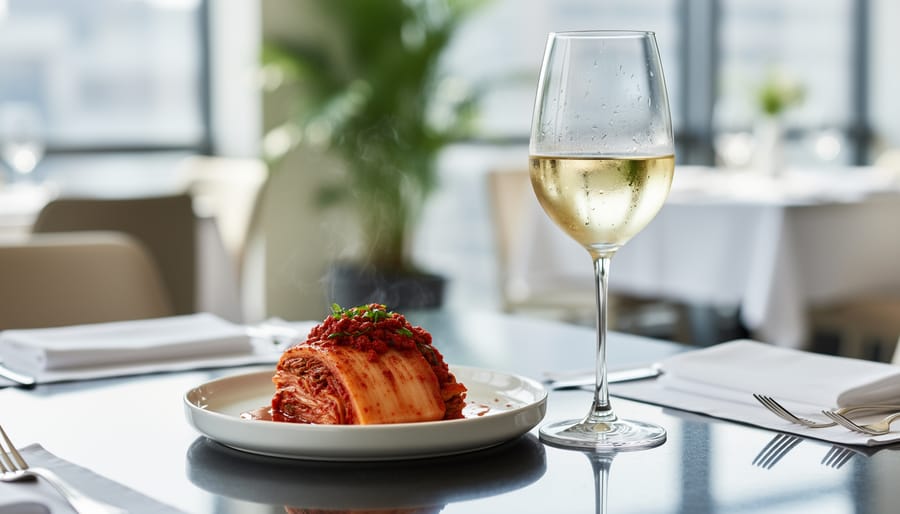
Kimchi’s lactic tang and fermented depth create pairing challenges that reward experimentation. The interaction of bright acidity, salinity, and often aggressive heat demands wines with enough structure to stand up without getting steamrolled. Approaching wine pairing secrets for kimchi means rethinking conventional wisdom, this isn’t about gentle complementarity but dynamic tension.
Off-dry Riesling remains the most reliable starting point. The residual sugar cushions kimchi’s heat while the wine’s natural acidity mirrors the ferment’s tartness without clashing. Look for German Kabinett or Spätlese expressions with pronounced minerality, that slate-driven backbone prevents the pairing from veering too sweet. The key lies in the wine’s temperature: serve it properly chilled, around 45-48°F, to maintain crispness against kimchi’s warming spice.
Gewürztraminer offers a bolder alternative, its lychee and rose petal aromatics playing against the funk. The variety’s oily texture and moderate alcohol provide weight that stands up to richer kimchi applications, think kimchi jjigae or pork belly preparations where fat needs cutting. Choose examples from Alsace or Alto Adige rather than New World interpretations, which often lack the structural precision required.
Sparkling wine deserves more attention in wine pairings for Korean dishes. Champagne’s autolytic complexity, that bready, yeasty character from lees aging, echoes kimchi’s fermentation notes while bubbles scrub the palate clean between bites. Blanc de Blancs works particularly well with lighter, fresher kimchi, while rosé expressions handle heartier preparations. Cava and quality Prosecco provide budget-friendly alternatives without sacrificing effectiveness.
Light-bodied reds present an intriguing counterpoint. Gamay from Beaujolais or Oregon Pinot Noir with minimal oak treatment can succeed when served slightly chilled. The fruit-forward profile and low tannins prevent bitterness amplification from kimchi’s heat, while subtle earthiness complements the fermented character. Avoid anything approaching full-bodied or heavily extracted, the clash becomes unpleasant quickly.
For spirits enthusiasts, kimchi’s salinity makes it a natural companion to juniper-forward gin in a dry martini or gimlet variation. The botanical complexity harmonizes with kimchi’s layered spice profile. Soju remains the traditional choice, its clean neutrality allowing kimchi’s flavors to dominate, though craft iterations with botanical infusions create more sophisticated interplay.
Beyond Toronto: The Kimchi & K-Food Festival Experience
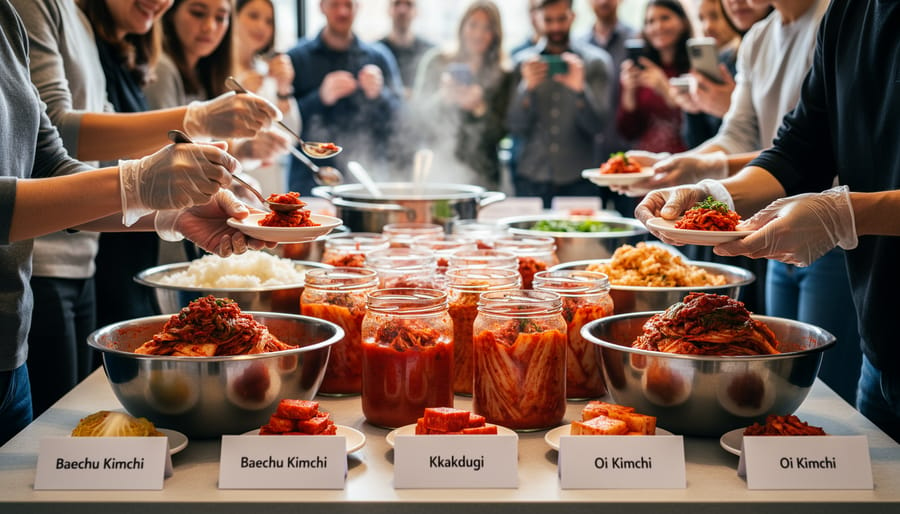
The Kimchi & K-Food Festival offers a compelling reason for Toronto’s culinary-minded to consider westward travel this August. Returning to Coquitlam Town Centre Park in Coquitlam, BC, on August 28-29, 2026, this free-admission event represents the kind of immersive cultural experience that transforms an ingredient from familiar to fascinating.
| Festival Details | Information |
|---|---|
| Dates | August 28-29, 2026 |
| Location | Coquitlam Town Centre Park, Coquitlam, BC |
| Admission | Free |
| Experience | Preparation demonstrations, regional variations, tasting opportunities |
What distinguishes this festival from casual restaurant dining is the opportunity to witness traditional preparation methods firsthand. Live demonstrations typically showcase the labor-intensive process behind different kimchi styles, the precise salting that draws moisture from vegetables, the layering of gochugaru and fish sauce, the timing that determines whether you’re creating a pungent, deeply fermented version or a fresher, crisper style. These technical details matter to anyone serious about understanding fermentation.
For the wine enthusiast accustomed to vineyard tours and tasting room conversations, a festival centered on fermented vegetables offers parallel pleasures: you observe craft, ask questions of practitioners, and taste variations that reveal terroir-like distinctions between regions and makers. Napa cabbage kimchi from one province differs markedly from radish kimchi prepared elsewhere, much as a Chablis diverges from a Russian River Chardonnay despite sharing a grape.
The value proposition extends beyond the weekend itself. Culinary tourism has long justified cross-country trips for serious food events, Niagara wine weekends, Montreal restaurant weeks, Vancouver seafood festivals. A dedicated kimchi event in British Columbia warrants similar consideration, particularly when admission costs nothing and the experience provides education unavailable in most Toronto dining rooms. You return home with knowledge that elevates every subsequent kimchi encounter, whether at a Korean restaurant or your own table.
Sourcing and Appreciating Quality Kimchi
Finding exceptional kimchi requires understanding what separates craft producers from commercial operations churning out standardized product. When evaluating options at specialty Korean grocers or high-end food retailers, look first at the ingredient list. Premium kimchi should feature whole, recognizable vegetables, napa cabbage, daikon radish, or cucumber, along with gochugaru (Korean red pepper flakes), garlic, ginger, fish sauce or salted seafood, and perhaps scallions. If you see artificial preservatives, MSG, or an ingredient list dominated by fillers and stabilizers, move on.
Fermentation indicators tell you much about quality. Artisanal kimchi appears vibrant yet slightly translucent, with vegetables that have softened but retain structure. The brine should be cloudy, not crystal-clear, a sign of active cultures. Open the jar if possible. The aroma should be pungent, pleasantly funky, with layers of garlic, spice, and fermented complexity. A flat, vinegary smell suggests shortcuts or pasteurization that killed beneficial bacteria.
Regional variations offer different experiences. Napa cabbage kimchi (baechu kimchi) is the most common, but radish cubes (kkakdugi) provide a crisp, refreshing alternative with more pronounced sweetness. Cucumber kimchi (oi sobagi) offers bright, immediate flavors suited to warmer months. Serious producers often make seasonal batches, reflecting ingredient availability rather than year-round uniformity.
Traditional methods involve natural fermentation at controlled temperatures, aging that develops nuanced flavors over days or weeks. Industrial shortcuts, rapid acidification with vinegar, artificial coloring to mimic fermentation, produce consistent but one-dimensional results. Ask retailers about production methods. Reputable vendors can tell you whether their kimchi is made in small batches, how long it ferments, and who makes it. That transparency signals quality worth seeking.
Kimchi’s trajectory mirrors a broader shift in how we value ingredients. What was once unfamiliar to most North American diners now commands attention in serious kitchens and on discerning tables, not through dilution but through deeper understanding. The fermented cabbage that anchored Korean family meals for centuries has revealed itself as a study in patience, technique, and the kind of layered complexity that fine dining celebrates.
For those of us who chase flavor across borders and traditions, kimchi offers a reminder: authenticity and sophistication need not conflict. Whether you’re planning a trip to British Columbia for the Coquitlam festival or selecting a jar from a trusted purveyor closer to home, the pursuit matters. Seek producers who honor traditional methods. Ask questions about ingredients and fermentation timelines. Taste with intention.
The current fascination with kimchi isn’t a trend destined to fade, it’s part of a larger awakening to fermented foods as foundational to global cuisines. These are ingredients that demand time, care, and respect for microbial processes we’re only beginning to appreciate fully. In a culinary landscape often driven by novelty, kimchi stands as proof that the most compelling flavors emerge when craft, tradition, and modern curiosity converge. Your plate is richer for it.